

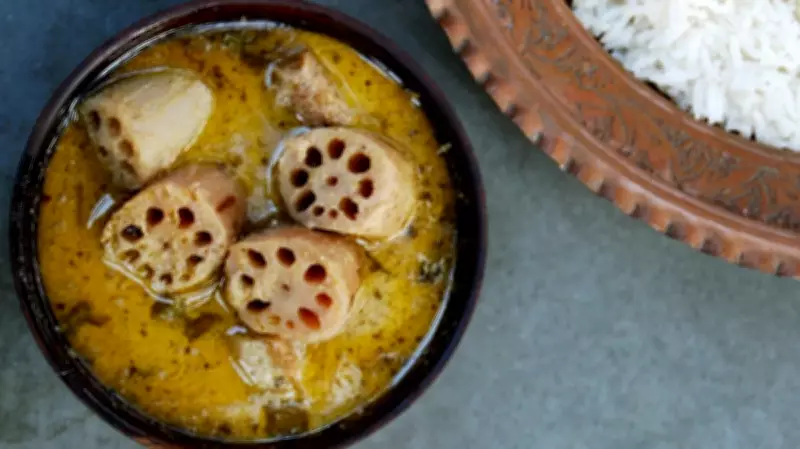
The lotus stem, also known as kamal kakdi or bhe, is a versatile ingredient that adds a distinct earthy flavour to various dishes. Often used in Indian cuisine, this aquatic vegetable is prized for its crunchy texture and subtle sweetness.
Nutritional Profile
Lotus stem is rich in dietary fiber, vitamins, and minerals. It contains vitamin C, potassium, and iron, making it a healthy addition to meals. The stem is also low in calories, which makes it ideal for weight management.
Culinary Uses
In Indian cooking, lotus stem is used in curries, stir-fries, and salads. It can be sliced and added to sabzis, or pickled for a tangy treat. The stem is also used in traditional dishes like Kashmiri yakhni and Bengali shukto.

Health Benefits
Consuming lotus stem may aid digestion, boost immunity, and improve heart health. Its anti-inflammatory properties help reduce inflammation, while the high fiber content promotes gut health.
To prepare lotus stem, peel the outer skin and slice it into rounds or strips. It can be boiled, fried, or steamed. For a simple recipe, sauté with spices like cumin, turmeric, and chili powder.
Regional Variations
Different regions in India have unique ways of cooking lotus stem. In Kashmir, it is cooked with yogurt and fennel. In Bengal, it is often paired with poppy seeds. South Indian cuisine uses it in sambar or stir-fried with coconut.
Lotus stem is not only delicious but also versatile. Its earthy flavour complements a variety of spices and ingredients, making it a favourite among chefs and home cooks alike. Whether you are looking for a healthy snack or a hearty curry, lotus stem is a wonderful choice.

