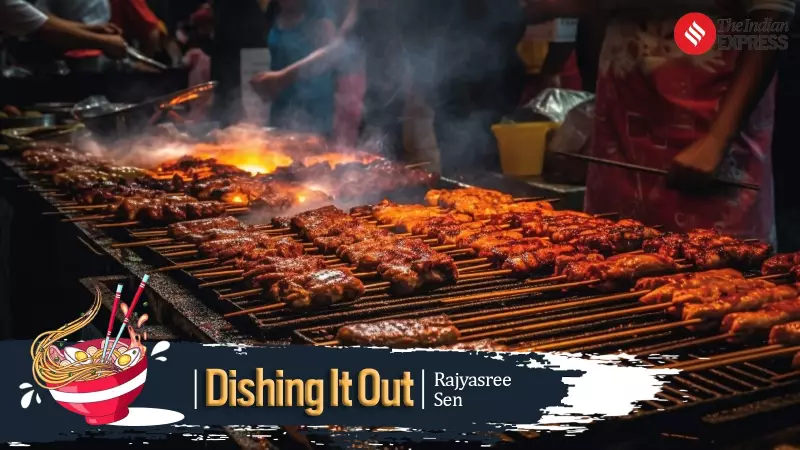
The arrival of winter in Delhi announces itself with a distinct, smoky aroma drifting through its bustling markets. This scent, irresistible and warm, leads you to the source: a cylindrical clay oven, glowing with embers, producing slightly charred kebabs and soft, blistered naan. This is the tandoor, an apparatus whose journey to becoming the undisputed soul of North Indian cuisine is a tale of ancient civilisations, empires, and resilient migration.
The Ancient Roots and Royal Journey
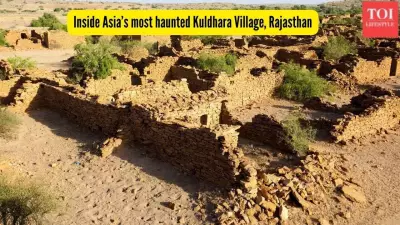
The tandoor's story begins not in a modern restaurant, but in the archaeological sites of the Harappan civilisation. Excavations in Kalibangan, Rajasthan, unearthed mud-plastered ovens with a side-opening, strikingly similar to modern tandoors, dating back to around 2600 BCE. Intriguingly, findings of chicken paintings on pottery from the same era have led to theories that even tandoori chicken might have ancient origins.
This culinary technology travelled across Rajasthan and Punjab over millennia. By the 13th century, it was documented in Delhi's imperial courts by poet Amir Khusrau, who wrote of 'naan-e-tanuri'. The Mughal era, particularly under Emperor Jahangir, saw significant innovation. The rulers embraced tandoori cooking, introducing portable versions and enriching the spice profiles of dishes cooked within the fiery oven.

The Punjabi Refugee: Catalyst for a Culinary Revolution
While the tandoor had existed in the subcontinent for ages, its proliferation as a cornerstone of urban food culture is inextricably linked to a pivotal modern event: the Partition of 1947. With the massive influx of Punjabi refugees into Delhi, the city witnessed a culinary transformation. These communities brought with them the tradition of the 'sanjha chulha' or community tandoor, and the expertise of cooking meats on skewers, perfected in the North West Frontier Province.
This migration led to an explosion of tandoori restaurants across the national capital. The refugees did not just bring an oven; they embedded a whole food ethos into Delhi's fabric, turning the tandoor from a village hearth into a ubiquitous urban icon.
More Than Flavour: The Science of Smoke and Health
The tandoor's magic lies in its unique cooking method, which imparts a flavour impossible to replicate with modern propane grills. The constant heat from wood or charcoal, combined with the smoke from dripping marinades and the searing hot clay walls, creates a complex combination of baking, grilling, and griddling effects simultaneously. This intense heat, so fierce it singes the hair off a regular chef's arms, also makes it a surprisingly healthy cooking style.
The tandoor requires minimal to no added fat, as the high temperature cooks food quickly, sealing in juices. This method has found admirers far beyond India, even reaching the city of Turpan in China's Xinjiang province via the ancient Silk Road, where Uygur Muslims use it to cook dumplings and naan.
Despite its noble lineage, the tandoor has faced infamy in Delhi, wrongly stigmatised by association with a single crime and modern pollution concerns—a reputation this ancient, versatile oven hardly deserves. Today, it stands as a testament to resilience, a piece of culinary heritage that survived empires and migrations to define the very taste of a region. To experience it is to taste history, smoke, and community, all served on a disposable plate with a side of spicy chutney.