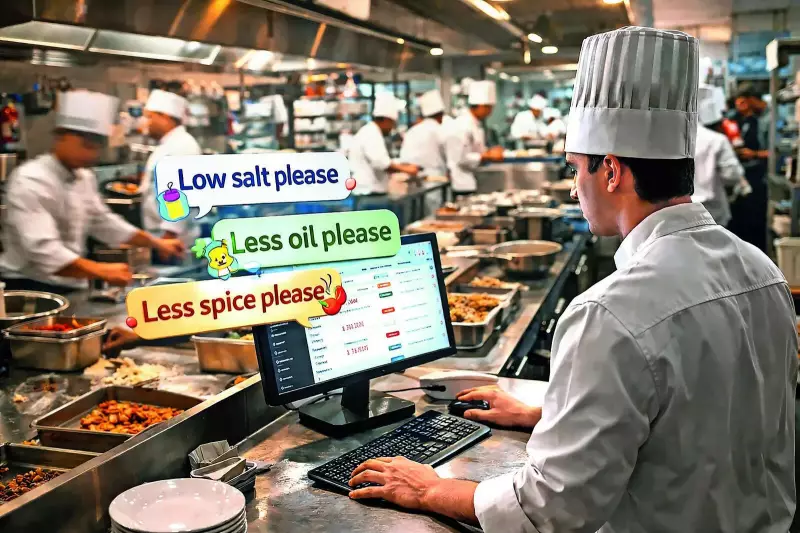
During the bustling festive week at the end of December, a common plea from food lovers in Kolkata—'Please make the dish less spicy', 'Less oil please', or 'Please use tofu instead of paneer'—often went unheard. The surge in online food orders forced a majority of the city's restaurants and cloud kitchens to prioritise swift service over accommodating individual customisation requests.
The Efficiency Imperative During Peak Season
Restaurateurs cite the overwhelming volume and the need for speed as the primary reasons. Rajiv Paul, a city-based restaurateur, explains that the fast-paced operations and tight timelines make it challenging to handle highly specific instructions. Teams rely on standardised processes to ensure smooth service, making efficiency the top priority during such rushes.
Regular customers have adapted to this reality. Sonali Chakraborty, a local resident, shares her experience: "I've learned not to expect customisation during festive rush hours. I don't blame restaurants either; they're swamped with orders."

What Restaurants Cannot Customise
There are clear culinary boundaries during peak times. The following aspects are typically non-negotiable for kitchens operating at full capacity:
- Spiciness: Adjusting heat levels in pre-mixed recipes.
- Oiliness: Reducing oil in dishes already in preparation.
- Texture: Altering the crispiness of vegetables in a cooked dish.
- Pre-prepared Items: Changing the taste of batch-cooked gravies, curries, or sauces.
- Major Recipe Changes: Requests like 'no onion, no garlic', turning a non-vegetarian dish vegetarian, replacing paneer with tofu, or changing a base sauce.
Chef Ranjan Biswas clarifies the stance, "We try to customise as much as possible, except for dishes pre-cooked in bulk, or if a customer asks for, say, leg pieces only."
Where Some Flexibility Remains
Despite the constraints, not all personalisation is off the table. Establishments still try to accommodate certain requests where feasible:
- Specific packaging instructions.
- Adjusting the consistency of a gravy.
- Requesting a certain cut or piece of meat (subject to availability).
- Reducing the quantity of rice if a customer asks for less.
Shiladitya Chaudhury, another restaurateur, emphasises the effort: "We always cater to customisation requests, though during the festive rush, it's challenging. We still try to fulfil all requests."
Interestingly, the demand for heavy customisation might be a vocal minority. Siddharth Kothari, a restaurateur, notes that 99% of customers prefer dishes as they are traditionally prepared, with only about 1% insisting on changes.
The situation also placed delivery executives in a difficult spot. They reported having no leverage to make restaurants honour customisation requests amidst the festive chaos, acting merely as the final link in a strained chain.
This scenario highlights the evolving dynamics between consumer desire for personalised meals and the operational realities of the food service industry during peak demand periods in metropolitan India.