

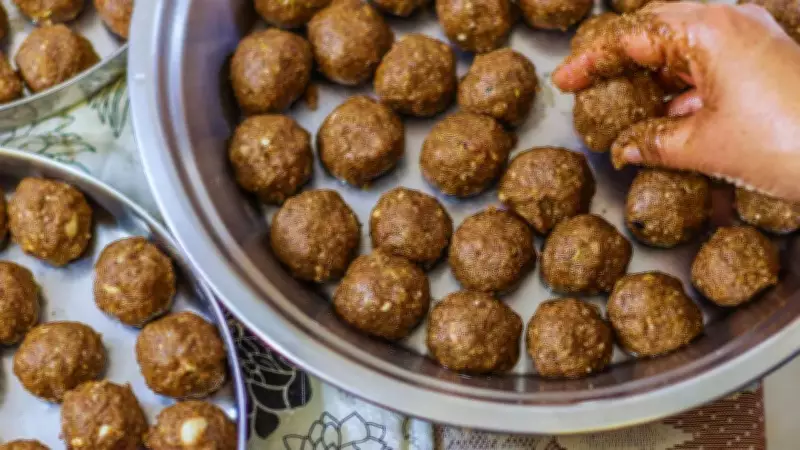
Ragi and Sattu Laddus: A Nutritional Legacy in Indian Sweet Traditions
In the rich tapestry of Indian food traditions, sweets were never merely indulgent treats for pleasure. They were integral to a broader nutritional framework, where sweetness served as a vehicle for nourishment, strength-building, and energy provision to sustain physical labor and long daily routines. This ancient wisdom is vividly embodied in the creation of ragi and sattu laddus, where taste and function are intricately linked.
The Nutritional Power of Ragi and Sattu
Ragi, also known as finger millet, stands as one of the most nutritionally dense grains commonly found in Indian kitchens. Its impressive profile includes high levels of calcium, iron, fiber, and complex carbohydrates, elevating it beyond a simple calorie source. These components play crucial roles in supporting bone health, enhancing muscle function, and promoting stable energy levels. These are not incidental advantages but the core reasons why ragi has maintained its esteemed position in traditional diets across generations.
Sattu, derived from roasted Bengal gram, brings a distinct form of nutritional strength to the table. Rich in plant protein and fiber, it is highly satiating, making it a long-valued sustaining food in many regions. Additionally, sattu is renowned for its cooling properties, a reputation rooted in centuries of observational knowledge about how the body responds to it, especially in hot climates and during physically demanding activities.

Expert Insights on Combined Benefits
Lavleen Kaur, Chief Dietitian and Founder of Santushti Holistic Health & Healing, emphasizes the transformative effect of combining ragi and sattu. "When ragi and sattu are combined, the laddu itself changes character. It is no longer just a sweet; it becomes something closer to a compact, energy-supporting food," she explains. Unlike refined confections that often cause rapid blood sugar spikes followed by crashes, these laddus facilitate a slower, more sustained energy release. In practical terms, this means individuals typically experience steadier energy levels over longer periods, avoiding the familiar post-sweet slump associated with many packaged desserts.
She further details the specific applications of each type: "Ragi laddus are commonly included in diets for women, children, and older adults, largely due to their calcium contribution and overall nutrient density. Sattu laddus, on the other hand, are more closely tied to food habits in warmer regions, where their cooling quality and association with strength and stamina are particularly valued." Both varieties seamlessly integrate into daily routines, suitable for consumption mid-morning, after physical exertion, or as an occasional sweet that aligns with overall dietary balance.
The Importance of Preparation Methods
The preparation of these laddus is as critical as the core ingredients. Using jaggery instead of refined sugar is a deliberate, functional choice, not merely cosmetic. Jaggery provides trace minerals and is generally gentler on digestion. Ghee, when used in moderate amounts, enhances nutrient absorption and adds to the satiety of the laddus. Nuts and seeds like almonds or sesame are often incorporated not just for flavor but to boost nutritional depth without making the treats excessively heavy.
Lavleen highlights a key principle: "These are dense preparations. A small portion is usually enough. That detail reflects a broader principle that guided traditional sweet-making. Sweets were designed to satisfy and nourish in limited quantities. They were not intended to be eaten mindlessly or in large volumes."
Reflecting a Functional Food Culture
Ragi and sattu laddus ultimately mirror a food culture where flavor was expected to serve a nutritional purpose. Enjoyment was important but rarely divorced from function. This perspective can seem distant in today's era, where packaged desserts often dominate eating habits. In this context, revisiting traditional preparations is not about sacrificing sweetness but about embracing a different kind of sweetness—one that remains rewarding while quietly supporting the body in long-term, sustainable ways. It represents not restriction or denial, but a thoughtful shift in what constitutes a treat.

Recipe for Homemade Ragi and Sattu Laddus
Here is a simple method to prepare these nutritious laddus at home:
- Ingredients:
- 1 cup ragi flour
- 1 cup chana sattu
- 1/2 cup cow ghee
- 1 cup jaggery
- 1 teaspoon cardamom powder
- 1 cup roasted crushed mixed nuts
- 2 teaspoons kesar (saffron)
- Milk as required
- Method:
- Dry roast the ragi flour in a pan and set it aside.
- In a separate pan, bring 1 cup of water to a boil, then add jaggery and melt it completely.
- Soak the kesar in half a cup of milk and set it aside.
- In a large plate or vessel, combine the roasted ragi flour, sattu, melted ghee, jaggery liquid, roasted nuts, and cardamom powder.
- Add the kesar milk and mix thoroughly. If needed, incorporate a little extra milk for binding.
- Shape the mixture into laddus and enjoy them daily with milk for optimal benefits.
