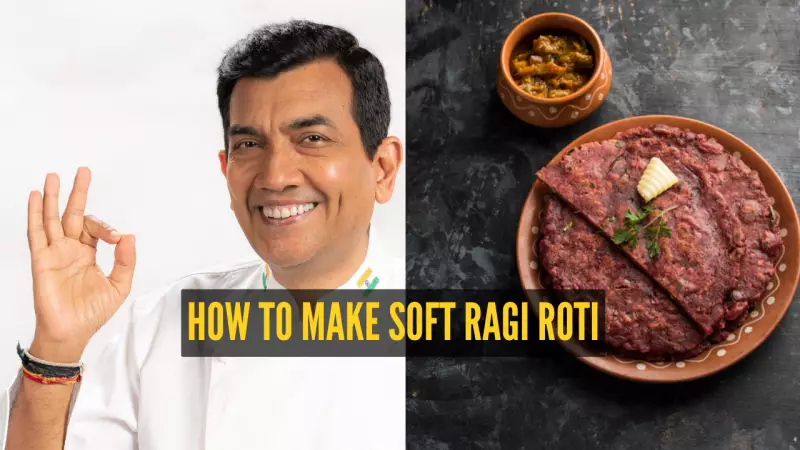
Mastering the art of making soft rotis can be a kitchen challenge for many, especially when using nutritious but tricky flours like ragi. The dense, gluten-free nature of finger millet often results in crumbly dough and hard rotis, leading many home cooks to avoid it. However, celebrity chef Sanjeev Kapoor has now shared a surprisingly simple culinary hack that promises to deliver perfectly soft and pliable ragi rotis every time.
The Secret Step for Soft Ragi Roti
In a recent social media video, Chef Sanjeev Kapoor demystified the process. His key to success lies not in complex techniques, but in one crucial step often overlooked. The chef advises boiling water with salt and ghee before incorporating the ragi flour. "Once it starts boiling, add salt and ghee, stir well, and cover it for five minutes," he explained. This process, he states, is the difference between a hard, brittle roti and a soft, delightful one. He emphasized that skipping this step is why many people end up with unsatisfactory results.
Why Ragi Deserves a Place in Your Diet
Ragi, or finger millet, is a nutritional powerhouse that has been a staple in traditional Indian diets for generations. It is naturally gluten-free and packed with essential nutrients. It is an excellent source of calcium, iron, dietary fiber, and vital amino acids. Its versatility allows it to be used in everything from porridge and dosas to laddoos and cookies.

Scientific studies highlight its significant health benefits. Its low glycemic index and high fiber content help regulate blood glucose levels, making it particularly beneficial for managing diabetes. Furthermore, ragi is rich in vitamin B3 (niacin) and antioxidants, which are known to help reduce bad cholesterol (LDL) and boost good cholesterol (HDL), thereby supporting heart health.
Expert Nutritionists Weigh In
Celebrity nutritionist Rujuta Diwekar also champions the inclusion of ragi (nachni) in the diet. In a Facebook post, she highlighted its benefits for weight management and mental well-being. She points out that the amino acids present in ragi—tryptophan, valine, and isoleucine—aid in fat burning and have a calming effect on the mind. Diwekar recommends incorporating this fiber and mineral-rich millet into the diet in various forms like laddoo, kheer, dosa, or halwa.
Simple Ragi Roti Recipe
Here is a concise method based on the shared tips to make your own soft ragi rotis at home:
Ingredients:
- 1 cup ragi (finger millet/nachni) flour
- Salt to taste
- 1 tablespoon oil or ghee
- Extra flour for dusting
- 2 cups water
Method:
- Heat 2 cups of water in a non-stick pan.
- Add salt and oil/ghee and bring it to a rolling boil.
- Reduce the heat, add the ragi flour all at once, and mix vigorously to avoid lumps.
- Switch off the heat, mix well, cover the pan, and let it sit for 10-15 minutes to cool down.
- Once cool enough to handle, knead the dough well on an oiled surface until smooth.
- Divide into equal portions, roll into balls, and dust with dry flour to roll out into rotis.
- Cook on a hot non-stick tawa for 2-3 minutes on each side.
- For that perfect puff, finish by placing the roti directly on a medium flame for a few seconds.
- Apply a little ghee and serve hot with your favorite sabzi or curry.
With this expert-backed method, enjoying the immense health benefits of ragi through soft, homemade rotis is no longer a daunting task. This winter, embrace this super millet and elevate your meals with both taste and nutrition.