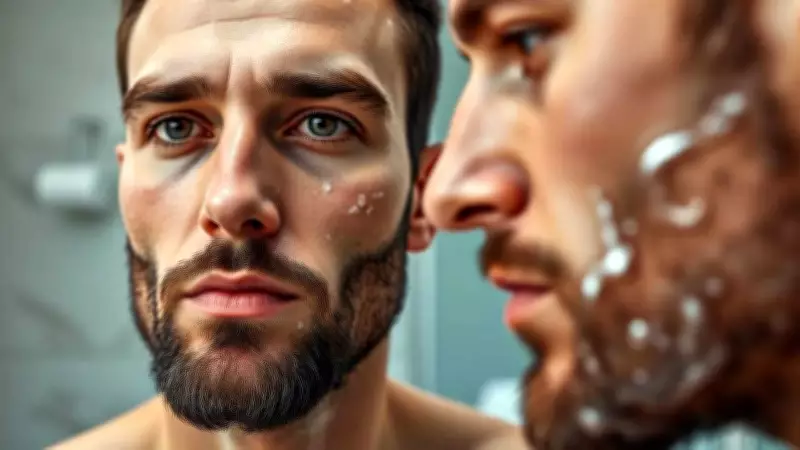
The Annoying Morning Ritual: Battling the Foggy Mirror
We've all experienced that frustrating moment after a refreshing shower when you step out ready to start your day, only to confront an impenetrable wall of white mist on your bathroom mirror. You grab a towel, wipe vigorously, and watch helplessly as streaks immediately reappear, clouding your reflection once more.
While this might seem like a minor inconvenience, on hectic Monday mornings when every minute counts, it can mean the difference between a perfectly executed tie knot and a disheveled appearance. Luxury hotels have long addressed this issue with expensive electric heating pads installed behind their mirrors, but most households still rely on ineffective towel-wiping or noisy window fans.
The Barber Shop Secret That's Revolutionizing Bathrooms
Recently, however, a remarkably effective solution has been quietly migrating from professional barbershops to everyday household bathrooms. The secret weapon? An ordinary aerosol can of shaving cream. When applied correctly to mirror surfaces, this common grooming product creates a transparent, fog-resistant coating that lasts for days.

This isn't just another household myth or temporary fix. There's genuine chemical science behind why shaving cream works so effectively against mirror fogging. The solution creates a specific chemical reaction on the glass surface that maintains transparency despite high humidity levels.
The Chemical Science Behind Clear Vision
To understand why shaving cream works so well, we must first examine how condensation forms on mirrors. When hot, humid bathroom air encounters the cold glass surface, moisture begins to accumulate. This isn't merely a thin layer of water but rather countless tiny droplets that scatter light and create that familiar foggy appearance.
The effectiveness of shaving cream stems from its rich concentration of surfactants—special molecules that significantly reduce water's surface tension. In the comprehensive study Recent Advances in Hydrophilic Polymeric Coatings for Antifogging, researchers explain that creating a "hydrophilic" or "water-loving" surface is the key to maintaining clear vision through glass in humid conditions.
When you apply a thin layer of shaving foam to your mirror, you're essentially coating the glass with an invisible film that forces water to spread out into a flat, transparent sheet rather than forming light-scattering beads. This transformation results in a uniform water film thin enough to see through clearly.
Nature-Inspired Solutions and Everyday Applications
The principle at work here relates to "wettability," a concept explored further in the research paper Efficient Anti-Fog and Anti-Reflection Functions of Bio-Inspired, Hierarchically-Architectured Surfaces of Multiscale Columnar Structures. While that study examines intricate natural surfaces like butterfly wings for anti-fog solutions, you can achieve similar results with the shaving cream already in your bathroom cabinet.
This creates a protective transparent film that provides fog-free visibility for approximately seven to ten days before requiring reapplication. It represents a safe, environmentally friendly alternative to harsh chemical products specifically formulated for anti-fog purposes.
A Safer Alternative to Chemical Solutions
Most commercial anti-fog products and window cleaners contain volatile organic compounds that can cause respiratory irritation when trapped in small, enclosed spaces like bathrooms. Since shaving cream is specifically designed for skin application, it's considerably milder and safer for household use.
The medical community has even investigated similar methods for critical applications. The research paper Anti-Fogging Techniques as Part of Personal Protective Equipment (PPE) explores how various substances can prevent fogging on face shields and medical goggles. The study notes that simple hydrophilic treatments often provide the most accessible way to maintain visibility in humid environments.

If this method proves reliable enough for protective face shields in medical settings, it's certainly more than capable of handling your bathroom vanity mirror. For those interested in cutting-edge developments, the paper Recent Trends on Anti-Fogging Treatments Using Self-Healing Hydrophilic/Superhydrophilic Materials discusses emerging self-repairing protective coatings, though this technology hasn't yet evolved for home mirror applications.
Creating Your Own "Clear-View" Mirror Coating
Implementing this effective trick requires just two items: shaving foam and a clean mirror. Begin by thoroughly cleaning your mirror with a lint-free cloth to remove any dust or residue. Next, apply a small amount of shaving cream to another clean, soft cloth and spread it across the entire glass surface in a very thin, even layer.
Once you've covered the mirror, wipe the surface again until no visible foam remains on the glass. The invisible protective film will remain in place, completely undetectable until you take your next shower and notice the remarkable absence of fogging.
This simple process not only eliminates morning haziness but also prevents water spots from drying on your mirror surface. It's a minor adjustment to your routine that makes a significant difference in daily grooming efficiency, transforming a frustrating chore into a seamless part of your morning ritual.