

The Silent Decline of Your Non-Stick Pan
Imagine crafting a flawless omelette that slides effortlessly from pan to plate, a testament to culinary perfection. Fast forward six months, and that same pan is a battlefield of scorched egg whites stubbornly clinging to every surface, turning cooking into a frustrating chore. Many blame an "old non-stick pan" or assume they purchased a defective product, but the reality is far more insidious: we often unknowingly sabotage our own cookware through everyday misuse.
Understanding the Delicate Nature of Non-Stick Coatings
Non-stick pans, despite their sturdy metal handles and robust appearance, are precision instruments with delicate coatings. Unlike rugged cast-iron cookware, these coatings cannot withstand extreme heat or aggressive scrubbing. Recognizing how these surfaces degrade is the first step toward preserving their magical properties for years, not just months.
Fluoropolymer vs. Ceramic: The Great Coating Debate
Today's market is dominated by two primary non-stick technologies: fluoropolymer (like traditional Teflon) and ceramic sol-gel coatings. At first glance, they seem interchangeable, but scientific testing reveals stark differences in durability and performance.

A comprehensive study titled Evaluation of the effectiveness and durability of commercial non-stick coatings subjected these materials to rigorous kitchen simulations. Researchers conducted ninety consecutive cooking cycles, using adhesives such as pancake batter to measure the force required to release food. The results were illuminating: fluoropolymer coatings (including PTFE and PFA) maintained their non-stick properties with minimal degradation, while ceramic pans experienced a dramatic increase in food adhesion.
This evidence underscores a critical point: ceramic coatings, though often marketed as eco-friendly and heat-resistant, wear out faster in terms of smoothness compared to their fluoropolymer counterparts. It's not your imagination—your pan's coating is indeed deteriorating prematurely.
The Hidden Culprit: Microscopic Cracks and Thermal Ageing
Even traditional fluoropolymer-coated pans are not immune to failure. Their Achilles' heel lies in susceptibility to high temperatures, which trigger a process known as crazing. According to research published in the journal Engineering Failure Analysis, cooking at elevated heats causes the polymer matrix to undergo "thermal ageing," making the coating brittle and leading to the formation of microscopic cracks.
Once these invisible fissures appear, food particles and oils infiltrate, creating a bridge between your meal and the pan. This explains why a pan can appear pristine yet cause everything to stick. Factors like using metal utensils or abrasive cleaning pads exacerbate this wear, especially when combined with thermal cycling—such as plunging a superheated skillet into cold water, which accelerates cracking.
Three Proven Strategies to Double Your Skillet's Lifespan
Treat your non-stick coating as a protective layer that requires gentle care. By adopting these evidence-based practices, you can end the annual ritual of replacing cookware and enjoy the convenience these pans were designed to provide.
1. Master Temperature Control
Non-stick coatings perform optimally at low to medium temperatures. Reserve high-heat cooking for stainless steel or cast-iron pans. Maintaining moderate heat prevents crazing and sticking, preserving the coating's integrity.
2. Revamp Your Cleaning Routine
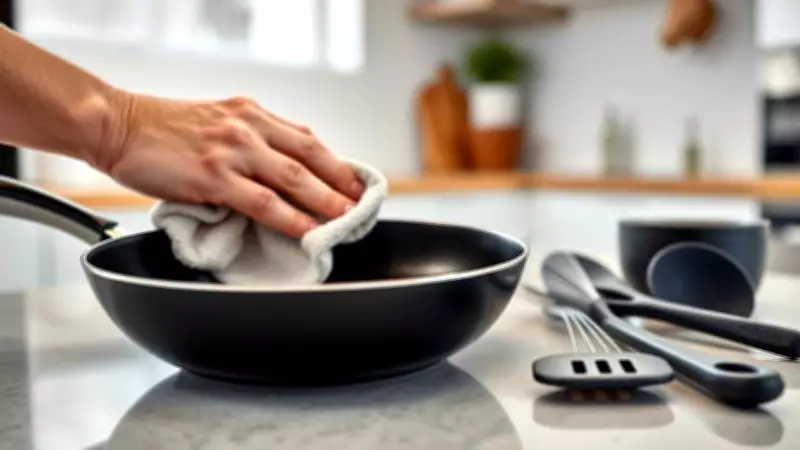
Even "non-scratch" sponges can gradually wear down the coating through mechanical pressure. Instead, use a soft cloth and mild dish soap, cleaning the pan while it's slightly warm (but not hot) to effortlessly remove residues without damage.
3. Choose Utensils Wisely
Stainless steel utensils are the sworn enemy of non-stick surfaces; even minor abrasions can initiate flaking. Opt for silicone or wooden tools to prevent scratches and extend your pan's longevity significantly.
By integrating these tips into your kitchen habits, you'll not only save money but also enhance your cooking experience, ensuring your non-stick pan remains a reliable ally in the culinary journey.

