

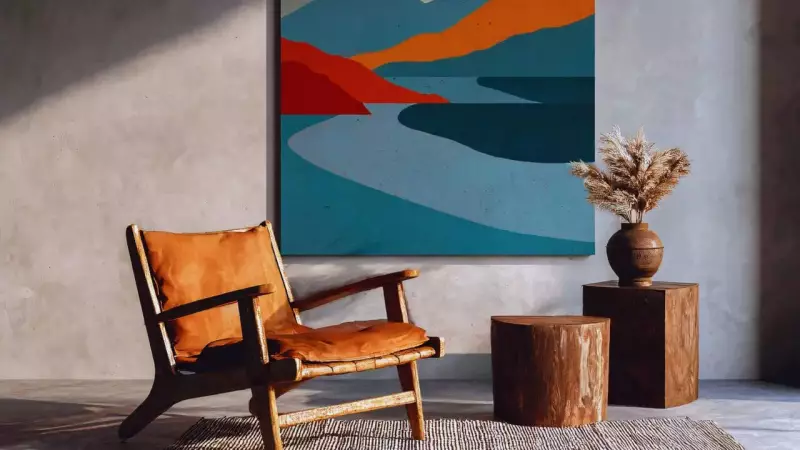
Artisanal craftsmanship is making a significant comeback in Indian homes, marking a shift from mass-produced uniformity to personalized, handcrafted elegance. But what exactly defines this revival? It harks back to the intricate carvings, delicate jali work, and finely crafted wood furniture found in heritage homes and ancestral residences—objects and spaces created primarily by hand, guided by skill, experience, and deep cultural knowledge rather than automated industrial processes.
The Shift from Standardization to Individuality
For several decades, the trend in Indian real estate and interior design leaned heavily toward standardization. Prefabricated materials, modular fittings, and mass-produced finishes dominated the market, making construction faster and more affordable. However, this approach often resulted in a loss of uniqueness, with flats and apartments across the country looking strikingly similar, regardless of local climate, culture, or context. Homeowners seeking customization and distinctiveness felt increasingly dissatisfied with this homogenized aesthetic.
Artisanal craftsmanship has emerged as a powerful response to this sameness. In the realm of real estate and interiors, it manifests through details that bear the unmistakable mark of the maker: hand-carved woodwork, lime-plastered walls, hand-laid tiles, woven lighting fixtures, and furniture shaped slowly and thoughtfully rather than stamped out in factories. These elements add character and authenticity that cannot be replicated by machine-made products.

Driving Factors Behind the Craftsmanship Revival
Several key factors are fueling the resurgence of artisanal craftsmanship in Indian homes:
- Desire for Individuality: In a real estate market where value is often measured solely in square footage and standardized specifications, handcrafted details offer a rare opportunity for personal expression. A chiseled stone floor or custom wooden jaali can instantly set a home apart, transforming it from a generic space into a unique sanctuary.
- Material Honesty and Longevity: There is growing awareness among homeowners about the durability and authenticity of artisanal creations. These techniques typically rely on natural materials and time-tested methods—solid wood instead of engineered boards, natural pigments rather than synthetic coatings, and breathable plasters instead of chemical-heavy finishes. Such materials age gracefully, developing a rich patina over time rather than simply wearing out, appealing to those who view their homes as long-term investments.
- Sustainability and Local Sourcing: Artisanal work often emphasizes locally sourced materials and regional craftsmanship, reducing transportation emissions and industrial waste. This approach aligns with a broader shift toward responsible building practices that respect both environmental resources and local economies.
- Redefining Luxury: The concept of luxury in Indian homes is evolving from ostentatious displays to intentional, meaningful choices. A handcrafted dining table by a master carpenter carries emotional and cultural value that surpasses mass-produced branded items. In premium real estate, artisanal interiors signal thoughtfulness, cultural depth, and invested time—qualities increasingly associated with refined living.
Expert Insights on the Craftsmanship Movement
Industry leaders highlight the transformative impact of artisanal craftsmanship. Sammeer Pakvasa, Managing Director & CEO of Eleganz Interiors Limited, notes, "Artisanal craftsmanship is redefining premium office designs as well because organizations today seek depth, not decoration. There is a clear shift away from generic, template-driven workplaces towards environments that feel considered, tactile, and human. Craft-led detailing brings that depth by introducing material honesty, refined execution, and a sense of permanence."

Sanjay Pareek, Co-Founder and Director of Beyond & More, adds, "The future of luxury interiors isn't about perfection but about personality. As design becomes more global, what truly sets a space apart is the human touch—the subtle signs of time, care, and intention. Artisanal craftsmanship brings this to life through each handcrafted detail, whether a carved surface, woven texture, or burnished finish."
Kamal Khemani, Senior Vice President of Design & Liaison at Raheja Universal, observes, "We are witnessing a redefinition of what luxury truly means to today’s discerning client. True luxury now lies in exclusivity—owning something unique, like a hand-carved console that took months to create or a textile woven using generations-old techniques. This isn't nostalgia; it's an evolution toward craftsmanship."
The Emotional and Cultural Dimension
Beyond aesthetics and sustainability, artisanal craftsmanship offers an emotional anchor in today's fast-paced, digital world. Handcrafted spaces tell stories of heritage, human effort, and cultural continuity, fostering a deeper connection between homeowners and their living environments. For developers and designers, this approach enables the creation of homes that feel warm and lived-in from the very beginning, rather than sterile and impersonal.
This revival is not merely a nostalgic trend but a meaningful movement toward more authentic, sustainable, and emotionally resonant living spaces in India. As awareness grows and preferences shift, artisanal craftsmanship is poised to play an increasingly central role in shaping the future of Indian real estate and interior design.
