

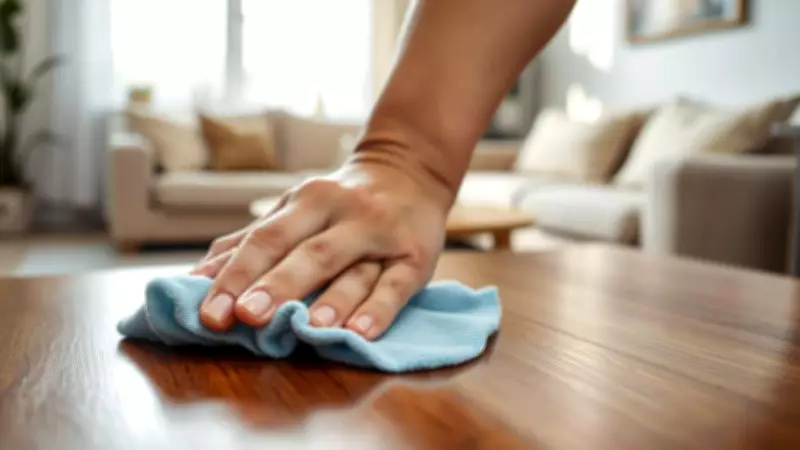
The Perpetual Dust Problem and a Simple Solution
Almost everyone has experienced the frustrating phenomenon of watching a fresh layer of dust settle on surfaces just minutes after thorough cleaning. Traditional cleaning tools like feather dusters and dry cloths often exacerbate this problem by disturbing dust particles and launching them into the air, where they become inhalable and eventually resettle elsewhere in your home.
Why Dry Dusting Fails and Damp Dusting Succeeds
As it turns out, many home cleaning enthusiasts have rediscovered an old but remarkably effective technique: damp dusting. This method involves simply wetting a cloth before use, which fundamentally changes how dust is managed during cleaning. The technique requires no special adhesives or chemicals—it works purely through physical principles.
The science is straightforward: even a slightly moist surface possesses the ability to collect allergens and dust particles effectively. In contrast, dry cleaning tools often generate static electricity through friction between surfaces. This static charge can actually repel fine dust particles, making them harder to capture. A damp cloth neutralizes these electrostatic forces while providing actual gripping power, ensuring that whatever you wipe away remains trapped in the cloth until you dispose of it properly.

The Physics of Capturing Airborne Allergens
Research has demonstrated why dry dusting often proves ineffective and potentially harmful. A study titled "Airborne Dust and Allergen Generation during Dusting with and without Spray Polish" revealed that both dry dusting methods and certain spray polishes cause significant increases in airborne particle concentrations. Rather than collecting dust, these methods release it into the air, where it disperses throughout the environment and eventually settles in new locations.
This explains why many people experience sneezing fits during cleaning sessions. The particles being stirred up become airborne pollutants that can trigger allergic reactions and respiratory issues.
Damp or electrostatic cloths change this dynamic completely. The moisture acts as a cooling agent for static electricity, which otherwise functions like a reverse magnet, pushing fine dust away from cleaning surfaces. This principle is supported by research published in "Use of an Electrostatic Dust Cloth for Self-Administered Home Allergen Collection," available through PubMed.
Practical Benefits for Household Health
This research confirms that cloths designed with these properties demonstrate remarkable efficiency in allergen collection. By preventing particles from becoming airborne, you create cleaner environments while significantly improving indoor air quality. This method proves particularly valuable in households where dust particles or pet dander cause sensitivity problems.
Adding moisture to your cleaning process helps dust fibers adhere to the cloth, making them heavier and keeping them securely in place rather than simply redistributing them throughout your living space. Instead of merely moving dirt around, you effectively extract it from your environment. This scientifically validated technique enhances cleaning efficiency and improves indoor air quality without requiring special equipment or substantial investments.
Balancing Humidity and Static Electricity for Optimal Results
While moisture proves beneficial for dust removal, cleaning effectiveness also depends on ambient air conditions. The relationship between air humidity and cleaning efficiency is detailed in the scientific paper "Effect of Relative Humidity on Dust Removal Performance of Electrodynamic Dust Shield," published in the Journal of Electrostatics.
The research indicates that while damp surfaces help trap dust effectively, extremely high humidity can make dust particles heavier and more challenging to manage with static-based tools. For optimal results, your cleaning cloth should feel barely damp to the touch rather than dripping wet. An oversaturated cloth can leave streaks on surfaces and potentially encourage mold growth in hidden crevices.

By maintaining moderate dampness, you create a surface that mimics advanced technology explored in studies like "Optimizing Electrostatic Cleaning for Dust Removal on Gecko-Inspired Adhesives," also published in the Journal of Electrostatics. This research examines how nature-inspired textures and static forces can be harnessed to detach and capture dust particles with remarkable efficiency.
Practical Implementation Tips
For best results:
- Begin cleaning from the highest surfaces in the room and work your way downward. This approach ensures that any rare escaping particles will eventually land on lower surfaces that haven't been cleaned yet.
- Use high-quality microfiber cloths as your DIY solution. Their tiny fibers are specifically designed to hook into dust particles, and adding a light mist of water or natural cleaning solution only amplifies their grabbing power.
- Remember that the damp dusting hack demonstrates you don't need expensive equipment or large budgets to achieve tangible cleaning outcomes at home. Simply modifying how you prepare your cleaning cloth can help keep your household free from allergens and maintain cleanliness for extended periods.
This simple yet scientifically supported technique can transform one of the most mundane household chores into an effective element of your regular routine. The next time you reach for that feather duster, consider reaching for a damp cloth instead—your lungs and living space will thank you.
