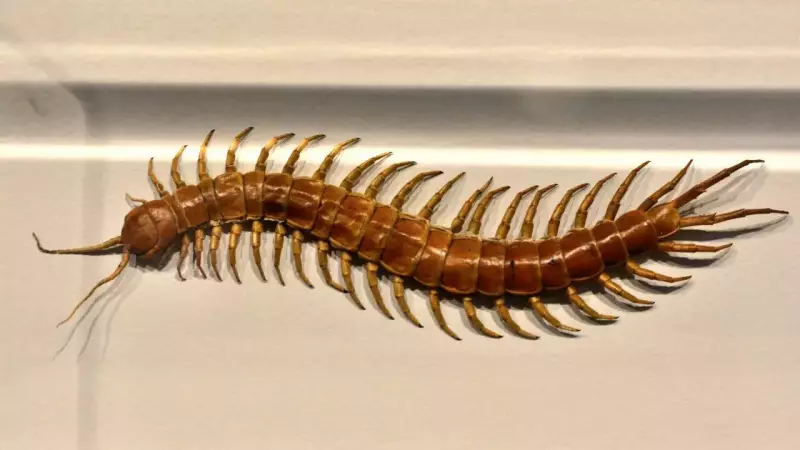
For many in India, the sudden sight of a centipede scurrying across a tiled bathroom floor or a painted wall triggers an immediate reaction: to kill or spray it. This instinct is driven more by a feeling of discomfort and surprise than by any real danger. However, viewing these multi-legged creatures as threatening intruders or a sign of a dirty home is a common misconception. Scientific observation reveals a different story—one where the house centipede is a functional, albeit startling, ally in managing indoor ecosystems.
The Real Reason Centipedes Enter Our Homes
Centipedes do not invade homes to bother people. They enter for the same basic reasons as many small creatures: shelter, moisture, and food. Gaps in masonry, spaces around pipes, loose skirting boards, and drainage openings provide easy access to environments that mimic their natural outdoor hiding spots. Areas like bathrooms, basements, and storage rooms offer the stable humidity and minimal disturbance they need.
Their appearance indoors is almost always reactive. Seasonal changes, heavy monsoon rains, or temperature drops drive their prey—other insects—inside. Centipedes simply follow this food source. A centipede sighting is a strong indicator that other arthropods are already present in your home. They are predators on the hunt, not spontaneous invaders.

Three Key Reasons Not to Kill House Centipedes
1. They Are Expert Pest Controllers
House centipedes are dedicated hunters that play a crucial role in controlling other, often more problematic, insects. Their diet includes cockroaches, silverfish, ants, termites, spiders, flies, and beetle larvae. Importantly, they do not eat human food, fabrics, or wood. They sit at the top of a small indoor food chain, acting as a natural suppression force.
Their biology is perfectly adapted for this role. Long legs allow for rapid movement on walls and uneven surfaces. Highly sensitive antennae detect vibrations and chemical traces left by prey. They use venom, delivered through modified front limbs, to paralyze their targets almost instantly. Being nocturnal, they hunt in cracks and hidden edges, returning to their hiding places after feeding.
Studies show centipede populations in homes rise and fall directly with the availability of their prey. Removing centipedes while leaving their food source intact can disrupt this balance, potentially allowing faster-breeding pest populations to grow unchecked.
2. The Minimal Risk They Pose to Humans
Despite their fearsome appearance, centipedes are a low-risk presence for people. Bites are extremely rare and typically happen only if the animal is trapped against skin or handled. Clinical reports describe symptoms like localized pain, mild swelling, and redness, which usually resolve without medical treatment. Severe reactions are not supported by population data.
The venom they use to immobilize insects is highly specific to invertebrate nervous systems and is not adapted for mammals. Their mouthparts are also not well-designed to effectively penetrate human skin. In virtually all encounters, a centipede's first and only intention is to flee. They are not carriers of human pathogens, do not seek out human warmth, and do not infest bedding, clothing, or food stores.
A study published in the journal Toxins classifies centipedes among the least harmful indoor arthropods. The fear they inspire is rooted in their speed and unfamiliar form, not in a genuine threat of injury or disease.
3. Why They Don't Lead to Infestations
Unlike many household pests, centipedes are not built for rapid colonization. Their reproductive cycle does not support large-scale infestations. Females lay eggs in concealed, damp places, but suitable indoor conditions for successful breeding are often limited and transient.
They are solitary creatures that do not build nests, form colonies, or gather in groups. Juveniles must fend for themselves from an early stage and require a steady supply of small prey to survive. In dry or frequently disturbed areas of a home, mortality is high. Long-term monitoring suggests that repeated sightings often involve the same long-lived individual (they can live for several years), which is mistaken for an infestation.

Without chronic moisture problems and an abundant prey base, centipede populations cannot establish or expand. Killing an individual does nothing to change these underlying environmental conditions and will not prevent others from entering if the habitat remains suitable.
Conclusion: Coexistence Over Extermination
The presence of a house centipede is not a sign of decay or a major pest problem. Instead, it indicates a specific, limited set of environmental conditions and the presence of other, less visible organisms. Reacting to a moment of fear by killing them addresses a symptom, not a cause. These creatures are functional predators adapted to enclosed spaces, whose interaction with humans is incidental and avoidant. By understanding their role as natural pest controllers, their minimal threat, and their biological limitations, homeowners can make a more informed choice to simply let them be, allowing them to perform their useful ecological function unseen.