

Home maintenance involves more than just cleaning and organizing your living space. A crucial aspect often overlooked is knowing when to replace everyday household items. Regular use leads to germ accumulation, reduced efficiency, and potential safety risks. While it might seem economical to extend an item's life, timely replacement prioritizes health and functionality. Let's explore room-by-room what needs frequent updating.
Kitchen: The Heart of Your Home Needs Care
Your kitchen sees constant activity, making it prone to dirt and bacteria. Several items here demand regular attention.
Sponges and Dish Cloths
Replace kitchen sponges and dish cloths every two weeks. Constant exposure to food particles and moisture creates ideal conditions for bacterial growth. Wash them daily after use and sun-dry them thoroughly. Shubhi Chatterjee, a homemaker from Kolkata, emphasizes this practice. "I change my kitchen cloths and sponges every 7-10 days. It's non-negotiable for me," she states.

Water Filters
Water filters gradually lose effectiveness as impurities clog them. Change standard filters every three to six months. Pitcher filters require replacement every one to two months, depending on your local water quality.
Spices
Always check expiry dates on spice packets. Once opened, spices typically lose flavor within six months. Whole spices can last three to five years if stored properly in airtight containers.
Cookware
As a general rule, replace cookware every five years or when coatings deteriorate. Non-stick pans need immediate replacement once the coating wears off. Prerna Shah, an MNC employee in Bengaluru, shares her approach. "I use ceramic cookware for safety. Any scratch means I stop using that pan for cooking and repurpose it," she explains.
Bathroom: High Humidity Demands Vigilance
Bathrooms provide perfect conditions for mold and bacteria due to constant moisture. Several items here require regular swapping.
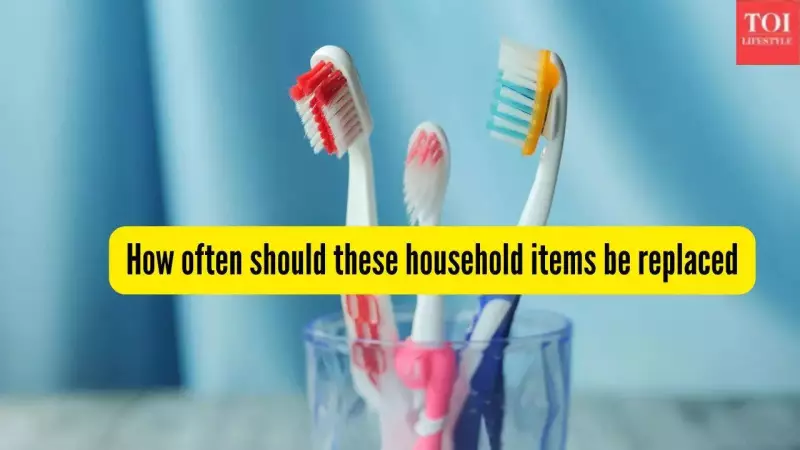
Toothbrushes
Dental professionals recommend changing toothbrushes every three to four months, or sooner if bristles fray. Arup Kumar, a bank employee from Kharghar, Maharashtra, follows a strict schedule. "I buy family packs and we all replace toothbrushes every two months. Dental health is paramount," he says.
Loofahs and Bath Sponges
Replace loofahs and bath sponges every two to three months. These items collect dead skin cells and remain damp, becoming breeding grounds for germs.
Toilet Brushes
Toilet brushes accumulate significant grime over time. Replace them every six to twelve months to maintain proper hygiene.
Towels and Mats
Towels and bathroom mats should be replaced every one to two years. Fibers break down with use and start retaining odors.
Bedroom: Ensuring Restful Sleep
Bedroom items might not need frequent replacement, but worn-out bedding can affect sleep quality and trigger allergies.
Bedsheets
Wash bedsheets every few days. Experts suggest replacing them every two years, depending on fabric quality and wear.
Pillows
Pillows collect body oils, sweat, and allergens over time. Replace them every one to two years for better sleep and hygiene.
Mattresses
A good mattress supports your body during sleep. Most mattresses begin losing their supportive qualities after eight to ten years of use.
Large Appliances and Furniture
Major investments like refrigerators, air conditioners, and washing machines can last up to fifteen years with proper care. Replacement timelines depend more on performance, repair history, and efficiency rather than strict schedules.
Regularly replacing household items goes beyond aesthetics. It directly impacts your family's health and safety. Making this a routine practice ensures a healthier home environment for everyone.

