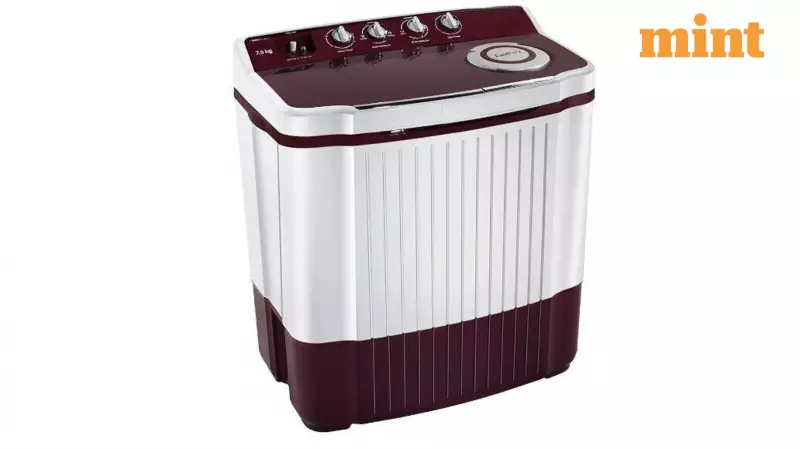
In the landscape of Indian home appliances, one category consistently delivers unmatched practicality and long-term value: the semi-automatic washing machine. These machines have carved a unique niche, offering a perfect middle ground between labor-intensive hand washing and the higher investment of fully automatic models. For countless families across the country, they represent a smart, efficient, and affordable solution to the weekly laundry challenge.
Core Features Driving Popularity
The enduring appeal of semi-automatic washing machines isn't accidental. It's built on a foundation of user-centric features designed specifically for the realities of Indian life. The most prominent of these is the twin tub mechanism. This signature layout features separate compartments for washing and drying, a design that significantly cuts down total laundry time. Users can wash one load while simultaneously drying another, a feature that promotes multitasking and saves considerable effort.
This separation also naturally prevents overloading the machine, which is a common issue that leads to inconsistent cleaning in other types of washers. By allowing you to transfer clothes manually, it ensures each garment gets the attention it needs for a thorough clean.

Economic and Practical Advantages
One of the strongest selling points for these machines is their exceptional control over resources. Unlike their fully automatic counterparts, they do not require a continuous water connection. This means you can manually fill the tub, and even reuse water for pre-rinsing subsequent loads, leading to significant water conservation—a critical advantage in areas with limited or inconsistent water supply.
Furthermore, their compact motors are designed to be energy misers, consuming less electricity and ensuring low operational costs over the machine's lifetime. This efficiency doesn't come at the expense of performance; high-speed pulsators are adept at removing tough stains quickly, making rapid washing cycles a standard feature. This makes them ideal for households that prefer doing multiple, shorter laundry rounds throughout the week.
Durability and User-Friendly Design
The physical design of semi-automatic machines is another key to their success. Most models are compact, lightweight, and easy to move, often coming with convenient handles or rollers. This portability is a huge benefit for small apartments and homes where space is at a premium.
Durability is a hallmark of these appliances. Constructed with rust-free plastic bodies and sturdy components, they are built to withstand years of regular use, even in India's varied and often humid climates. Their simplicity extends to maintenance; with fewer complex electronic parts compared to automatic machines, repairs are straightforward and maintenance costs are minimal.
Adding to their appeal is the high degree of control they offer. Users can manually set timers for soaking, washing, and spinning, allowing for a customisable wash program tailored to different fabric types. This level of manual intervention, which is rarely available in budget automatic models, ensures delicate clothes are treated gently while heavily soiled items get a more rigorous clean.
Ultimately, semi-automatic washing machines present excellent value for money. They are priced significantly lower than fully automatic models, have lower running costs, and offer proven durability. Their simple, mechanical controls are easy for anyone to operate, making them accessible to all generations in a household. For Indian families seeking a reliable, economical, and efficient laundry partner, the semi-automatic washing machine continues to be an unbeatable investment.