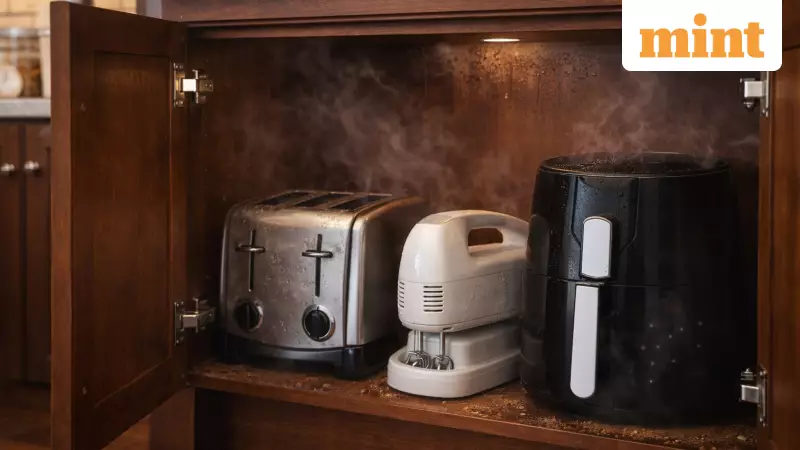
For many Indian households, the kitchen cabinet is the default home for the toaster, mixer-grinder, and the increasingly popular air fryer. It keeps counters clutter-free and seems like the ultimate tidy solution. However, this common practice might be silently shortening the lifespan of your valuable gadgets. The still, trapped air inside closed cabinets creates a hostile microclimate for electronics and metals.
The Hidden Microclimate Inside Your Kitchen Cabinets
A kitchen is a dynamic space, full of residual heat, steam from cooking, floating oil particles, and the fine dust of atta and spices long after the stove is off. A closed cabinet door does not shield appliances from this environment; it seals them inside it. This creates a stagnant pocket of air where warmth and humidity have no escape.
Open a cabinet after a cooking session, and you might feel a wave of warm, humid air or catch a lingering scent of spices. While we barely notice it, our appliances absorb it all. Exposed metal parts, like the chrome on a mixer base or the heating elements in a toaster, begin to dull. Rubber seals and gaskets can lose flexibility and become stiff. Even appliances marketed as sealed, such as air fryers and OTGs, are vulnerable as moisture seeps into the tiny gaps around buttons, dials, and vents.

The result is often premature wear, unexpected rust spots on a toaster's base, or buttons that feel sticky and unresponsive. Furthermore, the fine, almost invisible powder from kitchen staples settles on internal components, potentially straining motors and fans over time.
Simple Behavioural Shifts for Smarter Appliance Care
The solution isn't to abandon cabinet storage altogether but to adopt a few mindful habits that disrupt the damaging microclimate. These small changes require minimal effort but offer significant protection for your investments.
First and foremost, always allow appliances to cool down completely before tucking them away. Placing a warm appliance into a closed space is a direct recipe for internal condensation. Secondly, take a moment to wipe the exterior with a dry or slightly damp cloth to remove a layer of grease, steam residue, and dust. Pay attention to cords as well; avoid coiling them too tightly around a warm device, as the trapped heat can accelerate the degradation of the rubber insulation.
For cabinets that house appliances, make it a weekly ritual to leave the doors ajar for an hour or two, perhaps while cleaning. This simple act allows fresh air to circulate, dispelling trapped humidity and preventing that characteristic stale smell from clinging to your gadgets. Lastly, consider accessibility. If an appliance is used daily, store it in an easy-to-reach spot. The more convenient it is to access and clean quickly after use, the more likely you are to perform the small maintenance that prolongs its life.
Preserving Your Kitchen Investments for the Long Haul
The convenience of a clutter-free counter shouldn't come at the cost of your appliance's health. Recognising that a closed cabinet is an active environment, not a passive storage box, is the first step. The hidden damage from trapped heat and moisture accumulates slowly, often revealing itself only when a device starts malfunctioning or showing signs of corrosion.
By integrating these straightforward practices—cooling, wiping, airing, and smart placement—you can effectively combat the silent wear and tear. Published on January 8, 2026, at 08:05 PM IST, this guidance underscores that protecting your gadgets is less about major overhauls and more about consistent, small actions. Ultimately, these habits ensure that your trusted kitchen helpers remain in good working order, saving you money and hassle in the long run.