

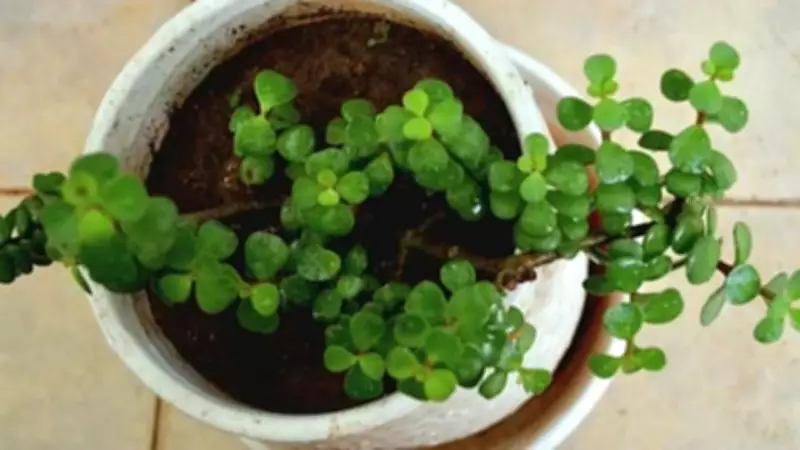
Jade plants are often referred to as some of the easiest indoor succulents to raise. That is why many inexperienced individuals get these plants to decorate balconies, work desks, and window corners. They are famous for their thick green leaves, durability, low maintenance, and ability to live for decades. However, even jade plants can start losing leaves, turn yellow, and eventually rot. In most cases, the reason behind dying plants is improper watering, lack of sunlight, or poor soil choice. The knowledge about these common mistakes allows homeowners to take care of jade plants for many years rather than see them perish gradually.
Overwatering is one of the main reasons
Overwatering plants is probably one of the most common mistakes people make. Despite being succulents, jade plants contain natural water storage in their leaves. Constant wet soil may lead to root rot, the development of fungi, and the collapsing of the stems. Many beginners think that indoor plants need to be watered on a regular basis, which is often not true in the case of jade plants. Dying leaves and stems, as well as falling leaves, usually indicate excessive water.
Lack of sunlight leads to the slow destruction of the plant
For jade plants to stay healthy and small, it is necessary to place them under bright light. Dark corners inside the room are often responsible for stretching and becoming very weak the stems of these plants. Moreover, the leaves may lose their beautiful color. Generally, it is recommended to put jade plants close to sunny windows or balcony walls with plenty of indirect sunlight.

A bad drainage system may harm roots very fast
While using proper watering frequency, jade plants may still suffer from a lack of an efficient drainage system. Succulents require well-aerated soils that allow water to pass quickly. As a result, wet soil becomes a cause for root decay. Cactus and succulent potting mixes are often recommended for this purpose.
Abrupt weather changes may affect plants negatively
Usually, jade plants tolerate warm conditions well. However, sudden environmental changes may negatively impact jade plants' health. For instance, constant alternation between the heat outside and cold air conditioners inside a house often damages the leaves and inhibits growth. Also, heavy monsoons and extreme coldness affect jade plants' health negatively by limiting their growth and development.
Pests and fungal diseases should be taken seriously
In spite of having relatively high resilience to diseases, jade plants are also susceptible to various pests, such as mealybugs or aphids. Moreover, fungal infections are common in poorly maintained environments. Cotton-like spots, sticky leaves, and black marks indicate that your jade plant needs help. Failure to address these concerns leads to severe damage to jade plants.
Using larger containers is not always good for the plants
As a rule, many beginner gardeners tend to use big containers in the belief that they benefit plant growth. In reality, large pots tend to retain excess water, causing root decay. Therefore, it is more effective to use containers just a little bigger than the jade plants' root systems to let water evaporate faster.
Disclaimer
This article is for general informational and gardening awareness purposes only. Jade plant health and growth may vary depending on climate, sunlight exposure, watering practices, humidity, soil quality, and indoor environmental conditions. Overwatering, pests, fungal infections, and improper drainage are common plant-care issues but may differ from one growing environment to another. Readers are advised to consult local horticulture experts, nurseries, or professional gardeners for plant-specific care guidance and treatment recommendations.

