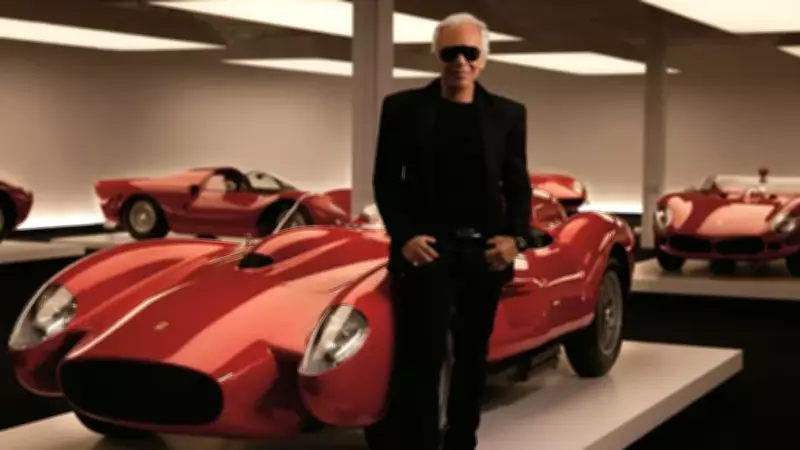
Ralph Lauren's Automotive Passion: Beyond Fashion to Curated History
The name Ralph Lauren evokes images of timeless American luxury, impeccable tailoring, and a lifestyle aesthetic polished to cinematic standards. However, behind the iconic tweed jackets and prestigious runway presentations lies another meticulously cultivated passion: one of the world's most respected private collections of classic automobiles.
Within automotive historian circles and concours judging panels, Lauren is not regarded as a mere celebrity hobbyist. He is recognized as a serious custodian of automotive heritage, whose garage functions more as a dynamic, moving museum than a simple display of personal trophies and wealth.
The Legend Lies in Quality, Not Quantity
What establishes Lauren's collection as legendary is not its sheer volume. Reports indicate he owns only a few dozen vehicles, a number far smaller than many billionaire collectors. Instead, its prestige stems from the exceptional quality and historical significance of each machine. The collection focuses on automobiles that represent pivotal turning points in automotive design, engineering innovation, and racing history. Each car is restored to near-flawless condition and preserved with the scholarly precision of a museum curator.

Collecting as an Extension of Design Philosophy
Lauren has frequently described himself first and foremost as a designer. This fundamental sensibility directly guides his approach to selecting automobiles. He is drawn to cars that fundamentally altered the visual language of motoring: vehicles featuring long hoods, elegantly flowing fenders, jewel-like grilles, and proportions so perfectly balanced they appear sculpted rather than merely engineered.
For Lauren, classic cars are rolling works of art—industrial objects where masterful craftsmanship, groundbreaking innovation, and romantic allure powerfully intersect. This philosophy explains why his garage is dominated by pre-war and post-war European masterpieces and mid-century racing legends, rather than modern hypercars built solely for extreme speed. Fellow collectors admire this approach because it mirrors how top-tier museums build their collections: focusing on historical milestones, not fleeting trends.
The Iconic Machines: Automotive Royalty
The automobiles most frequently associated with Lauren's collection are models that typically appear only in major auction headlines or institutional exhibitions. His stable is believed to include a Ferrari 250 GTO, one of the most valuable cars ever sold at auction. Alongside it sit impossibly rare Bugattis from the 1930s, including the dramatic Type 57SC Atlantic—a coupe whose sweeping, riveted spine has achieved near-mythical status in automotive lore.
Lauren has also shown a strong preference for marques such as Bentley, Alfa Romeo, Jaguar, and Mercedes-Benz, particularly examples tied to legendary endurance races or the peak of bespoke European coachbuilding. These are cars that once competed at Le Mans, crossed continents at triple-digit speeds, or represented the absolute zenith of personalized luxury. To the collector community, the message is unequivocal: Ralph Lauren is not merely purchasing nostalgia; he is acquiring definitive Apex Moments in automotive history.
Restoration to Uncompromising Museum Standards
Another key reason Lauren's garage commands such deep reverence is the unparalleled standard of maintenance and restoration applied to each vehicle. He collaborates with elite restoration specialists who treat every automobile as a priceless historical document. Original paint codes, period-correct materials, hand-stitched leather, and mechanically authentic components are prioritized over any cosmetic shortcuts or modernizations.

The explicit goal is not to update these machines but to return each one as closely as possible to the exact state it would have been in when new, or when it achieved its racing glory. In the rarefied world of concours d'elegance, where cars are judged down to the finish of individual bolts and the routing of wiring, this level of meticulous scholarship is paramount. Several of Lauren's automobiles have earned top honors at the world's most prestigious shows, including events at Pebble Beach, where judges and rival collectors alike acknowledge the extraordinary consistency and quality of his collection.
When Fashion Met Horsepower: The 2011 Paris Exhibition
Lauren briefly lifted the veil on his private automotive world in 2011, when a significant portion of his collection was displayed at the Musée des Arts Décoratifs in Paris. This exhibition intentionally framed his cars not as mere luxury possessions but as seminal design objects, placing them alongside haute couture, fine furniture, and architectural models.
The show cemented his reputation far beyond enthusiast circles. Art critics, museum curators, and design historians widely praised how the automobiles were contextualized within broader artistic and design movements, from the flowing curves of Art Deco to the aerodynamic experimentation of the post-war era. It was a rare moment where the worlds of high fashion and automotive history overlapped so completely that neither field seemed like a novelty guest in the other's domain.
Why Collectors "Worship" the Lauren Garage
Among serious car collectors, admiration is rarely granted based on wealth alone. Respect is earned through restraint, coherence, and intellectual depth—and Lauren's collection demonstrably excels in all three areas.
- Patience in Acquisition: He is known for waiting years for the perfect, correct example of a desired model rather than settling for a compromised vehicle.
- A Cohesive Narrative: The collection forms a visual and historical timeline, illustrating how automotive performance and elegance evolved across decades.
- Accessibility and Sharing: Unlike many private collectors, Lauren allows his cars to be seen and appreciated through public exhibitions and concours appearances, rather than hiding them permanently behind closed doors.
In an industry increasingly influenced by speculative buying and headline-grabbing auction prices, Lauren represents a slower, more deliberate, and deeply curatorial model of collecting. This principled approach is precisely why fellow enthusiasts speak of his garage in the hushed, respectful tones usually reserved for hallowed museum halls.
More Than a Hobby: A Unified Worldview
For Ralph Lauren, classic cars are far from a sideline to his fashion empire; they are an integral part of the same, cohesive worldview. Both domains celebrate heritage, craftsmanship, proportion, and enduring style. Just as his clothing collections draw inspiration from Ivy League tailoring, Western wear, and European elegance, his automobiles trace the golden ages of automotive coachbuilding and motorsport.
Collectors revere his garage because it feels profoundly intentional rather than merely extravagant—a carefully edited anthology of the automobile at its most beautiful and historically significant. In a world often obsessed with the newest and the fastest, Ralph Lauren has built something far rarer: a collection that treats speed, steel, and leather as genuine cultural artifacts. And within the exacting circles of automotive connoisseurship, that is perhaps the highest compliment of all.