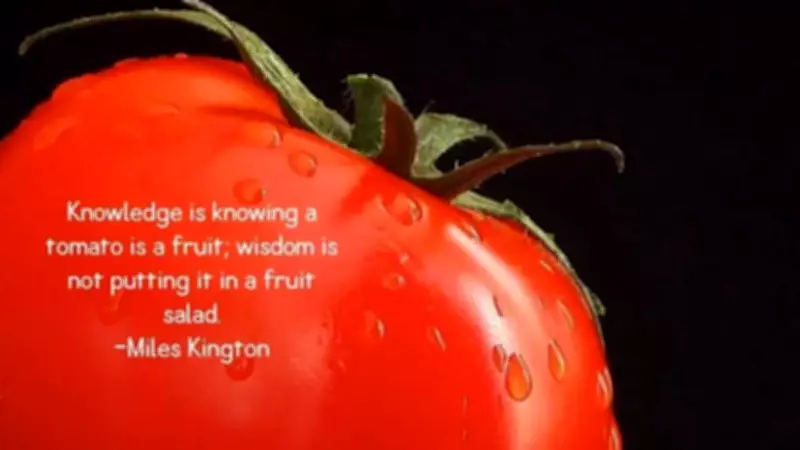
The Tomato Wisdom: A Humorous Lesson on Knowledge vs. Common Sense
Sometimes, the simplest quotes conceal the most profound meanings, and the statement about tomatoes being fruits but not belonging in a fruit salad is a perfect example. While it may sound amusing at first glance, this quote actually encapsulates a vital life lesson about the critical difference between mere information and true wisdom.
The Distinction Between Knowledge and Wisdom Explained
Here, a crucial distinction is made between knowledge and wisdom through the lens of humor. Knowledge involves acquiring facts, such as understanding that tomatoes are technically classified as fruits based on botanical definitions. Wisdom, on the other hand, pertains to the appropriate application of that information in real-world contexts. It means that simply learning facts does not automatically grant the ability to use them effectively in specific situations. Therefore, it is essential to differentiate between these concepts when making decisions and taking actions in daily life.
When Facts Alone Are Not Enough
In today's digital age, people often strive to accumulate as much information as possible due to its high availability through various sources. However, this knowledge is insufficient when facts cannot be applied appropriately across different contexts. For instance, even though tomatoes are scientifically fruits, placing them in a fruit salad would generally be considered illogical or unappealing in culinary traditions. This absence of wisdom can lead to misunderstandings, as there are numerous scenarios where raw knowledge proves to be of little practical use without thoughtful consideration.

The Role of Common Sense in Everyday Life
In this example, common sense plays a pivotal role because it represents a fundamental component of wisdom. As individuals interact and communicate daily, their words and actions must align with social norms and practical expectations. Consequently, common sense enables one to discern what is acceptable and what should be avoided, fostering better relationships and decision-making. While logic is important, its excessive or rigid application can sometimes harm interpersonal connections, highlighting the need for a balanced approach.
How to Apply Facts Appropriately
As for this quote, the main point it emphasizes is that knowledge must be applied effectively and logically. Therefore, one must carefully distinguish between facts and the specific situation at hand before drawing conclusions. Otherwise, facts might be used inappropriately due to a stubborn adherence to them, regardless of context or the potential consequences of such actions. This underscores the importance of adaptability and critical thinking in utilizing information wisely.
An Amusing Statement with a Significant Message
The most intriguing aspect of this statement is its use of a familiar example that resonates with everyone. By leveraging this common reference, the concept of wisdom becomes more accessible and easier to grasp. As a result, achieving wisdom might not seem as daunting as it initially appears. It is clear that while logic and critical thinking are essential, one should also remember the value of common sense in navigating life's complexities.