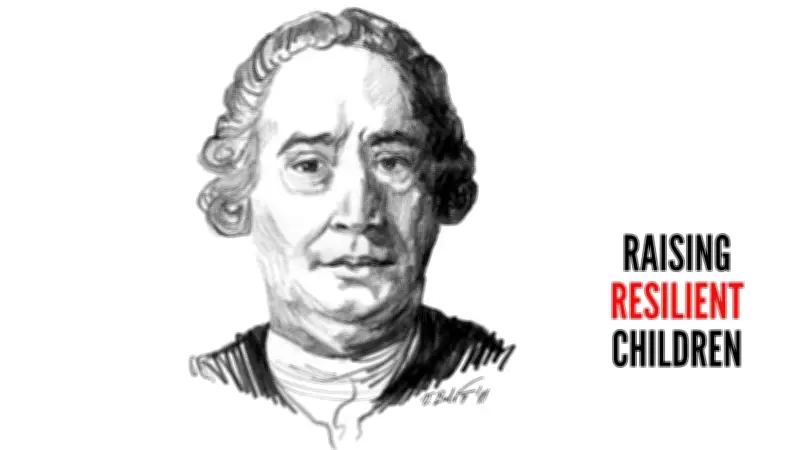
Teaching Children Adaptability: A Modern Take on Hume's Wisdom for Parenting
David Hume, the renowned philosopher, once wrote, “He is happy whose circumstances suit his temper, but he is more excellent who can suit his temper to his circumstance.” While these words may sound ancient, their lesson resonates with profound urgency in contemporary family life. Every parent naturally desires a smooth and easy path for their child, yet reality rarely aligns perfectly with a child's moods, comforts, or expectations. The true skill in parenting lies not in altering the world to fit the child, but in empowering children to adjust themselves while preserving their core identity. This fundamental shift in perspective transforms daily parenting practices and fosters lasting resilience.
Comfort is Easy, Character is Earned
It is instinctive for parents to seek comfort for their children, often tailoring schedules, educational environments, social circles, and family routines to match a child's unique personality. This approach can yield short-term peace and harmony. However, genuine growth and development commence when children learn to function effectively even when situations do not unfold as they prefer. For instance, a shy child might not naturally enjoy group projects, while an energetic child could find quiet classrooms challenging. Shielding children from every discomfort might protect their immediate mood, but it inadvertently weakens their coping mechanisms and emotional muscles.
Hume's insight serves as a powerful reminder that happiness dependent solely on ideal conditions is inherently fragile. In contrast, robust character is cultivated when children acquire the skills to manage frustration, practice delayed gratification, and confront mild disappointments. These experiences are not punitive measures; rather, they are essential practice sessions that prepare children for the complexities of real life.

Temperament is Not Destiny
Many parents encounter statements like, “That's just how he is,” or “She has always been like this.” Temperament is indeed a real and influential factor, with some children being naturally sensitive, others bold, and some cautious observers. Yet, temperament should not be viewed as a fixed or unchangeable label. Children possess the capacity to learn emotional regulation, patience, and flexibility. Neuroscience robustly supports this notion, demonstrating that the brain undergoes significant changes through repeated experiences and consistent practice.
When a child exhibits a tantrum due to altered plans, the objective is not to suppress emotion but to guide it constructively. A calm parental response, clear boundaries, and simple explanations help children understand that feelings can coexist without dictating behavior. Over time, this guidance encourages children to adapt proactively rather than react impulsively.
Modeling Adjustment at Home
Children are astute observers, often learning more from what they see than what they hear. If adults frequently complain about traffic, work stress, or minor inconveniences, children internalize these reaction patterns. Conversely, when adults demonstrate resilience by stating, “This wasn't the plan, but we can handle it,” they impart a valuable lesson in calm flexibility. Family life provides daily opportunities for such training:
- A cancelled picnic can transform into a cozy movie night at home.
- A poor exam result can lead to a constructive study plan instead of a session of shame.
- A lost match can become a source of feedback rather than a defining aspect of identity.
Parents who adjust their own tone and approach during conflicts send a powerful message. Emotional steadiness is primarily learned through observation, making Hume's philosophical idea intensely practical in everyday scenarios.
Teaching Adaptability Without Harshness
Adapting to circumstances does not entail suppressing emotions or accepting unfair treatment. Striking a balance is crucial. In cases of bullying or unsafe conditions, the lesson is protection and decisive action, not adjustment. However, if a child dislikes a new teacher's strict style, the skill involves learning to function within established structures. Parents can facilitate this by asking guiding questions:

- What aspects of this situation can be controlled?
- What valuable lessons can be learned from this experience?
- What small, manageable step can make this situation easier?
These questions shift a child's focus from helplessness to agency, moving from “Why is this happening to me?” to “How can I handle this effectively?”
Preparing Children for an Uncertain World
The modern world is characterized by rapid change, with evolving educational systems, shifting career landscapes, and transforming social norms. A child who thrives only under ideal conditions may face significant struggles later in life. Parents need not deliver grand lectures; instead, small daily corrections can shape a resilient mindset. Encourage effort over mere outcomes, praise problem-solving abilities over perfection, and validate feelings while insisting on respectful behavior.
Hume's line speaks to a concept of excellence that transcends achievement, focusing instead on inner steadiness. A child who masters the art of adjusting to change carries a quiet, enduring strength that persists long after childhood concludes.
Disclaimer: This article is intended for educational and informational purposes only. It does not serve as a substitute for professional psychological or medical advice. Parents encountering persistent behavioral or emotional concerns in children should consult a qualified mental health or child development professional.