10 Most Brightly Colored Birds to Spot in Indian Forests: A Birder's Guide
India's diverse forests, ranging from the lush Western Ghats to the misty Himalayan foothills and the dry deciduous woodlands of central regions, rank among the world's most prolific bird habitats. For birders and nature enthusiasts, nothing inspires more awe than encountering avian species adorned with vivid hues of blue, red, yellow, and green that appear almost surreal against the forest backdrop. These brilliant colors serve crucial biological functions beyond mere decoration, playing essential roles in reproductive cycles, camouflage strategies, and inter-bird communication.
The unique ecological diversity of India allows enthusiasts to observe numerous colorful bird species in their natural environments. Here is a comprehensive guide to ten of the most brightly colored birds found across Indian forests, complete with details about their appearances, habitats, and optimal viewing locations.
1. Indian Golden Oriole
The Indian Golden Oriole presents a spectacular visual display with its vibrant yellow plumage dramatically contrasted against black wings and a distinctive black eye stripe. Resembling a ball of sunshine navigating through tree canopies, this bird maintains a surprisingly elusive presence despite its brilliant appearance, often revealing itself primarily through its melodious calls. Birders can most easily observe this species in deciduous and wooded environments throughout North and Central India, with prime viewing opportunities at locations like Jim Corbett National Park, Ranthambore, and Kanha, particularly during summer months.

2. Red-billed Leiothrix
This small, energetic bird represents a concentrated bundle of colors, featuring olive-green upperparts, a yellow throat, and an orange breast complemented by its namesake red bill. The Red-billed Leiothrix typically moves in active groups while maintaining continuous vocal communication. This brightly colored species predominantly inhabits forests along the Himalayan foothills and various regions of Northeast India, where its vibrant presence adds color to the undergrowth.
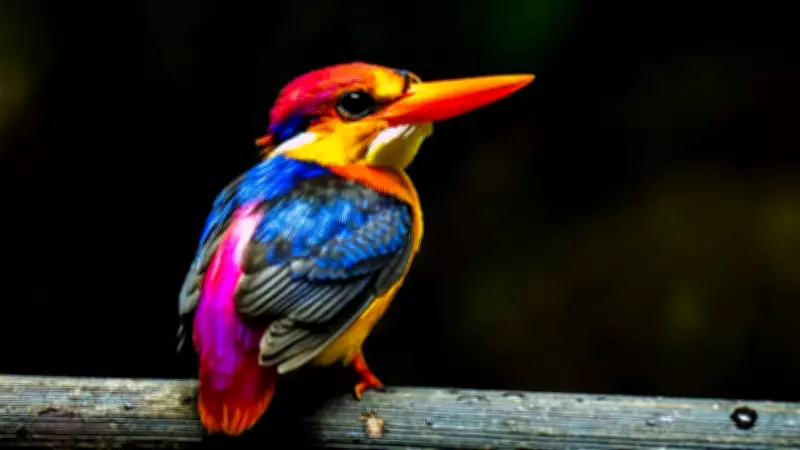
3. Oriental Dwarf Kingfisher
Among India's most visually stunning avian residents, the Oriental Dwarf Kingfisher showcases a breathtaking palette of deep blue, violet, orange, and red feathers. Unlike many kingfisher species that prefer open water bodies, this particular bird favors shaded forest streams and waterways. The Western Ghats region serves as its primary habitat, with the most reliable sightings reported from Maharashtra, Goa, and Karnataka during monsoon seasons when forest streams flow abundantly.
4. Indian Pitta
Commonly known as 'Navrang' (meaning nine colors), the Indian Pitta lives up to its name with plumage featuring green, blue, yellow, orange, and black hues. This ground-dwelling bird typically hops through leaf litter while foraging, presenting a colorful spectacle against the forest floor. Despite its brilliant coloration, the Indian Pitta maintains a secretive nature that makes sightings particularly rewarding. Prime viewing locations include the Western Ghats and Central India, with optimal observation periods occurring during pre-monsoon and monsoon seasons.
5. Indian Peafowl
As India's national bird, the Indian Peafowl represents one of the country's most distinctive avian species. The male's brilliant blue body plumage combined with spectacular green tail feathers adorned with eye patterns creates an unforgettable visual display during mating rituals. While typically inhabiting open areas, peafowl frequently appear on forest fringes and within dry deciduous forests. National parks including Ranthambore, Gir, and Bandhavgarh offer excellent viewing opportunities, with monsoon seasons providing the best chances to witness their famous courtship dances.

6. Great Hornbill
Among the largest forest-dwelling birds in India, the Great Hornbill commands attention with its massive yellow bill and distinctive plumage. Often heard before seen, the powerful wingbeats of this impressive bird create a characteristic sound as it moves through forest canopies. As a species requiring extensive undisturbed forest habitats, Great Hornbills serve as important indicators of environmental health. Prime viewing locations include Western Ghats reserves like Periyar and Silent Valley, along with northeastern sanctuaries such as Kaziranga and Namdapha.
7. Mrs. Gould's Sunbird
This species ranks among India's most gorgeous sunbirds, with males displaying spectacular scarlet red, bright yellow, and shining green plumage. Females present more subtle but equally beautiful coloration. These highly active birds constantly move among flowers while feeding on nectar, creating vibrant flashes of color in forest environments. Mrs. Gould's Sunbirds are commonly observed in Northeast Indian forests, particularly in Arunachal Pradesh and surrounding regions.
8. Asian Paradise Flycatcher
Representing avian elegance and contrast, the Asian Paradise Flycatcher presents two distinct male morphs: one featuring long, flowing white tail streamers and another displaying rufous coloration, both with glossy black heads. Observing this bird's graceful flight through shaded forests creates an unforgettable wildlife experience that highlights nature's artistic diversity.
9. Scarlet Minivet
Among India's most vibrantly colored birds, the Scarlet Minivet presents striking sexual dimorphism with males displaying red and black plumage while females feature yellow and grey feathers. These birds typically forage in small groups within high tree canopies throughout extensive ranges including the Himalayas, Central India, and Western Ghats. Prime viewing locations include Satpura Tiger Reserve, Eaglenest Wildlife Sanctuary, and Munnar's forested regions.
10. Vernal Hanging Parrot
This tiny, agile bird features beautiful bright green plumage accented with striking red feathers. Their most remarkable behavioral characteristic involves hanging upside down while foraging for food. Commonly found throughout the Western Ghats and parts of Central India, particularly in Karnataka, Kerala, and Goa, these colorful parrots add vibrant movement to forest canopies.
Bird Watching Tips for Indian Forests:
- Early morning hours typically offer the best viewing opportunities as birds are most active during this period
- Monsoon and pre-monsoon seasons often provide optimal conditions for spotting many colorful species
- Maintain respectful distances to avoid disturbing natural behaviors
- Consider hiring local guides who possess specialized knowledge of regional bird populations
- Carry appropriate optical equipment including binoculars and cameras with zoom capabilities
India's forests continue to provide unparalleled opportunities for observing some of the world's most colorful avian species in their natural habitats. From the Himalayan foothills to the Western Ghats and central woodlands, these vibrant birds represent both ecological treasures and visual spectacles that reward patient observers with unforgettable wildlife encounters.