12 Jyotirlingas of India: A Journey Through Sacred Geography and Mythology
Scattered across the diverse landscapes of India, from the snow-capped peaks of the Himalayas to the coastal shores of the Indian Ocean, the 12 Jyotirlingas of Lord Shiva represent one of the most profound pilgrimage circuits in the country. For travelers and devotees alike, this journey transcends mere religious observance, offering a deep immersion into India's rich tapestry of mythology, geography, and living cultural traditions. Each Jyotirlinga shrine possesses its own unique legend, distinct landscape, and spiritual rhythm, making this pilgrimage an experience that enriches both the soul and the mind.
Somnath Jyotirlinga, Gujarat
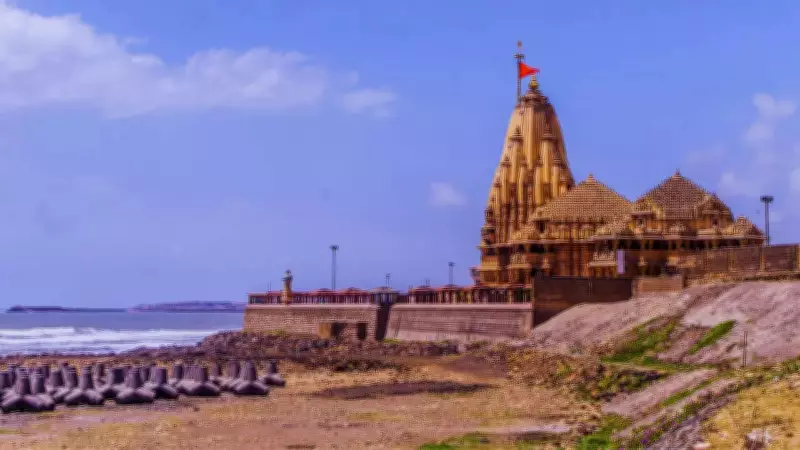
Located in Prabhas Patan near Veraval, Somnath is revered as the first Jyotirlinga. According to ancient legend, Chandra, the Moon God, was cursed by his father-in-law Daksha to lose his radiance. Chandra performed intense penance at Prabhas Patan, where Lord Shiva appeared and restored his luminous glow, earning the name Somnath, meaning "Lord of the Moon." Positioned majestically beside the Arabian Sea, this temple symbolizes eternal resilience, having been destroyed and rebuilt multiple times throughout history. Travel tip: The optimal time to visit is between October and March, with excellent accessibility by road and rail networks.
Mallikarjuna Jyotirlinga, Andhra Pradesh
Nestled in the Nallamala Hills of Srisailam, this sacred site uniquely honors both Shiva and Shakti together amidst dense forest surroundings. The legend recounts that after a family dispute, Kartikeya departed from Mount Kailash, prompting Shiva and Parvati to follow him to Srisailam. Here, Shiva manifested as Mallikarjuna, while Parvati took the form of Bhramaramba, establishing this location as both a Jyotirlinga and a Shakti Peetha, a rare dual sanctity.

Mahakaleshwar Jyotirlinga, Madhya Pradesh
Situated in the ancient city of Ujjain, Mahakaleshwar is a powerful center of Shaiva worship, deeply connected to the concepts of time and cosmic cycles. Pro-tip: Secure advance bookings to attend the early-morning Bhasma Aarti, a spiritually charged ritual. Mythology tells of a demon named Dushana who terrorized Ujjain until Shiva emerged as Mahakala, the destroyer of evil, to protect his devotees. The lingam here is swayambhu (self-manifested) and uniquely faces south, a distinctive feature among all Jyotirlingas.
Omkareshwar Jyotirlinga, Madhya Pradesh
Perched on Mandhata Island along the banks of the sacred Narmada River, Omkareshwar is renowned for the parikrama (circumambulation) ritual performed by pilgrims. A prominent legend describes how, during a fierce battle between Devas and Danavas, the Devas prayed to Shiva for victory. Shiva manifested as the Omkareshwar Jyotirlinga and vanquished the Danavas. The island itself naturally resembles the sacred 'Om' symbol, adding to its spiritual significance.
Kedarnath Jyotirlinga, Uttarakhand
One of the most iconic destinations in the Garhwal Himalayas, Kedarnath is accessible only from April or May through November due to heavy snowfall. According to epic tales, after the Kurukshetra war, the Pandavas sought Shiva's forgiveness for their sins. Shiva evaded them by transforming into a bull and diving into the earth, with his hump resurfacing at Kedarnath, where the Jyotirlinga now stands. Important note: This high-altitude pilgrimage demands physical endurance but offers profound spiritual tranquility in return.
Bhimashankar Jyotirlinga, Maharashtra
Located in the scenic Sahyadri Hills, Bhimashankar is ideally visited during the monsoon season for its lush green landscapes, though travelers should exercise caution on potentially slippery roads. The legend involves the demon Tripurasura's son, Bhima, who was defeated by Shiva after sages performed intense penance. Shiva's sweat is believed to have formed the Bhima River. The temple, surrounded by dense forests, symbolizes themes of penance and divine protection.

Kashi Vishwanath Jyotirlinga, Uttar Pradesh
In the eternal city of Varanasi (Kashi), Kashi Vishwanath is best visited early in the morning to avoid long queues for darshan, with exploration of the nearby ghats being highly recommended. Kashi is considered Shiva's perpetual abode, where it is believed that those who pass away attain moksha (liberation), as Shiva whispers the Taraka Mantra into their ears. Did you know? Varanasi stands as one of the oldest continuously inhabited sacred cities globally.
Trimbakeshwar Jyotirlinga, Maharashtra
Near Nashik, Trimbakeshwar offers a quieter experience when visited on non-festival days. The legend centers on Sage Gautama, who performed penance here to cleanse himself of sin, leading to the descent of the Godavari River. The lingam uniquely represents the Hindu trinity of Brahma, Vishnu, and Shiva, making it a rare shrine symbolizing their unity.
Baidyanath Jyotirlinga, Jharkhand
Located near Deoghar, Baidyanath experiences massive pilgrim footfall during the Shravan month, so planning accordingly is advised. Mythology recounts how Ravana worshipped Shiva here to gain immortality. When Ravana attempted to carry the lingam to Lanka, it became rooted at Deoghar. Shiva, acting as the divine physician (Baidyanath), healed Ravana's injuries, emphasizing his compassionate nature.
Nageshwar Jyotirlinga, Gujarat
Near Dwarka, Nageshwar Jyotirlinga is associated with protection from poison, fear, and negative forces. The legend tells of a demon named Daruka who imprisoned Shiva's devotee Supriya. Shiva appeared as Nageshwar to destroy the demon and safeguard his followers, highlighting the theme of divine intervention.
Ramanathaswamy Jyotirlinga, Tamil Nadu
On Rameshwaram Island, Ramanathaswamy is one of the most revered Jyotirlingas, famous for its sacred theerthams (holy wells) where devotees perform ritual baths. According to the Ramayana, before crossing to Lanka, Lord Rama worshipped Shiva here to atone for killing Ravana, a Brahmin. Rama himself installed the lingam on the island, linking it directly to epic narratives.
Grishneshwar Jyotirlinga, Maharashtra
In Verul village near the Ellora Caves in Chhatrapati Sambhaji Nagar, Grishneshwar is recognized as the 12th Jyotirlinga, constructed from black stone. Travel note: The Ellora Caves are a nearby attraction worth exploring. The legend involves a devout woman named Ghushma who worshipped Shiva daily. When her son was killed out of jealousy, Shiva restored him to life, manifesting as Grishneshwar, demonstrating the power of unwavering devotion.
Embarking on a journey to these 12 Jyotirlingas is not merely a pilgrimage; it is an exploration of India's spiritual heart, where ancient legends intertwine with breathtaking landscapes, offering travelers a transformative experience that bridges the divine and the earthly realms.