

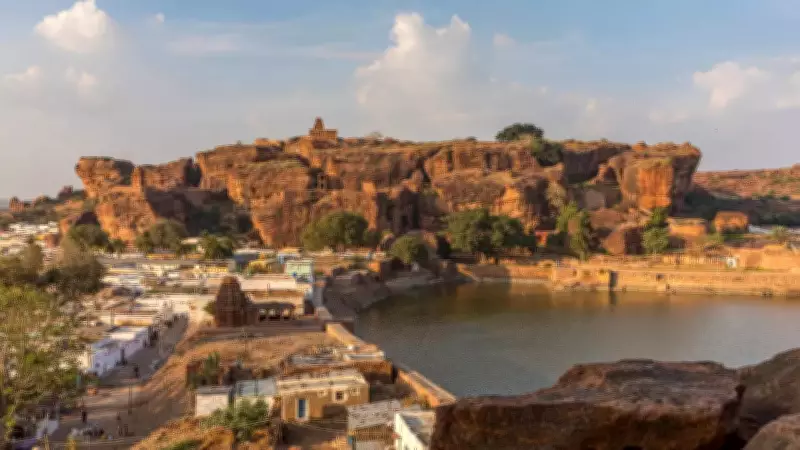
Step into Karnataka, a treasure trove of beautiful ancient temples. These are not only places of worship but also living museums of sculpture, art, and bygone artistry carved out of stone, granite, or other materials. Karnataka's temples are inspired by diverse styles that will leave you awestruck. One can observe different architectural styles such as Dravidian, Nagara, Vesara (a combination of the former two), and rock-cut architecture. These temples boast stunning architecture that reflects centuries of religious, cultural, and artistic evolution.
Chennakeshava Temple, Belur
This temple was commissioned by King Vishnuvardhana of the Hoysala Empire. Built on the bank of the Yagachi River, it features magnificent Hoysala architecture in the form of a star-shaped platform and soapstone structure. Numerous sculptures and depictions of Hindu epics like the Ramayana, Mahabharata, and the Puranas are found here. The temple's architecture is influenced by many cultures, including Vaishnavism, Shaivism, Shaktism, Jainism, and Buddhism, reflecting its cultural tolerance. The ornamental sculptures and artistic skill make it worth a visit for pilgrims, art historians, and tourists. The ideal time to visit is between October and March.
The Vitthala Temple, Hampi
A typical monument within the UNESCO World Heritage Site of the Group of Monuments at Hampi, this temple showcases extraordinary architecture and beautiful artistry. Dating back to the 15th century, it belongs to the Vijayanagara Empire. The temple complex is a vast space enclosed by high compound walls and three large gateways. The most beautiful aspect is the stone chariot shrine in the courtyard, which appears as an intricately carved temple chariot and contains musical pillars that produce musical notes when tapped.

Hoysaleswara Temple, Halebidu
This Shiva temple is a fine example of Hoysala architecture. Located in the Hassan district, it was built during the early 12th century using soapstone, with sculptures of Hindu deities, mythological scenes, and rich reliefs. It features beautiful pillared halls and friezes that are stunning pieces of medieval Indian temple sculpture, depicting the Ramayana, the Mahabharata, the Bhagavata Purana, and other major Shaiva and Vaishnava Puranas.
Badami Cave Temples
Located in the Bagalkot district of Karnataka, these 6th-century rock-cut temples were built by the early Chalukya dynasty. Carved out of Badami sandstone cliffs, they feature sculptures of Hindu deities such as Shiva, Vishnu, and Durga, as well as Jain and Buddhist figures. The complex consists of four caves, each with stone columns and brackets, giving it a distinctive feature. The style of these caves is influenced by both Nagara and Dravidian architecture. They are crucial in the history of how temple architecture and rock-cut art evolved in South India.
Group of Monuments at Pattadakal
This former sacred site and royal capital of the Chalukya dynasty has been designated as a UNESCO World Heritage Site, featuring a combination of Nagara and Dravidian temple architecture. The monuments include nine Hindu temples and a Jain temple with depictions of Hindu epics such as the Ramayana and the Mahabharata. The most beautiful temples here are the Virupaksha and Mallikarjuna temples, with beautifully carved pillars and spires. They can be toured during October and March when the weather is ideal.






