India is home to 44 UNESCO World Heritage Sites, a prestigious number that reflects the country's rich cultural and natural heritage. While iconic destinations like the forts of Rajasthan, the ancient caves of Ajanta and Ellora, and the Taj Mahal draw millions of visitors, many other remarkable sites remain surprisingly overlooked. These hidden gems, some already on UNESCO's Tentative List, offer unique historical, architectural, or ecological significance. Here are five lesser-visited UNESCO World Heritage Sites in India that travelers should explore.
Champaner-Pavagadh Archaeological Park, Gujarat
Located near Vadodara in Gujarat, the Champaner-Pavagadh Archaeological Park is one of the least-visited UNESCO World Heritage Sites. This vast archaeological zone blends medieval Islamic architecture, Hindu temples, stepwells, and sacred hills. The abandoned city of Champaner once served as the capital of Sultan Mahmud Begada, yet it remains strangely forgotten by mainstream travelers. Visitors can explore the intricately designed mosques, palaces, and fortifications that showcase a unique fusion of styles.
Great Himalayan National Park, Himachal Pradesh
The Great Himalayan National Park in Himachal Pradesh's Kullu region is a quiet UNESCO natural wonder. This protected landscape is home to snow leopards, Himalayan brown bears, and blue sheep. Much of the park can only be accessed through multi-day treks, making it a haven for adventure seekers. The best months to visit are April to June and September to November, when the weather is pleasant and wildlife sightings are more common.

Rani ki Vav, Gujarat
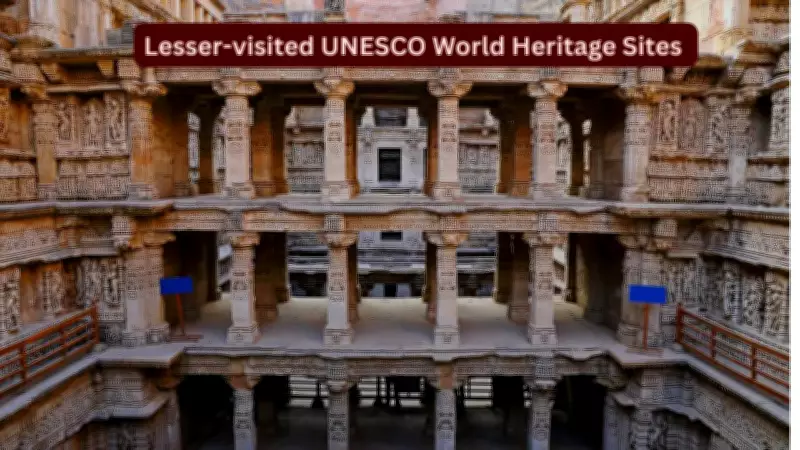
Rani ki Vav in Gujarat is an architectural marvel that remains undervisited. Built in the 11th century by Queen Udayamati in memory of King Bhima I, this stepwell is described as an inverted temple due to its intricate sculptural detailing. Rediscovered only in the 20th century, it is considered one of India's finest examples of stepwell architecture. The carvings depict mythological scenes, deities, and geometric patterns, offering a glimpse into medieval craftsmanship.
Bhitarkanika National Park, Odisha
Bhitarkanika National Park in Odisha often gets overshadowed by more famous wildlife reserves like Kaziranga and Ranthambore. Though not individually inscribed as a standalone UNESCO World Heritage Site, the region is internationally recognized for its biodiversity. It is home to saltwater crocodiles, various bird species, and lush mangrove forests. The park offers boat safaris and nature trails for those willing to venture off the beaten path.
Group of Monuments at Pattadakal, Karnataka
The Group of Monuments at Pattadakal in Karnataka often gets overshadowed by nearby Hampi, but it remains one of India's most architecturally important yet under-visited UNESCO sites. Built during the Chalukya dynasty in the 7th and 8th centuries, these monuments are set along the banks of the Malaprabha River. The site features a blend of Dravidian and Nagara styles, with temples dedicated to Hindu deities. The intricate carvings and structural design make it a must-visit for history enthusiasts.
These five sites offer a unique opportunity to explore India's lesser-known heritage without the crowds. Whether you are interested in history, architecture, or nature, each destination provides a rewarding experience that goes beyond the typical tourist trail.