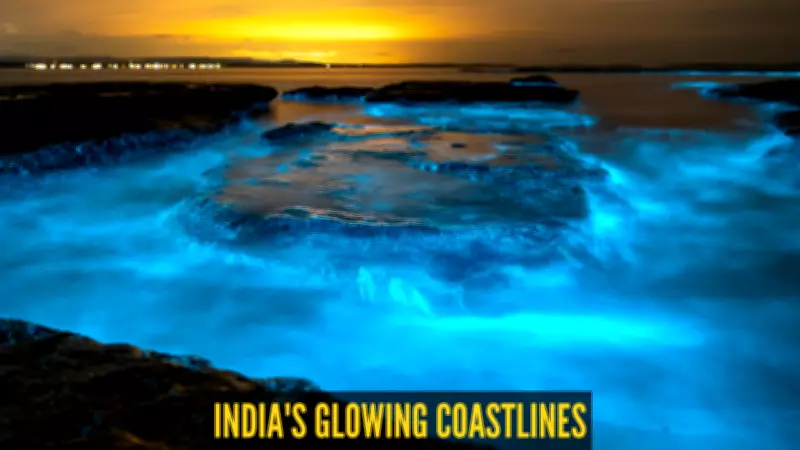
There is something truly enchanting about walking along a dark, quiet beach and watching the waves crash in a pulse of electric blue. Or imagine yourself out on a kayak in the middle of a still backwater, where every stroke of your paddle leaves a glowing trail behind. This isn't magic; it is bioluminescence. This natural phenomenon occurs when tiny marine organisms, usually microscopic plankton called dinoflagellates, emit light when they are disturbed by currents or waves.
While witnessing this spectacle can never be guaranteed, it remains one of the most worthwhile experiences for anyone who loves nature and its diverse forms. Such experiences can rekindle the inner child in you. If you are eager to tick this off your bucket list, here are six spots in India where you might just catch nature's own light show.
Swaraj Dweep (Havelock Island), Andaman and Nicobar Islands
If there is one place in India that has earned a reputation for bioluminescence, it is Swaraj Dweep, formerly known as Havelock Island. Located about 40 km from Port Blair, it is already a paradise for its turquoise waters and coral reefs, but at night, it reaches a whole different level. The best way to experience it is through a night-kayaking tour. Watching the water spark blue-green with every paddle stroke is an unforgettable experience. Radhanagar and Kalapathar beaches are the go-to spots. Because there is minimal light pollution here, your chances of seeing the glow are as good as they get. Fly into Port Blair, then take a ferry for a two-to-three-hour trip. Best time: November to April. Aim for a moonless night for the best visibility.

Kumbalangi, Kerala
Close to Kochi, you will find Kumbalangi, India's first eco-tourism village. It is famous for its traditional fishing and mangroves, but locals know it for kavaru, their term for this glowing phenomenon. Unlike the open ocean, the glow here lights up the calm backwaters and canals. It is a beautifully quiet experience; during an evening boat ride, you will see flashes of blue rippling around your boat. It is super accessible from Kochi, making it a perfect, low-effort addition to a Kerala trip. Best time: March and April, when the water conditions and salinity are just right.
Bangaram Island, Lakshadweep
If you really want to get away from it all, head to the remote lagoons of Bangaram. It is isolated, stunning, and because there is almost no artificial light, it is an incredible place to watch the water flicker. When the plankton bloom, the surf literally glows as it breaks against the white sand. It is a stark, beautiful contrast to the dark sky above. It takes a bit more effort to reach; you will need to fly to Agatti from Kochi and then take a boat, but for the seclusion alone, it is worth the trek. Best time: September to March. You will need a permit to visit, so plan ahead!
Betalbatim Beach, Goa
Most people go to Goa for the parties, but if you head down to South Goa, you might catch something far more ethereal. Betalbatim Beach is known for the Noctiluca scintillans, or sea sparkle. On really dark nights, if you wander away from the beach shacks and bright lights, you will see tiny blue flashes dancing in the waves. It is one of the most accessible spots on this list, so if you are already in Goa, it is well worth a late-night stroll. Best time: November to February, with January and February usually being the sweet spots.
Mattu Beach, Karnataka
Mattu Beach, near Udupi, is a bit of a hidden gem. It is backed by coconut groves and is blissfully free from the typical tourist crowds. It is one of those places where you really need a bit of luck, but when the conditions align after the monsoon, the crashing waves turn into streaks of glowing blue light. It is quiet, peaceful, and feels like you have stumbled upon a secret. Best time: October to December, ideally on a moonless night after the monsoon has cleared.

Vypin Island, Kerala
Tucked away just north of Kochi, Vypin Island is a lovely mix of beaches and backwater channels. While the sightings here can be a bit more hit or miss compared to Havelock, it is a brilliant spot if you are already hanging around the Kochi area. The glow usually pops up in the quieter, sheltered channels. Even if the bioluminescence does not put on a show during your visit, the island's relaxed, authentic vibe is enough to make the trip worthwhile. Best time: March to May, though people have reported sightings during the darker winter months as well.
A quick tip: Bioluminescence is a bit like wildlife spotting; you are at the mercy of nature. The most important thing is to find a spot that is as dark as possible and wait for the moon to be out of the way. Bring a bit of patience, and you might just get lucky!