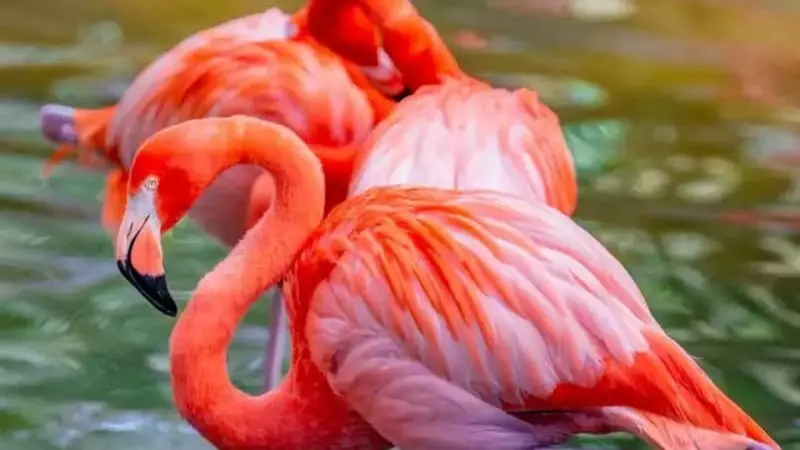
With their statuesque legs, gracefully curved necks, and vibrant pink plumage, flamingos often look like living art. While their elegance is widely admired, the true nature of these birds holds many surprises. Beyond the exotic facade lies a world of unique adaptations and behaviours. Here are seven rare and fascinating facts about flamingos that reveal their incredible story.
The Secret Behind the Iconic Pink Colour
In a fact that often surprises many, flamingos are not born pink. Hatchlings emerge with grey and white feathers. Their iconic colour is entirely a result of their diet. Flamingos feed on algae and brine shrimp that are rich in natural pigments called carotenoids. As they digest this food, the pigments are absorbed into their bloodstream and eventually deposited in their growing feathers and skin, turning them shades of pink and orange. Without this specific diet, they would remain their juvenile grey colour.
Unique Adaptations: Sleeping and Eating
One of the most iconic sights is a flamingo standing on one leg. This behaviour is not just for show; it serves a practical purpose. Scientists believe standing on one leg helps flamingos conserve body heat and energy. Remarkably, they have a special locking mechanism in their joints that allows them to maintain this position effortlessly, even while sleeping. This adaptation is crucial for birds that spend long hours standing in water.

Their feeding method is equally extraordinary. A flamingo's beak works upside down compared to other birds. They submerge their heads upside-down in water, using their uniquely shaped bills as natural filters. Hair-like structures called lamellae line the beak, trapping tiny algae and crustaceans while expelling mud and water. This specialised technique allows them to thrive in salty, alkaline lakes where few other birds can feed.
Flamingos in India: Rajasthan's Winter Spectacle
For birdwatchers in India, there's a special seasonal treat. Jaipur and its surrounding wetlands become a temporary home for migratory flamingos during certain winters. Water bodies like the Sambhar Lake, with their saline waters, attract these birds when conditions are right. The sight of elegant pink flamingos against Rajasthan's arid landscape creates a stunning visual contrast for photographers and nature enthusiasts.
Their presence is more than just a beautiful sight; it's an ecological indicator. Flamingos are drawn to these specific habitats because Rajasthan's salty lakes are rich in their primary food sources: algae and brine shrimp. These shallow waters also offer relative safety from predators. Their annual visit underscores the importance of conserving these fragile wetland ecosystems from threats like pollution and unregulated tourism.
Social Life and Family Bonds
Flamingos are profoundly social creatures. They live in large, tightly-knit colonies that can number in the thousands. This social structure provides protection from predators and improves breeding success. Their social bonds are reinforced through synchronized group displays, including head-flagging, wing salutes, and marching rituals.
Parenting is a shared duty in the flamingo world. In a display of equal responsibility, both male and female flamingos build the mud nest together and take turns incubating the single egg. After hatching, both parents produce a highly nutritious secretion called 'crop milk' to feed their chick. This bright red milk is so rich in carotenoids that it can temporarily drain colour from the parents' own feathers, highlighting their dedication to the next generation.