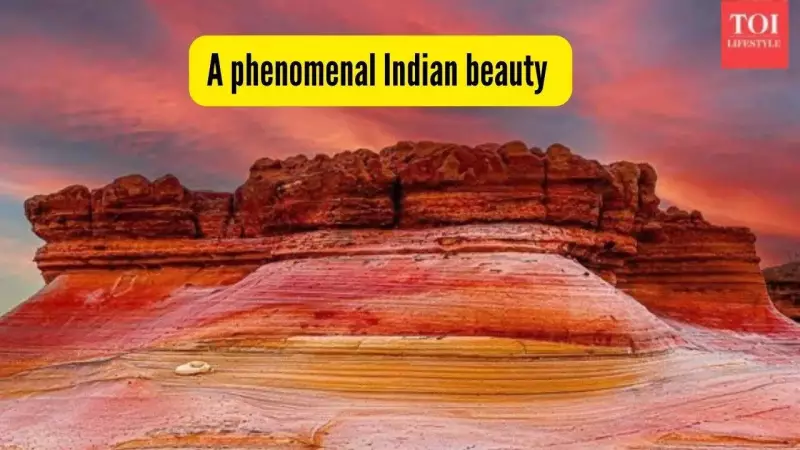
Industrialist and avid social media commentator Anand Mahindra has unveiled a breathtaking Indian destination, urging travellers to add it to their must-see lists. The chairman of the Mahindra Group, known for his #SundayWanderer posts on X, described the location as a "phenomenal sight" that unquestionably "deserves a spot on every bucket list." His endorsement has turned the spotlight onto Lyari, a relatively unknown geological wonder nestled in Gujarat's Kutch district.
The Mahindra Revelation: Lyari vs. Gandikota
In his post, Anand Mahindra drew a fascinating comparison for his followers. He referenced the ancient quartzite cliffs of Gandikota in Andhra Pradesh, which he has shared before, but introduced Lyari as its "younger sibling." He highlighted the "remarkable stratified formations" of Lyari, sharing stunning images that make the landscape appear digitally altered.
His quick research revealed a staggering age difference: while Gandikota's fortress is around a billion years old, the rocks of Lyari are geologically younger, dating back roughly 200 million years to the Jurassic era. This was a time when dinosaurs roamed the planet. The shared photographs showcase dramatic, naturally sculpted rock walls with horizontal bands in shades of earthy red, brown, grey, and ochre.

Unveiling Lyari: A Landscape Sculpted by Time
So, what exactly is Lyari? It is a hidden gem defined by its layered sedimentary rock formations. These strata are a silent record of prehistoric seas, shifting climates, and immense tectonic activity from eons past. Over millions of years, relentless wind and water erosion have carved these rocks into sharp ridges, flat-topped plateaus, and rippling walls that resemble a masterpiece of abstract art.
Unlike many polished tourist hotspots, Lyari remains raw, rugged, and largely untouched. There are no cafes, restaurants, or the usual tourist rush. Its beauty lies in its stark, open terrain and uninterrupted, surreal vistas. It offers a rare and humbling opportunity to literally walk through Earth's deep history.
Planning Your Visit to the Jurassic Wonder
For intrepid travellers inspired by Mahindra's discovery, here is what you need to know to plan a trip to Lyari.
Best Time to Visit: The ideal window is between October and February, when daytime temperatures are pleasant, ranging from 20°C to 30°C. The early morning and late afternoon light is particularly spectacular, as the sun's rays highlight the rock layers, creating a dramatic burst of colours.
How to Reach: Reaching Lyari requires some planning. The nearest major town is Bhuj.
- By Air: Fly into Bhuj Airport, which is connected to cities like Mumbai and Delhi.
- By Train: Bhuj Railway Station is the closest railhead, with regular trains from Ahmedabad and other major cities.
- By Road: From Bhuj, you can hire a private taxi or drive yourself to Lyari. Note that the final stretch may involve unpaved terrain, so a local guide is highly recommended.
Essential Tips for Visitors:
Since Lyari has no tourist facilities, visitors must be self-sufficient. Carry sufficient water, snacks, sunscreen, and a basic first-aid kit. Sturdy, comfortable shoes are non-negotiable for navigating the rocky terrain. The site is a paradise for photographers, but it is crucial to behave responsibly—do not litter and respect the fragile environment to help preserve its untouched beauty for future generations.
Anand Mahindra's discovery underscores the incredible, offbeat travel experiences India has to offer. Lyari stands as a testament to the planet's ancient history, offering a dramatic, historic, and profoundly moving adventure for those looking to begin 2026 with an unconventional journey.