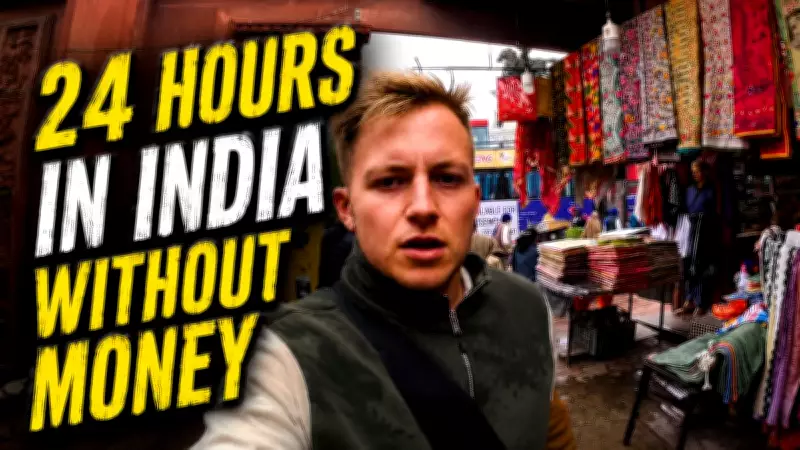
A British tourist recently attempted a daring challenge: spending 24 hours in India without any money. The experiment, which took place in a bustling Indian city, aimed to test survival skills and resourcefulness in a foreign environment. The tourist, who wished to remain anonymous, documented the journey, relying on kindness of strangers, bartering, and public facilities.
The Challenge Begins
The tourist started the day with no cash, cards, or phone. The first hurdle was finding food. By approaching local vendors and explaining the situation, the tourist received a free meal from a sympathetic street food seller. Water was obtained from public taps and offered by passersby. For transportation, the tourist walked and hitched rides on autorickshaws, with drivers agreeing after hearing the story.
Accommodation and Interactions
Nighttime posed a challenge. The tourist sought shelter at a railway station waiting room, allowed by authorities after a brief explanation. Throughout the day, interactions with locals were mixed—some offered help, while others were skeptical. The tourist noted the generosity of many, especially in providing food and directions.

Key Takeaways: The experience highlighted the hospitality of Indian people and the importance of basic necessities. The tourist concluded that while possible, the challenge required significant luck and social skills. Critics argue that such experiments glamorize poverty, while supporters see it as a testament to human kindness.
Reactions and Debate
The story went viral on social media, with divided opinions. Some praised the tourist's adventurous spirit, while others criticized the potential exploitation of local generosity. Travel experts suggest that while interesting, such challenges should be approached with caution and respect for local communities.
This experiment raises questions about travel ethics and the limits of human endurance. Whether seen as a stunt or a genuine exploration, it offers a unique perspective on survival in an unfamiliar setting.