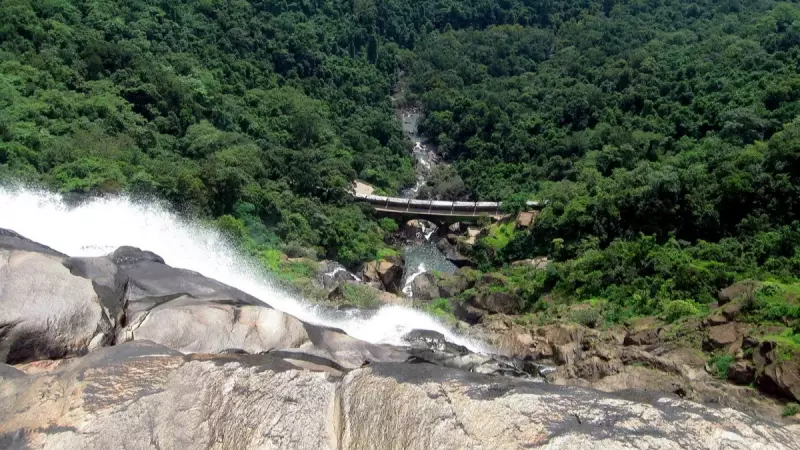
Nestled in the verdant embrace of the Western Ghats, near the thunderous beauty of Dudhsagar Falls, lies a historical sentinel often overlooked by tourists: Castle Rock. This location, more than just a scenic railway stop, is a silent witness to a pivotal moment in India's history—the liberation of Goa from Portuguese rule in 1961.
The Strategic Railway Point in Goa's Liberation
While the dazzling cascade of Dudhsagar draws crowds, Castle Rock station holds a deeper, strategic significance. During Operation Vijay in December 1961, the Indian Armed Forces launched a coordinated effort to end over 450 years of Portuguese colonial rule. The railway line passing through Castle Rock, part of the crucial South Western Railway route connecting Karnataka to Goa, became a vital corridor for the movement of troops and military logistics.
The area around Castle Rock served as a key entry point and staging ground for Indian forces advancing into Goa. Its capture and control were essential to secure the route and facilitate the swift advance towards other strategic locations within the territory. The successful operation culminated on December 19, 1961, marking Goa's official liberation and integration into the Indian Union.

Beyond the Battle: A Journey Through Scenic History
Today, Castle Rock offers travelers a unique blend of natural splendor and historical reflection. The station itself is a charming halt on the picturesque railway journey to Dudhsagar Falls. Visitors arriving here are treated to the breathtaking vistas of the ghats, often shrouded in mist, with the distant roar of the waterfall hinting at the natural marvel nearby.
For the intrepid explorer, Castle Rock is the starting point for one of the most popular trekking routes to Dudhsagar Falls. The trail winds through dense, evergreen forests, across railway tracks, and alongside rivers, offering an immersive experience in the region's pristine ecology. This journey physically connects the modern-day tourist with the historic path once traversed for a monumental political cause.
Preserving a Legacy for Future Generations
The story of Castle Rock underscores the multifaceted layers of India's historical landscape, where natural wonders and tales of valor coexist. It serves as a reminder that history is not confined to textbooks or major cities; it is etched into the very geography of the nation.
As footfall increases in the region, primarily driven by the fame of Dudhsagar, there is a growing opportunity to highlight Castle Rock's historical context. Integrating this narrative into the tourist experience can foster a deeper appreciation for the sacrifices made during the liberation struggle. It transforms a scenic spot into a place of pilgrimage for those interested in the Goa liberation history.
Efforts by local historians, railway authorities, and tourism boards to install informative plaques or create guided heritage walks could help illuminate this chapter. Understanding that the tracks leading to the majestic falls once carried the weight of history adds profound depth to the travel experience.
In conclusion, Castle Rock stands as a humble yet powerful landmark. It is a testament to the strategic calculations of a military operation that freed a region, now seamlessly connected by the same railways that facilitated its liberation. The next time you plan a trip to witness the milky flow of Dudhsagar, remember to acknowledge the quiet history sleeping at Castle Rock—a crucial dot on the map of India's journey to sovereignty.