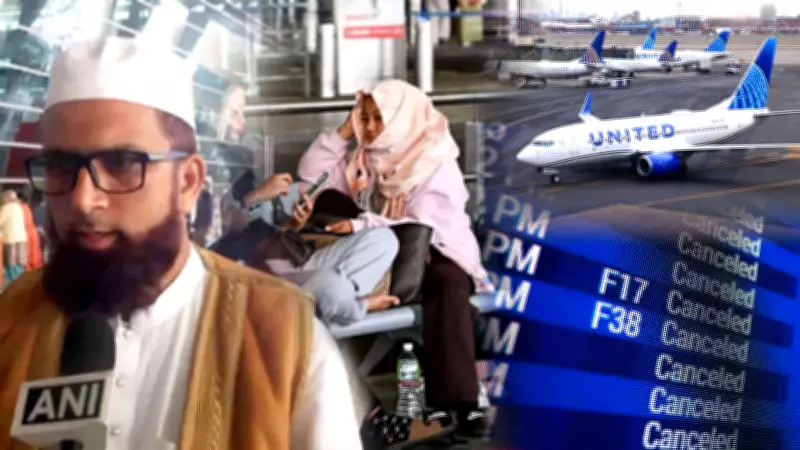
Massive Flight Disruptions at Delhi's IGIA as Middle East Tensions Escalate
In a significant travel upheaval, Delhi's Indira Gandhi International Airport (IGIA) witnessed the cancellation of at least 100 international flights on Sunday, March 2, 2026. The disruptions stem directly from the escalating crisis in West Asia, which has severely impacted global air traffic routes and operations.
Breakdown of Cancellations and Passenger Chaos
The airport operator, Delhi International Airport Limited (DIAL), confirmed that the cancellations included 62 departing flights and 42 arriving international services. Despite many airlines providing advance notices, Terminal 3 descended into chaos as hundreds of passengers crowded the facility. Travelers were seen queuing extensively at airline ticket counters, anxiously staring at flight information boards for real-time updates and scrambling to secure alternative travel arrangements.
Passengers, some still in nightwear, waited with their luggage for hours, while airline staff distributed refreshment boxes in an effort to provide some comfort. The scene highlighted the severe personal inconvenience caused by the geopolitical tensions, with families, business travelers, and tourists all caught in the crossfire of international conflict.

Domestic Operations Also Affected
The ripple effects extended beyond international travel, as domestic flights at IGIA faced substantial delays. These were primarily due to airspace disruptions and rerouting necessitated by the volatile situation in the Middle East. The airport, which typically handles approximately 1,520 flights daily, struggled to manage the cascading schedule changes and maintain operational fluidity.
DIAL has strongly advised all travelers to directly contact their respective airlines for the most current flight status and rebooking options, emphasizing that the situation remains fluid as regional tensions persist. The operator is working closely with airlines and aviation authorities to mitigate the impact, but full normalization is contingent on geopolitical developments.
Broader Context and Travel Advisory
This incident underscores how international conflicts can have immediate and tangible effects on global connectivity and passenger mobility. The Middle East turmoil has created a no-fly zone or restricted airspace, forcing airlines to cancel or reroute flights that traverse the region, directly impacting major hubs like Delhi.
Passengers are urged to:
- Monitor official airline communications and airport announcements closely.
- Allow for extra time when traveling to and from the airport due to potential congestion.
- Explore flexible booking policies that many airlines have activated in response to the crisis.
The aviation industry faces ongoing challenges as it navigates this period of instability, with passenger safety and operational security remaining the top priorities for authorities at Indira Gandhi International Airport and beyond.