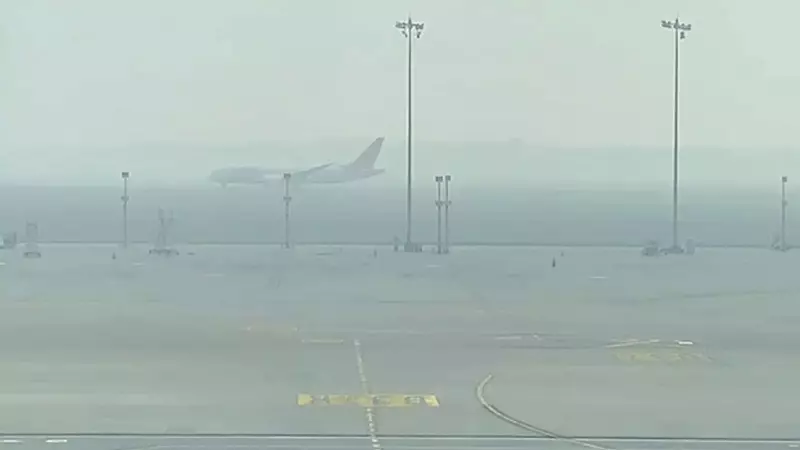
Flight operations across North India, particularly at Delhi's Indira Gandhi International Airport, have been severely disrupted for consecutive days due to dense fog and critically poor visibility. Despite marginal improvements, authorities warn that the disruptions are likely to persist, affecting thousands of passengers during the peak winter travel season.
Airlines and Airport Scramble Amid Zero Visibility
The Delhi airport issued a fresh advisory early on Tuesday, December 16, 2025, stating that while operations were steadily recovering, disruptions could continue for both departures and arrivals. The advisory, released at 6:06 AM, urged passengers to contact their airlines directly for the most accurate updates and confirmed that support personnel were deployed across terminals to assist affected travelers.
According to meteorological data, the situation was dire in the early hours. Safdarjung airport recorded a visibility of zero metres between 1:30 AM and 2:30 AM on December 15, with conditions remaining severely poor until 8:30 AM. Visibility improved to only 400 metres by 10:00 AM. At Palam, the visibility dropped to a low of 50 metres from 6 AM to 9 AM IST. While general visibility improved to 800 metres on Tuesday per the Delhi Automatic Message Switching System (AMSS), it remained below safe operational thresholds for many flights.

Airline Responses and Cascading Network Impact
Major Indian carriers have been forced to cancel and delay a significant number of flights, leading to widespread passenger inconvenience. Air India cited the dense fog as the primary cause, which led to severe air traffic congestion and parking bay constraints at Delhi Airport. The airline acknowledged a cascading, network-wide impact on its schedule and stated its teams were working to provide rebookings or full refunds to passengers on cancelled flights.
IndiGo Airlines, already grappling with operational cancellations, advised passengers that early morning fog in Northern India could slow flight movements. The airline assured flyers that its teams were monitoring conditions and making adjustments on the ground to minimize discomfort. They strongly recommended passengers check their flight status online before heading to the airport.
Other carriers like Akasa Air and SpiceJet also reported significant impacts across their networks, especially for flights operating in North India and Uttar Pradesh, due to the adverse weather conditions.
CAT-3 Systems and Passenger Frustration
The prolonged disruptions have sparked frustration among passengers, with many taking to social media to question why flights were being cancelled despite Delhi airport being equipped with Category III (CAT-3) Instrument Landing Systems (ILS). This advanced technology allows qualified pilots and aircraft to land in extremely low visibility conditions.
However, the presence of CAT-3 infrastructure does not guarantee uninterrupted operations. Its effectiveness depends on several factors, including whether the specific aircraft and flight crew are certified for such low-visibility operations. Notably, India has six CAT-3 enabled airports: Delhi, Lucknow, Jaipur, Amritsar, Bengaluru, and Kolkata. Regulations from the Directorate General of Civil Aviation (DGCA) mandate that operators ensure flight crews are qualified for the lowest applicable minima.
As winter tightens its grip, passengers flying in and out of North India are advised to check their flight status directly with their airline until weather conditions stabilize completely, as intermittent fog-related disruptions are expected to continue.