India is a land of incredible diversity, where every region carves out a unique identity. From the snow-capped Himalayas to the golden sands of Rajasthan, the country never ceases to amaze. Some cities are etched in history for their empires, others for trade, but one city's essence flows directly from its dramatic landscape, earning it a majestic nickname.
The Land Where Water Plunges: Ranchi's Natural Identity
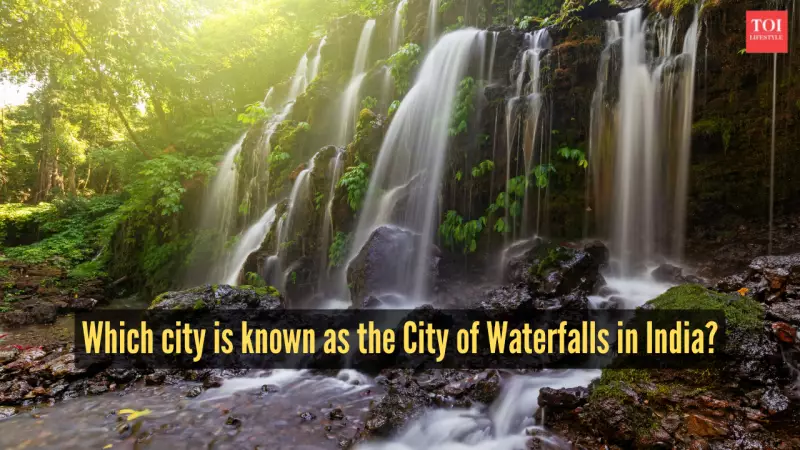
This city's identity literally rises and falls with the land itself. Nestled in lush greenery, it is defined by rivers that don't merely flow—they cascade and plunge. Streams vanish into dense forests only to re-emerge as thunderous waterfalls, a spectacle that becomes particularly vibrant when the monsoon clouds gather. For locals, waterfalls are not distant tourist spots but familiar landmarks of daily life. Visitors quickly learn that the sight and sound of falling water is not a rarity here; it is woven into the very fabric of the place.
The clues point clearly: it is the capital of a mineral-rich state, perched on the ancient Chota Nagpur Plateau. This massive rock formation was shaped by the same tectonic forces that created the Himalayas. The plateau's rugged terrain and rivers cutting through rock layers create the perfect recipe for waterfalls to form repeatedly. The answer is Ranchi, officially celebrated as India's City of Waterfalls.

Geography, Climate, and the Foundation of Industry
Surrounded by hills and dense tropical forests, Ranchi sits at an elevation of approximately 641 metres above sea level. This altitude grants it a milder climate compared to much of eastern India. Interestingly, its Kanke area lies on the Tropic of Cancer, contributing to its overall subtropical climate.
The city's topology is profound. The countless waterfalls in and around Ranchi, fed by the Subarnarekha and Kanchi rivers, vary in size and temperament. Hundru Falls, one of the state's tallest, makes a breathtaking plunge from a height of about 322 feet. During the monsoon, Dassam Falls transforms, splitting into multiple roaring channels. Geologically, many of these are classic "nick points," where rivers encounter harder rock, forcing the water into sharp, dramatic drops.
The iron-rich, earthy red soil is a telltale sign of the mineral wealth that lies beneath. This bounty helped lay the foundation for India's steel and heavy engineering sectors. The surrounding Sal and Teak forests, both wild and plantation-grown, act as natural carbon sinks, helping Ranchi enjoy cleaner air than many other Indian state capitals.
Layers of History and Modern Growth
Ranchi's story extends far beyond its natural beauty. As one of Jharkhand's oldest cities, it has been shaped by deep-rooted tribal traditions, princely rule, and colonial history. Monuments like the Jagannath Temple and Ratu Palace offer glimpses into its storied past. The British, appreciating its temperate climate and wooded vistas, established Ranchi as a summer capital.
Today, the city is rapidly evolving. Its industrial hubs, including the Heavy Engineering Corporation, once earned it the title "Manchester of the East." New parks, economic zones, and residential areas underscore its ongoing progress. Yet, amidst this modern development, the waterfalls have remained the unwavering core of its identity. They continue to attract tourists, fuel tourism development, and shape the city's natural rhythm.
In Ranchi, water is more than a scenic vision. It is a force that intertwines history, geography, and modern identity, forging the unique character of India's unforgettable City of Waterfalls.