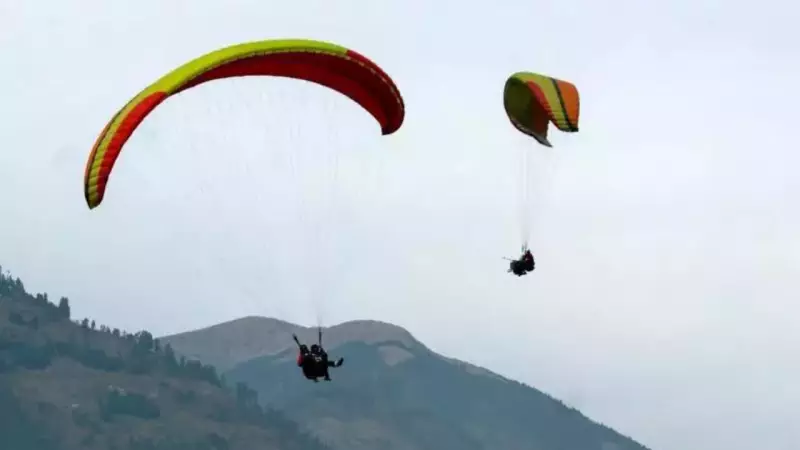
The breathtaking hills of Himachal Pradesh, long celebrated as a paradise for adventure seekers, are now shadowed by a grim reality. A disturbing series of fatal paragliding accidents throughout 2025 has exposed critical gaps in safety regulations and governmental oversight, turning moments of thrill into tragedy for tourists and experienced pilots from across India and the globe.
A Trail of Tragedy: Fatal Incidents Across Key Destinations
The year 2025 witnessed a harrowing sequence of accidents at Himachal's most popular paragliding sites. The causes were varied, ranging from loss of control after take-off and mid-air collisions to equipment failure. These incidents were not limited to novice tourists on tandem rides but also claimed the lives of seasoned solo pilots, highlighting systemic risks.
In December 2025, Ritu Chopra (56), an accomplished solo paraglider from Noida and wife of a retired IAF officer, died after her glider crashed minutes after take-off from the world-renowned Bir-Billing hills in Kangra. The local paragliding association confirmed her expertise, attributing the risk to the region's difficult terrain and erratic winds.

Just months earlier, in October 2025, the state saw multiple fatalities. Megan Elizabeth Roberts (27), a Canadian paraglider on a solo flight from Bir-Billing, crashed into the Dhauladhar ranges. Her body was recovered from an altitude of 13,000 feet. Around the same time, a Belgian paraglider died in a mid-air collision at Bir-Billing after his reserve parachute failed to open, an incident that occurred days before the Paragliding World Cup. Another foreign national, Andy (51) from Australia, was luckily rescued after 20 hours following a crash near Manali's Seven Sisters Peak.
The danger extended to domestic tourists as well. In July 2025, Satish (25) from Ahmedabad, Gujarat, died after a tandem crash during take-off from an unapproved site near Dharamshala. The pilot sustained serious injuries. January 2025 was particularly deadly, with two tourists losing their lives in separate tandem crashes within two days in Kullu and Kangra districts. The victims included Jayesh (28) from Tamil Nadu and Bhaveshawar Khushi (19) from Gujarat. Earlier that month, Mahesh Reddy (32) from Telangana died in an accident in Raison village near Manali.
Root Causes: Pilot Error, Lax Oversight, and Risky Operations
Experts and local associations point to a confluence of factors behind the recurring disasters:
- Pilot Error and Inadequate Training: Suresh Thakur, founder of the Billing Paragliding Association, stated that in most crashes, tandem pilots are at fault, yet they often face no consequential action.
- Operation at Unapproved Sites and Unsuitable Times: Many accidents, like the one involving the tourist from Gujarat, occurred at locations not sanctioned by the district administration. Flights often continued near sunset or during adverse weather changes.
- Weak Regulatory Enforcement: Despite authorities registering cases and ordering inquiries, there is a glaring lack of consistent monitoring and enforcement of safety protocols. Vinay Dhiman, Deputy Director (Tourism) for Kangra, admitted that accidents increase when pilots venture into high-risk zones with little knowledge of local topography and wind conditions.
- Challenging Rescue Operations: The remote and rugged terrain of Himachal significantly delays rescue efforts, as seen in the Australian pilot's 20-hour ordeal, reducing chances of survival in critical situations.
Official Response and the Path to Safer Skies
In the wake of these incidents, authorities have announced several measures. Tourism officials say they are documenting thermal currents in the Bir-Billing area with expert help to better understand flight risks. Proposals are underway to install special towers in high-altitude zones to pinpoint crash sites quickly. Paragliders have been directed to register, adhere to designated routes, and avoid flying over military areas. Operators using unapproved sites face potential license suspension.

However, the gap between announcement and enforcement remains wide. The repeated tragedies—affecting eager tourists and veteran pilots—underscore an urgent need for a robust regulatory framework. This includes strict site approvals, mandatory and verified pilot training, real-time weather monitoring, and enforceable accountability for operators who flout rules.
Himachal Pradesh's reputation as a premier adventure destination is at stake. Without stricter oversight, genuine accountability, and enhanced emergency preparedness, the thrilling dream of flying over its majestic hills will continue to be marred by preventable loss of life. The state must ensure that the spirit of adventure does not come at an unacceptable human cost.