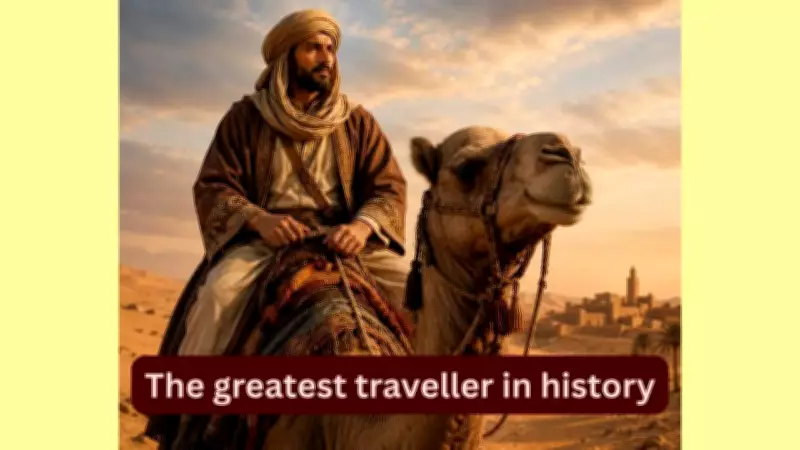
Ibn Battuta, celebrated as history's greatest traveler, was born in 1304 in Tangier, Morocco. Over his lifetime, he journeyed nearly 75,000 miles (approximately 120,700 kilometers) across Africa, Asia, the Middle East, and parts of Europe. Among the many reflections from his travels, one quote remains profoundly relevant: "Traveling gives you home in a thousand strange places, then leaves you a stranger in your own land."
The Poetic Contradiction of Travel
At first glance, the quote appears poetic yet contradictory. How can travel turn unfamiliar places into home while simultaneously alienating one from their homeland? Yet, any avid traveler understands the raw emotion behind these words. Travel possesses an extraordinary ability to dissolve boundaries, creating emotional ties across continents.
Finding Home in Strange Places
The first part of the quote, "Traveling gives you home in a thousand strange places," highlights how travel makes the world feel less strange. A tea seller in India remembers your regular order, a Sherpa in Nepal shares stories over noodles, or a local family in Bhutan invites you for dinner. Gradually, these strangers and places become home. Home transcends a single address, becoming a feeling rooted in comfort and human connection.

Modern Relevance: Digital Nomads
This idea resonates strongly with modern digital nomads who work from Bali cafés, Indian homestays, or European beaches. As people travel more, they realize that kindness, curiosity, and shared experiences are universal. A crowded market in Singapore might remind someone of Janpath in Delhi, while the rhythm of coastal life in Greece feels familiar to a traveler from Goa.
The Transformative Power of Travel
Travel teaches adaptability. Navigating foreign train systems, conversing with locals, and savoring regional food quickly become second nature. Travelers create emotional homes everywhere—not literally, but as spaces where they feel welcomed without judgment.
The Second Half: Stranger in Your Own Land
The quote's second part, "then leaves you a stranger in your own land," reveals a deeper truth. Travel changes people internally, not externally. This often manifests as "reverse culture shock." After experiencing diverse cultures, familiar streets feel smaller and conversations revolve around routines, leading to disconnection. A person who has witnessed sunrise over the Thar Desert or trekked the Himalayas returns with a different understanding of the world, time, and belonging. Home remains important but no longer feels like the center of the universe.
Empathy and Spiritual Transformation
This shift is not inherently negative. Travel fosters empathy by forcing travelers to step outside their assumptions. Sharing meals with strangers in rural villages abroad often heightens awareness of privilege and inequality. For some, transformation begins with a single journey—a pilgrimage in the mountains may reshape spiritual understanding, or a short trip to a wildlife sanctuary can alter one's worldview.
Ibn Battuta's Extraordinary Journeys
Ibn Battuta traveled for over 30 years, meeting kings, queens, scholars, traders, and ordinary people from vastly different cultures. By the time he returned to Morocco, he was no longer the same man. His remarkable achievements include:
- Hajj Pilgrimages (1326)
- Exploration of East Africa (1328–1330)
- Service as Qadi in Delhi and the Maldives (1334–1346)
- Ambassador to China (1345–1346)
- Documenting the Muslim World in The Rihla (1325–1354)
He recorded his journeys in A Gift to Those Who Contemplate the Wonders of Cities and the Marvels of Travelling, also known as The Rihla. Battuta returned as an evolved person, and that is the everlasting beauty of his quote. It reminds us that travel is not merely about moving between destinations—it is a journey of transformation.