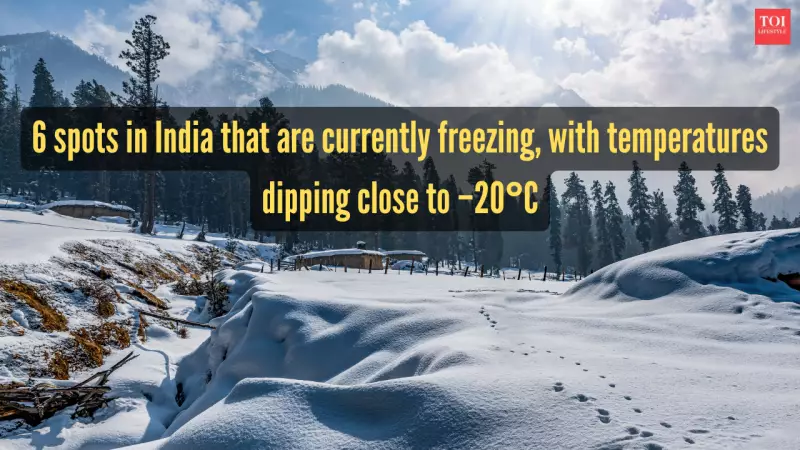
As of early January 2026, a severe winter spell has descended upon India's Himalayan belt, pushing temperatures in several high-altitude destinations into double-digit sub-zero territory. While much of the nation grapples with chilly mornings and cold waves, these elevated regions are experiencing some of the most extreme cold conditions found in inhabited parts of the country. The combination of high elevation, rugged terrain, and long winter nights has created a deep freeze, with mercury levels plummeting close to a bone-chilling -20 degrees Celsius.
Plunging into the Deep Freeze: A Region-by-Region Look
The cold is not uniform but particularly acute in specific valleys and towns. Here are six locations currently reeling under the intense cold, with temperatures recorded around January 5, 2026.
Kargil, Ladakh: Battling -16°C

Located approximately 234 kilometres west of Leh, Kargil is no stranger to harsh winters. The town is currently enduring temperatures around -16°C. Its geographical setting, surrounded by mountains that trap cold air, results in extremely severe winter conditions. The persistent cold leads to prolonged snow cover, frozen roads, and blocked water sources, dramatically slowing down daily life and work.
Spiti Valley, Himachal Pradesh: A -17°C Cold Desert
The high-altitude cold desert of Spiti Valley experiences a winter season that can last up to six months. The thin air at this considerable altitude loses heat rapidly after sunset. A temperature of -17°C has been recorded, which is common during the peak winter months. Many villages in the valley remain cut off due to snow-blocked roads and frozen landscapes.
Leh, Ladakh: Capital in a Deep Chill at -11°C
The capital of Ladakh has seen temperatures dive to -11°C. Winters here are characterised by dry but intense cold. Clear skies facilitate significant radiative heat loss at night, and even daytime sunshine offers little respite. The deep freeze results in water pipes, lakes, and streams remaining frozen solid for weeks on end.
Life in the Extreme Cold
Dras, Ladakh: Nearing -20°C
Often cited as one of the coldest inhabited places in India, Dras is living up to its reputation with temperatures hovering close to -20°C. Situated in a narrow valley, the town receives scant sunlight during winter, allowing frigid air to settle for days. These conditions strain infrastructure and make ordinary daily life a formidable challenge.
Nubra Valley, Ladakh: Exposed to -15°C
Despite being at a lower elevation than Leh, the Nubra Valley is also suffering under intense cold, with temperatures around -15°C. Its desert-like terrain and exposure contribute to plummeting nighttime temperatures. The winter scene here is a stark mix of frozen rivers, sand dunes, and villages blanketed in snow.
Gulmarg, Jammu & Kashmir: A Milder but Icy -3°C
A popular winter tourism destination, Gulmarg is experiencing Arctic-like conditions, though its -3°C is milder compared to the other locations. The town is firmly below freezing, with heavy snowfall transforming it into an icy wonderland. Meadows and walking trails are frozen solid under the winter chill.
The ongoing cold wave in these regions underscores the extreme climatic conditions faced by communities in India's high-altitude areas. The sub-zero temperatures, often dipping close to -20°C, disrupt transportation, water supply, and daily routines, highlighting the resilience required to inhabit these breathtaking yet challenging landscapes.