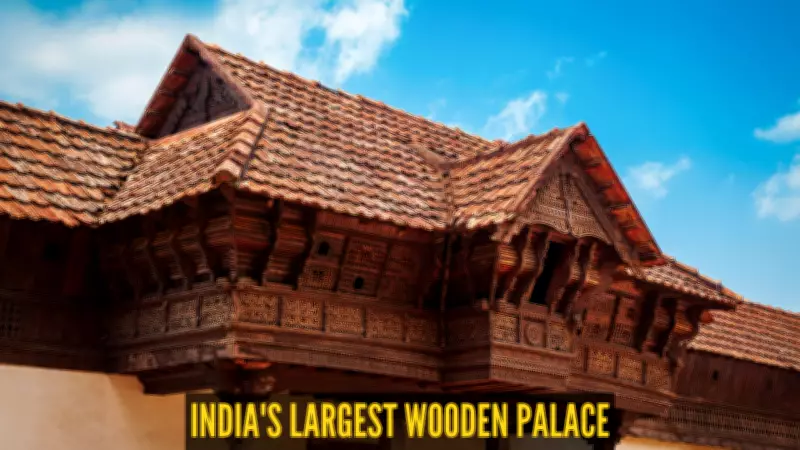
Hidden near the southern tip of India, far from typical tourist routes, lies a breathtaking royal residence that feels frozen in time. Padmanabhapuram Palace, with its secret underground passages, 400-year-old murals, and intricately carved wooden ceilings, offers an incredible glimpse into South India's regal history. Although located in Tamil Nadu's Kanyakumari district, it is maintained by the Kerala government and holds the title of India's largest surviving wooden palace complex.
A Palace with a Royal Legacy
The palace's story began in 1601 as the seat of the Venad kingdom. It expanded over centuries, reaching its peak under Maharaja Marthanda Varma, who transformed Travancore into a southern powerhouse. In 1750, he dedicated his realm to Lord Padmanabha, renaming the capital Padmanabhapuram, meaning 'the abode of Lord Padmanabha.' It remained the cultural and administrative heart until the capital moved to Thiruvananthapuram in 1795. Today, it operates as a vibrant museum showcasing art, royal traditions, and architectural brilliance.
What Makes This Palace Special
Unlike India's grand stone monuments, Padmanabhapuram is a masterclass in timber engineering. Designed before modern air conditioning, it naturally combats the intense heat of the deep south. The estate feels like a labyrinth of interconnected pavilions, courtyards, and draughty corridors. Ceilings feature dozens of floral motifs, doorways are lavishly decorated, and rosewood pillars are flawlessly carved. The legendary glossy black floors remain a puzzle: centuries later, they still gleam like mirrors. Historians believe craftsmen used a mixture of charcoal, lime, burnt coconut shells, and plant saps, but the exact recipe remains a mystery.

Highlights Travellers Should Not Miss
The Queen Mother's Palace (Thai Kottaram)
This is the oldest part of the property, centered around a classic courtyard with exquisite woodwork and delicate carvings. It also features a hidden underground tunnel once used as an emergency escape route for royals.
The King's Council Chamber (Mantrasala)
One of the most stunning spaces, where the monarch met advisors. Intricately slotted wooden windows let in fresh breezes while blocking the sun, keeping the chamber naturally cool.
The Grand Dining Hall (Valiya Oottupura)
This massive hall reflects the wealth and generosity of the Travancore kings, who fed thousands of guests during major occasions.
The Ancient Clock Tower
Near the main entrance, this centuries-old mechanical timepiece still works today, ranking as one of the site's most fascinating quirks.
Nearby Attractions
- Udayagiri Fort: A historic fort showcasing Maharaja Marthanda Varma's military might.
- Mathur Aqueduct: One of Asia's longest trough bridges, a marvel of engineering.
- Suchindram Temple: Renowned for musical stone pillars and stunning carvings.
Many travellers continue to Kanyakumari to witness the meeting point of the Indian Ocean, Bay of Bengal, and Arabian Sea.
How to Reach Padmanabhapuram Palace
The palace is located near Thuckalay in Kanyakumari district.
- By air: Thiruvananthapuram International Airport, about 55–70 km away.
- By rail: Nagercoil Junction, approximately 20 km from the palace.
- By road: Taxis and regular buses from Thiruvananthapuram, Kanyakumari, or Nagercoil are readily available.
Best Time to Visit
October to March offers pleasant weather. Arriving early morning allows you to explore before the heat intensifies. Note that footwear must be removed before entering to preserve the ancient floors and wooden structures.