

India's Rarest State Birds: Where to Spot These Elusive Species
India's state birds serve as more than just symbolic emblems; they are living reflections of the nation's delicate and increasingly fragile ecosystems. While not all are officially classified as endangered species, many are becoming alarmingly rare within their natural environments. These avian treasures are now confined to shrinking spaces, remote wilderness areas, or highly specific ecological zones that are often difficult to access.
From the high-altitude wetlands of Ladakh to the dense Northeastern forests and rugged Himalayan terrain, spotting these birds presents a formidable challenge. Their rarity stems not only from declining populations but also from their elusive nature and preference for hard-to-reach habitats. This comprehensive guide compiles India's rarest state birds in the truest sense—species that are either endangered or exceptionally difficult to observe in the wild.
Great Indian Bustard: Rajasthan's Majestic Symbol
No bird better represents India's conservation crisis than the Great Indian Bustard. Once a common sight across India's arid grasslands, this majestic creature now survives only in scattered locations, with Rajasthan serving as its final stronghold. The species faces severe threats from habitat destruction and, more recently, fatal collisions with overhead power lines—currently the greatest danger to its survival.

Your best chance to witness this magnificent bird lies within the vast expanses of the Desert National Park. Disturbingly, reports indicate that fewer than ten individuals remain in the wild. Recent captive breeding initiatives have shown some promising results, offering a glimmer of hope for this critically endangered species.
White-winged Wood Duck: Assam's Forest Dweller
Unlike typical ducks, the White-winged Wood Duck shuns open wetlands, preferring instead the seclusion of forest pools hidden beneath dense rainforest canopies. This behavior makes it one of India's most challenging waterbirds to observe. Its dependence on undisturbed forest habitats has rendered it extremely vulnerable to deforestation pressures.
For those determined to spot this elusive bird, the lowland rainforests of Dehing Patkai National Park or the remote wilderness of Namdapha National Park offer the most promising opportunities.
Blyth's Tragopan: Nagaland's Mythical Treasure
Blyth's Tragopan can only be described as mythical in its scarcity, inhabiting the high-altitude forests of Northeast India. Once hunted to the brink of extinction, dedicated conservation efforts have helped maintain small populations in specific protected areas. Among the few remaining sanctuaries for this rare bird is the Khonoma Nature Conservation and Tragopan Sanctuary.
Western Tragopan: Himachal's Rare Pheasant
Considered among the world's rarest pheasants, the Western Tragopan survives in isolated pockets of temperate forests within the western Himalayas. With low population numbers and remote, inaccessible habitats, this bird presents a formidable challenge even for experienced birdwatchers.
The temperate forests of the Great Himalayan National Park serve as crucial habitats for this species. Birders often spend days hoping for a brief glimpse, understanding that sightings depend entirely on favorable circumstances.
Mrs Hume's Pheasant: Beauty of Mizoram and Manipur
This strikingly beautiful pheasant, distinguished by its long tail and subtle plumage, inhabits the forested hills of Northeast India. Constant threats from habitat degradation and hunting have significantly diminished its population. Occasional sightings occur in parts of Mizoram and near Manipur's Keibul Lamjao National Park.
The bird's sporadic appearances and largely unexplored territory contribute to its mysterious aura among birding enthusiasts.
Black-necked Crane: Ladakh's High-Altitude Specialist
Ladakh adopted the Black-necked Crane as its state bird in September 2021. Unlike other crane species, this bird breeds at high altitudes, making it one of India's most restricted-range avian species. Its small, sensitive population faces particular vulnerability from infrastructure development and water system changes in the cold desert landscape.

The only realistic location to observe this bird is in and around Tso Moriri Lake in the Changthang region, and even this opportunity is seasonal, limited primarily to breeding periods.
Himalayan Monal: Uttarakhand's Colorful Gem
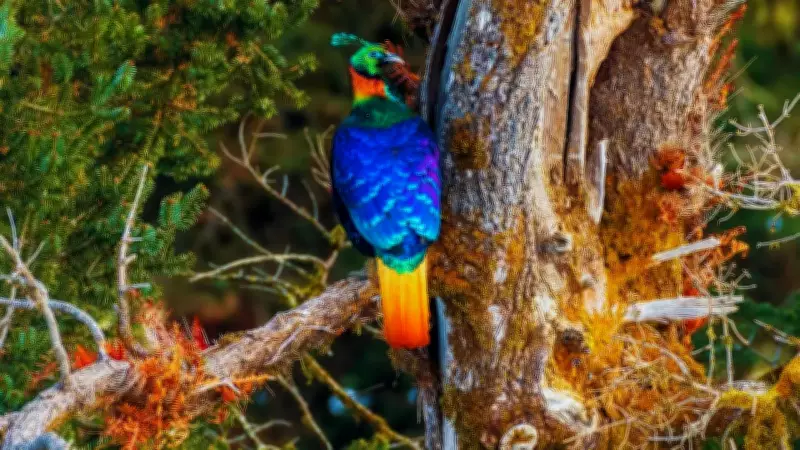
While celebrated as one of the Himalayas' most beautiful birds, spotting a Himalayan Monal in the wild remains remarkably difficult. Historical hunting pressures combined with alpine habitat loss have made sightings less common than the bird's popularity might suggest.
Potential observation areas include the high reaches of Kedarnath Wildlife Sanctuary or alpine meadows around Chopta. However, success is never guaranteed, as these birds are particular about their habitats and are most likely spotted early morning on steep slopes with minimal human disturbance.
India's state birds represent not only regional pride but also urgent conservation priorities. Their increasing rarity highlights the pressing need for habitat protection and sustainable wildlife management practices across the nation's diverse ecosystems.





