Iran-Israel Conflict Triggers Global Travel Chaos, Hyderabad Passengers Bear Brunt
The escalating military tensions between Iran and Israel are now rippling far beyond West Asia, severely disrupting international air travel and causing a dramatic spike in airfares for passengers departing from Hyderabad. Airlines are scrambling to reroute flights and reduce services through affected airspace, leading to unprecedented fare hikes and widespread cancellations that have left thousands of travelers in limbo.
Steep Fare Increases for European and US Destinations
Passengers flying from Hyderabad to key European hubs like London and Frankfurt are facing exorbitant ticket prices. On a recent Tuesday, one-way fares from Hyderabad to London surged to between Rs 65,000 and Rs 90,000, nearly double the typical cost for this route. The situation is even more severe for flights to Germany, where travel agents reported fare increases of 200% to 300% compared to regular prices.
Long-haul routes to the United States have also become significantly more expensive. For instance, flights from Hyderabad to New York via Addis Ababa, Ethiopia, were priced at approximately Rs 1.5 lakh on the same day. This sharp rise is primarily driven by a sudden influx of passengers shifting to alternative transit hubs, as numerous West Asia routes remain disrupted due to temporary airspace closures, operational suspensions, and extensive flight rerouting.

Severe Disruption to UAE-Hyderabad Connectivity
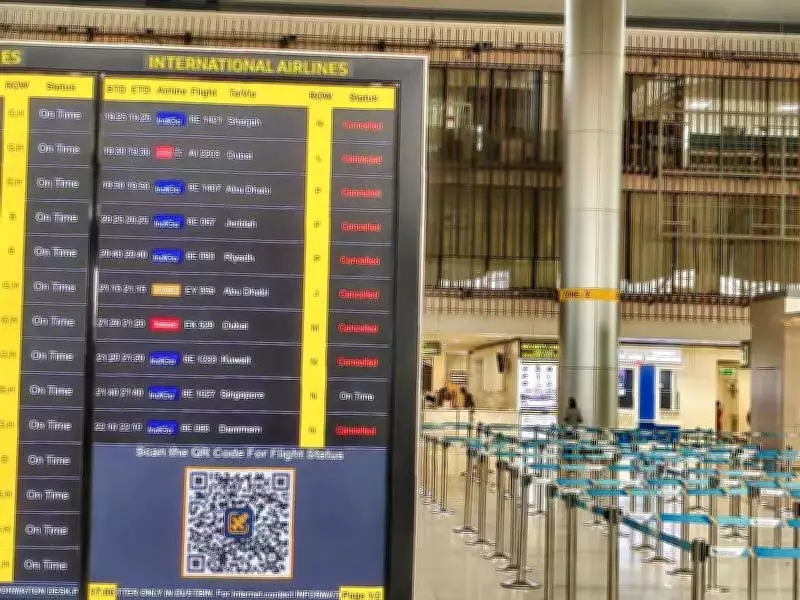
The air connectivity between the United Arab Emirates and Hyderabad has been particularly hard hit, creating uncertainty for thousands of passengers. Hyderabad, which typically sees an average of 5,000 daily passengers traveling to and from the UAE—its busiest international hub—is now grappling with severe operational challenges. Flights scheduled for the coming days remain under a cloud, with airlines issuing last-minute cancellations and travel advisories.
On Monday alone, more than 50 flights were cancelled at Rajiv Gandhi International Airport in Hyderabad, exacerbating the travel chaos. Passengers have expressed mounting anxiety over sudden cancellations and the difficulty of reaching airline customer care for assistance.
Passenger Frustrations and Airline Responses
Travelers like Shariq Siddiqui took to social media to voice their concerns, stating, "I have my flight from Hyderabad to Dubai on March 3. The flight status shows it as cancelled. I tried calling the airline multiple times, but the lines were busy. Kindly reschedule my booking." Similarly, R Suresh, a Hyderabad-based passenger, reported that his Dubai–Hyderabad booking for March 3 was cancelled despite the airline's website indicating the flight was operational, prompting him to ask Emirates on social media, "What are the options?"
In response to the crisis, airlines have issued advisories outlining their contingency plans. IndiGo announced an extension of the temporary suspension of select international flights operating through parts of the Middle Eastern airspace. A spokesperson for Air India detailed their adjustments, stating, "All flights to North America and Europe will operate per schedule using alternative routings over available airspaces in the Middle East, which is expected to add to the flying times. Additionally, flights to New York (JFK) and Newark (Liberty International) will operate with technical stops at Rome (Fiumicino Airport)."
Broader Implications and Ongoing Challenges
The conflict-induced disruptions are not only leading to higher ticket prices but also resulting in longer travel durations as airlines navigate alternative routes. The situation underscores the vulnerability of global aviation networks to geopolitical tensions, with Hyderabad emerging as a significant hotspot for travel woes due to its heavy reliance on Middle Eastern transit hubs.
As the Iran-Israel conflict continues to unfold, travelers are advised to stay updated with airline notifications and expect further fluctuations in fares and schedules. The ongoing uncertainty highlights the need for robust contingency planning in the aviation sector to mitigate such widespread impacts on international travel.