The Mysterious Singing Dunes of Kazakhstan
Deep within the vast Central Asian desert landscape lies one of the planet's most intriguing acoustic mysteries: the legendary Singing Dunes of Kazakhstan. These remarkable natural formations have captivated explorers, scientists, and adventurous travelers for centuries with their deep, resonant humming and booming sounds that echo across the desert plains.
A Geological Marvel in Altyn-Emel National Park
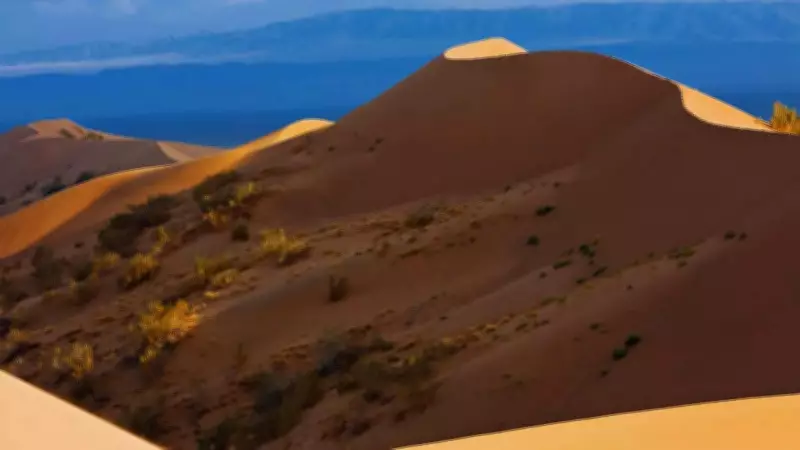
The famous Singing Dune stands prominently within Kazakhstan's expansive Altyn-Emel National Park, a protected area renowned for its diverse desert ecosystems, unique geological formations, and abundant wildlife. This extraordinary dune rises dramatically to approximately 150 meters in height and stretches an impressive 3 kilometers in length along the desert landscape near the Ili River.
What makes this geological formation truly exceptional is its remarkable acoustic behavior. When sand particles begin sliding down the dune's steep slopes, they create a distinctive humming vibration that has earned the site its poetic name. Local residents often refer to this natural wonder as "Singing Barkhan" - with barkhan describing its characteristic crescent shape typical of desert dunes.

The Science Behind the Desert's Song
For decades, researchers have been fascinated by the precise conditions that trigger this acoustic phenomenon. Scientific investigation has revealed that the singing occurs only when several specific requirements are met simultaneously:
- The sand must be completely dry, without any moisture content
- The sand grains need to be smooth and relatively uniform in size
- A substantial quantity of sand must be moving down the dune's slope
The resulting sound, often compared to a distant airplane engine or a massive musical instrument, emerges from vibrations created as countless sand particles rub against each other during their descent. Interestingly, the dune doesn't produce its signature sound continuously - the phenomenon typically occurs during periods of strong winds or when visitors intentionally slide down the slopes.
A Unique Destination for Adventurous Travelers
The Singing Dune has evolved into one of Altyn-Emel National Park's primary attractions, drawing visitors seeking both natural beauty and scientific curiosity. Adventurous travelers frequently undertake the challenging climb to the dune's summit, where they're rewarded with breathtaking panoramic views of the surrounding desert and distant mountain ranges.
The experience becomes truly magical when descending the steep slopes triggers the dune's famous acoustic performance, offering visitors the rare opportunity to hear the desert literally "sing" beneath their feet. The combination of the dune's golden coloration, imposing height, and mysterious sonic behavior creates one of Central Asia's most memorable natural landscapes.
Geographical Context and Environmental Significance
This acoustic wonder exists within a desert ecosystem connected to the broader Gobi Desert region of Central Asia. While the main Gobi Desert spans Mongolia and northern China, similar arid environments extend into southeastern Kazakhstan, where the Singing Dune has found its unique voice.
The surrounding wilderness enhances the experience, with the stark beauty of the desert creating a surreal atmosphere that feels both ancient and timeless. Despite scientific explanations for the physics behind the phenomenon, the Singing Dune maintains its enchanting quality as one of nature's most fascinating curiosities.
For visitors journeying to Kazakhstan's remote regions, the Singing Dune represents more than just a geological formation - it's a place where basic natural elements like sand and wind collaborate to create something truly extraordinary, reminding us that our planet still holds wonderful mysteries waiting to be experienced.