Kuwait is embarking on a landmark journey into environmental and scientific tourism with the launch of its first-ever geological park. This ambitious public project, set to open its doors at the end of December 2025, is designed to be a comprehensive centre for education, research, and sustainable eco-tourism. Spearheaded by the Kuwait Oil Company (KOC), the initiative marks a significant national effort to diversify the economy and promote environmental stewardship.
What Will Kuwait's GeoPark Offer to Visitors?
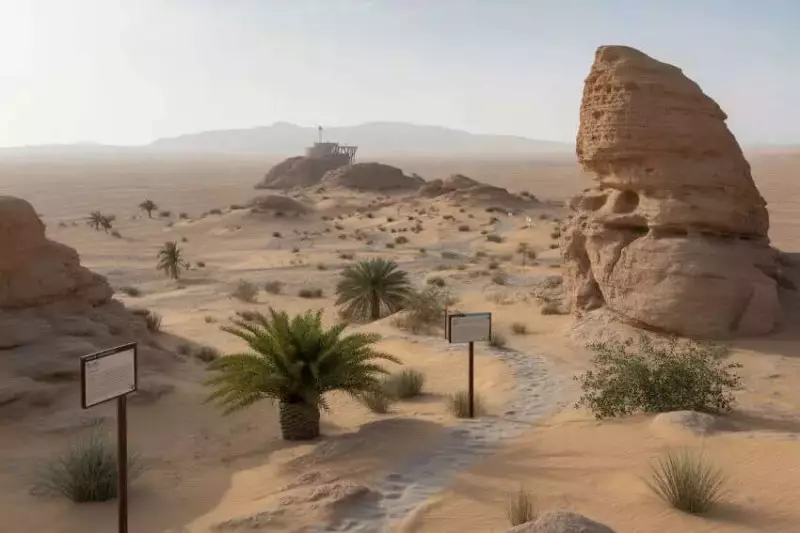
The Kuwait Geological Park is conceived as a vast open-air laboratory, offering a unique window into millions of years of Earth's history. Visitors will be taken on an interactive journey through the nation's natural heritage. The park will feature diverse rock formations, significant fossil sites, and detailed interpretive panels that narrate the geological evolution of the region.
A key highlight will be a massive geological timeline wall, illustrating the country's entire geological history from ancient eras to the present day. For a hands-on experience, an Interactive Mineral Garden will allow guests to touch and explore various native minerals. The park will also host educational trails, guided nature walks, and specialised workshops focused on earth sciences.

Among the natural wonders on display will be spectacular sand injectite formations—striking red geological structures that scientists note bear a strong resemblance to the Martian landscape. The site's importance extends beyond geology, preserving Neolithic archaeological sites dating back over 10,000 years, including traces of the ancient Ubaid civilization. It also holds historical value as the location of Kuwait's first oil exploration well, Bahra-1, drilled in 1936.
Strategic Vision and UNESCO Ambition
The GeoPark is a strategic pillar of Kuwait's long-term national development plan, aligning directly with the New Kuwait 2035 Vision to foster sustainable growth and economic diversification. The project's ultimate ambition is to secure a place in the prestigious UNESCO Global Geoparks Network (GGN), which recognises areas of international geological significance that balance conservation, education, and sustainable development.
The development will roll out in two distinct phases:
- Phase 1 (Rapid Plan): This initial stage will develop an accessible 20 square kilometer area to serve as the immediate public attraction and educational hub.
- Phase 2 (Long-Term Expansion): This ambitious phase will expand the park's total footprint to a massive 1,000 square kilometers. It will include major ecological restoration efforts, such as greening desert areas and planting over 300 native plant species, including ghaf and acacia trees.
A New Chapter for Science and Tourism
Dr. Mubarak Al-Hajri, Chairman of the Kuwait Society for Earth Sciences, emphasised the project's significance. He stated that the park will crucially contribute to sustainable development while preserving the nation's geological and cultural heritage. It is poised to become a vital resource for promoting scientific research and inspiring a new generation of environmental stewards.
Strategically located with a proposed pilot site in the Al-Subbiya area and a main location north of Kuwait Bay, the park will be less than an hour's drive from Kuwait City, ensuring easy access. While final details on ticket prices and operating hours are pending and will be announced closer to the opening, the GeoPark is already generating significant anticipation. It promises to be a premier destination that seamlessly blends science, conservation, and gentle eco-tourism, offering an accessible outdoor space for both learning and leisure.