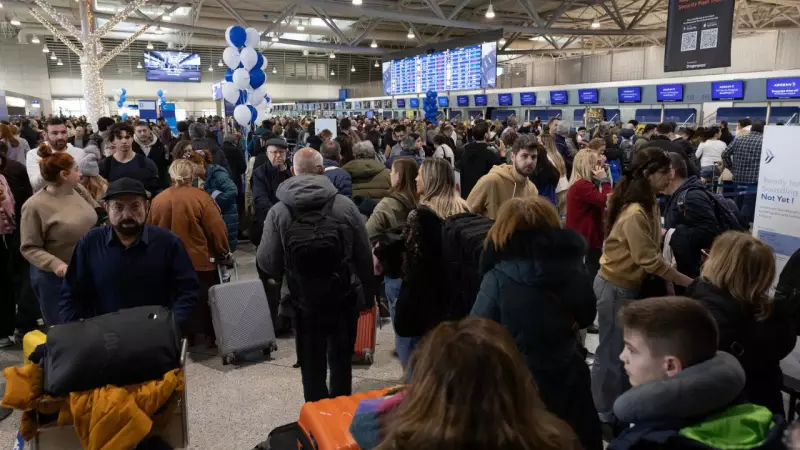
A major technical failure in Greece's air traffic control system plunged the country's aviation sector into chaos on Sunday, leaving thousands of travellers stranded at airports. The incident, described as "very serious" by officials, was caused by a sudden and unexplained loss of all radio frequencies, forcing a complete halt to flight operations for hours.
System Collapse Grounds Nationwide Air Travel
The crisis began around 0700 GMT (12:30 PM IST) when central radio frequency systems at the Athens and Macedonia area control centres collapsed. This critical failure meant air traffic controllers lost all communication with aircraft in the sky. "No plane landed or took off for at least two hours," confirmed the press office at Athens International Airport in a statement quoted by AFP.
Panagiotis Psarros, the chair of the Association of Greek Air Traffic Controllers, explained the severity to state broadcaster ERT. "For some reason all frequencies were suddenly lost … We could not communicate with aircraft in the sky." He pointed directly at ageing infrastructure, calling the airport equipment "obsolete" and "virtually ancient." Psarros revealed that controllers had raised concerns about the outdated systems multiple times in the past.

Widespread Disruption and Safety Measures
The disruption escalated rapidly, with Greece's civil aviation authority imposing immediate restrictions on airport operations for safety reasons. While some overflights across Greek and regional airspace were still handled, take-offs and landings were severely impacted.
A Transport Ministry official told Reuters that a limited number of aircraft heading north and east were later allowed to depart. However, the damage was already done. More than 75 flights were delayed, with dozens more cancelled, creating a domino effect of travel misery. The Athens Air Traffic Control Centre, the country's largest such facility which oversees the vast Athens Flight Information Region, was at the heart of the failure.
International Ripple Effects and Official Response
The closure of Greek airspace had immediate international consequences. In Israel, the Airports Authority spokesperson announced that Greek airspace was closed until 4 p.m. local time (1400 GMT), warning travellers to expect significant delays for both arrivals and departures.
As of Sunday, there was no immediate clarity on the root cause of the technical meltdown. The incident highlights critical vulnerabilities in national aviation infrastructure and raises urgent questions about modernization and investment in essential safety systems. For weary passengers stuck at terminals, the episode served as an unwelcome reminder of how reliant global travel is on ageing technology.