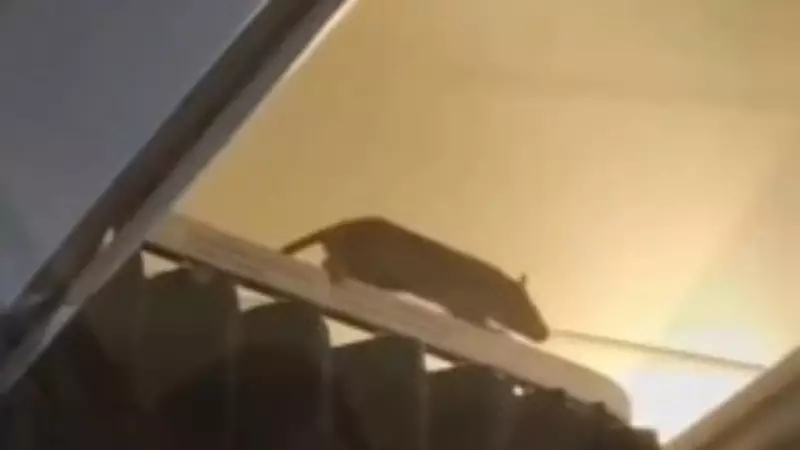
In an unusual turn of events, a single rodent caused major travel chaos for hundreds of passengers, leading to the cancellation of a long-haul KLM Royal Dutch Airlines flight. The incident, which highlights the unpredictable challenges of aviation safety, unfolded on a scheduled journey from Amsterdam to the Caribbean.
Flight Grounded Mid-Journey
The disruption began on December 10 aboard a KLM Airbus A330 aircraft. The plane was operating a multi-leg route, slated to fly from Amsterdam in the Netherlands to Aruba, before continuing on to Bonaire. However, the schedule was thrown into disarray when crew members discovered an unexpected stowaway: a large rat.
The rodent was first spotted while the aircraft was over the ocean, en route to Aruba. With limited options mid-flight, the pilot made the decision to continue to the scheduled destination. Upon landing in Aruba, the aircraft was immediately taken out of service. More than 250 passengers, who were either waiting to travel to Bonaire or to return to Amsterdam, were informed that their flight had been cancelled.

Airline's Response and Passenger Calm
A spokesperson for KLM addressed the situation, calling it a "very exceptional incident." The airline emphasized that "the safety and wellbeing of our passengers and crew are always our top priority." This principle led to the decisive action of cancelling the onward flight from Aruba via Bonaire to Amsterdam. The plane needed to undergo a thorough cleaning and inspection before it could be deemed safe for service again.
Remarkably, passengers remained calm throughout the ordeal. The airline staff managed the situation carefully, keeping a close watch on the animal's movements. The rat was seen crawling across a curtain rail and jumping onto overhead bins. Fortunately, the spokesperson confirmed that "the animal also didn't come near the food" stored onboard, mitigating one health concern.
Broader Implications for Air Travel
This incident underscores the rigorous safety protocols airlines must follow, even when faced with unconventional threats. Rodents on aircraft are taken extremely seriously due to the potential risk they pose to critical wiring and systems, not to mention public health concerns. The grounding and deep cleaning process, while inconvenient for travellers, is a mandatory procedure to ensure all risks are eliminated.
For the affected passengers, the discovery meant significant travel delays and the hassle of rebooking. The event serves as a reminder of the complex logistics of international air travel, where even the smallest intruder can have outsized consequences, grounding multi-million dollar aircraft and disrupting the plans of hundreds.