The ambitious redevelopment of Uttarakhand's iconic Beatles Ashram, a cornerstone of the state's tourism plans, has hit a major roadblock. A critical slope stability issue flagged by consultants has drawn a sharp response from the state government, raising concerns over visitor safety and project delays.
A Critical Oversight in Planning
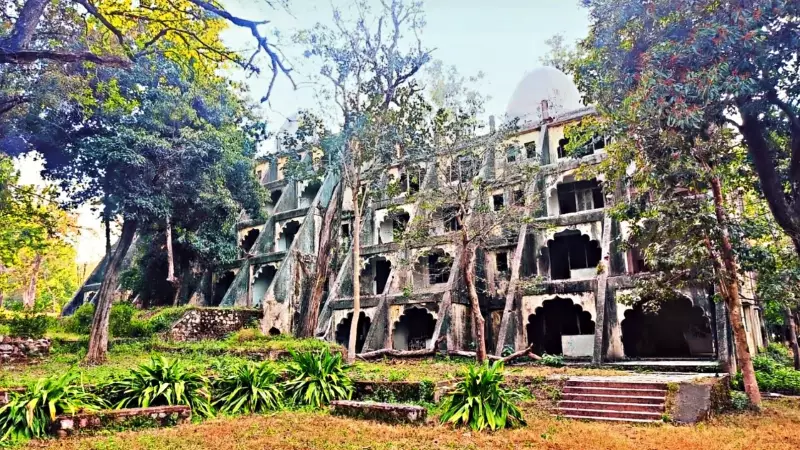
The controversy centers on the Rs 100 crore project to revamp the Chaurasi Kutiya Swargashram, famously known as the Beatles Ashram, located within the core area of the Rajaji Tiger Reserve. The consultancy firm, HCP Design, Planning, and Management, which was appointed for the project, wrote to the Public Works Department (PWD) on November 25. In its communication, HCP highlighted significant "slope sliding" adjacent to an existing pathway.
The firm's inspection revealed that river flow from below and rainwater runoff from above were causing erosion, putting the entire area at risk of progressive failure. It urgently recommended permanent slope protection, warning that further delay could put nearby pathways and structures in serious jeopardy. The letter was supported by photographic evidence of the landslides.

Government's Sharp Rebuttal
The PWD's response on December 3 was unequivocal. In a letter, the department expressed deep concern that such a vital aspect was overlooked during the initial planning and Detailed Project Report (DPR) preparation stages. It stated that a proposal to address land slippage should have been prepared by the consultancy team from the outset, as it was integral to the original scope.
Emphasizing the high priority of visitor safety, the PWD directed HCP to immediately conduct a detailed assessment of the affected slope and prepare a comprehensive mitigation proposal. This work is now to be incorporated into the external development plans. Praveen Kush, Executive Engineer with the PWD, confirmed that the consultancy firm has been tasked with studying and addressing the slope instability.
Project Context and Broader Implications
The Beatles Ashram holds immense historical value, having hosted George Harrison, Ringo Starr, Paul McCartney, and John Lennon in 1968 when it was the abode of Maharishi Mahesh Yogi. The current project aims to revitalize the complex, which has nearly 25 buildings, with 12 slated for renovation.
The selection of HCP itself had earlier drawn scrutiny. The tourism department had justified the single-source procurement by citing the firm's expertise, evidenced by projects like the Kashi Vishwanath Corridor and Central Vista redevelopment. However, the finance department had flagged the choice and stressed the need for forest department approvals and rate reasonableness.
Adding another layer of complexity, the site is adjacent to the Ganga and lies within a sensitive ecological zone. The Standing Committee of the National Board for Wildlife, while granting conditional approval in September, had explicitly directed that damage to local flora and fauna must be averted and that forest land use must be strictly limited to the proposal's specifications.
When contacted, HCP clarified that its scope is limited to architectural interventions, and that engineering matters like slope stabilization are being discussed with the PWD and specialized engineering experts. The unfolding situation underscores the challenges of executing large-scale heritage and eco-tourism projects in fragile Himalayan environments, where oversight of geological risks is paramount.