

Strangest Discoveries in the World and Where to Go See Them
The world is an endlessly fascinating place, brimming with sites that challenge our grasp of history, nature, and human ingenuity. Beyond the well-trodden tourist paths and picturesque landscapes lies a realm of travel defined by unexpected, even bizarre, scientific and historical finds. These discoveries continue to perplex experts and ignite curiosity, with many accessible for modern explorers to witness firsthand.
The Nazca Lines in Peru
Carved into the arid desert plains of southern Peru, the Nazca Lines stand as one of history's most enigmatic archaeological wonders. Created by the Nazca civilization between 500 BCE and 500 CE, these massive geoglyphs depict animals, plants, and geometric patterns, some stretching over 300 meters. Their sheer scale and visibility primarily from the air have spawned countless theories about their purpose and construction, yet no definitive explanation exists. Visitors can experience these mysteries by taking a small aircraft flight from Nazca or viewing them from observation towers along the Pan-American Highway.
Göbekli Tepe in Turkey
Dating back to around 9600 BCE, Göbekli Tepe is recognized as the world's oldest known temple, predating Stonehenge by approximately 5,000 years. Discovered in the 20th century but only recently appreciated, this site features large stones arranged in circular formations, intricately carved with animal shapes. What makes Göbekli Tepe truly strange is its timeline: it was built by hunter-gatherers before the advent of agriculture, contradicting previous beliefs that organized religion and monumental architecture emerged afterward. Located near Şanlıurfa, it is open for public exploration.

The Moai Statues of Easter Island in Chile
On the remote island of Rapa Nui, the iconic Moai statues tower as monumental stone figures crafted by early inhabitants between 1250 and 1500 CE. Some stand over 10 meters tall and weigh up to 80 tonnes, representing ancestral figures with profound cultural significance. The methods used to transport and erect these massive statues, involving ropes and innovative techniques, remain a subject of ongoing study. Travelers can reach Easter Island via flights from Santiago to marvel at these enigmatic creations.
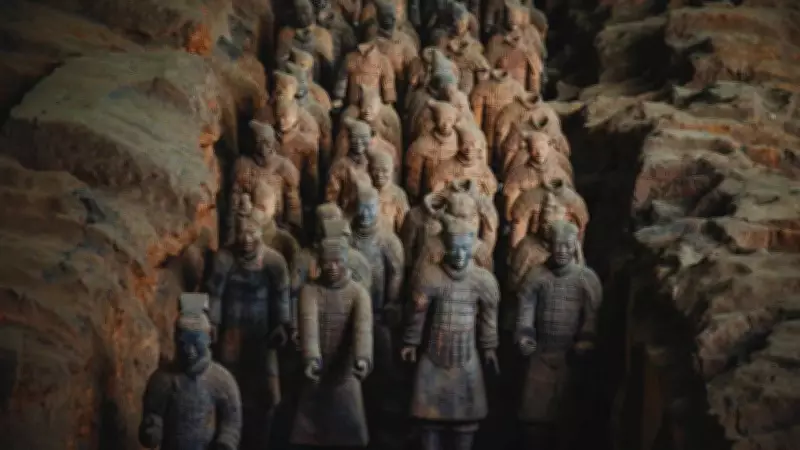
The Terracotta Army in China
Unearthed in 1974 by local farmers, the Terracotta Army is hailed as one of the 20th century's most astounding archaeological finds. This life-sized army of terracotta soldiers was buried near the tomb of China's first emperor, Qin Shi Huang, with each figure boasting unique facial features, hairstyles, and expressions. The sheer number of soldiers, horses, and chariots showcases unparalleled craftsmanship and organizational skill. Situated in Xi'an, the site draws countless tourists eager to witness this historical marvel.
The Antikythera Mechanism in Greece
Discovered in a shipwreck off the Greek island of Antikythera, the Antikythera Mechanism is believed to have originated between 100 BCE and 100 CE. Often dubbed the world's first computer, this ancient device is remarkable for its complexity, with no comparable technology appearing for over a millennium. Its purpose, likely related to astronomical calculations, continues to intrigue scholars. The original mechanism is housed in Athens' National Archaeological Museum, where visitors can ponder its mysteries.
Derinkuyu Underground City in Turkey
Beneath the Cappadocia region lies Derinkuyu Underground City, an expansive subterranean complex capable of sheltering up to 20,000 people. Excavated deep into soft volcanic rock, it includes living quarters, storage areas, ventilation tunnels, and even worship spaces. While its origins are unclear, it served as a refuge during invasions in the Byzantine era. The city's scale and complexity make it one of Earth's most unusual sights, now open for exploration with visitors descending multiple levels into its labyrinthine tunnels.






