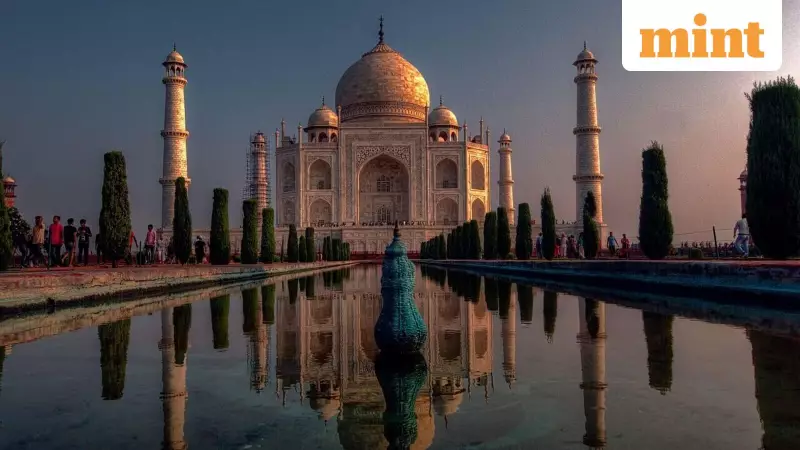
Thousands of visitors who travel to Agra, Uttar Pradesh, daily with the hope of witnessing the majestic Taj Mahal were met with an unexpected sight recently: a vast, empty wall of white. The iconic monument, one of the Seven Wonders of the World and a timeless symbol of love built by Mughal Emperor Shah Jahan for his wife Mumtaz Mahal, was completely obscured by a dense blanket of fog.
A View of Nothingness at the Taj View Point
The northern parts of India are currently experiencing an intense cold wave, accompanied by thick fog that has severely reduced visibility. This weather phenomenon reached the historic city of Agra, shrouding the white marble mausoleum entirely. From the popular Taj View Point, which typically offers the best panoramic view of the structure, tourists could see nothing but a solid, impenetrable grey-white haze.
Visibility dropped to such an extreme level that even the faint outline of the monument was barely perceptible. Instead of the breathtaking architectural marvel, people were left staring at what many described as a wall of "nothing." The experience was a significant letdown for domestic and international travelers who had made long journeys specifically to see the UNESCO World Heritage Site.

Internet Erupts with Memes and 'Nature's VFX'
The bizarre visual of the 'disappearing' Taj Mahal quickly captured the imagination of the internet, turning into a major meme fest across social media platforms. Netizens humorously commented on the situation, attributing the vanishing act to impressive special effects by nature itself.
One social media user wittily remarked that it looked like "nature's VFX" at play. Another popular post stated, "North India winter doing VFX on a Wonder of the World." The user elaborated that from the viewpoint, the Taj Mahal had "literally vanished into a white wall," leaving a crowd of bewildered tourists facing an empty space where the grand monument should have been.
Weather Woes Disrupt Travel Plans
This incident highlights how extreme weather conditions can disrupt tourism and travel plans in the region. The dense fog and cold wave are common in North Indian winters but this season's intensity has led to unprecedented visibility issues, affecting not just sightseeing but also transportation.
While the Taj Mahal itself remains perfectly intact, hidden behind the fog, the event serves as a reminder of nature's power to alter even the most predictable of scenes. Authorities and tour operators often advise visitors to check weather forecasts during the winter months, but the complete disappearance of such a massive structure remains a rare and surreal occurrence.
For now, the memory of the invisible Taj Mahal lives on not in photo albums, but in the countless creative memes and online discussions it sparked, proving that even when hidden, the monument continues to captivate the world's attention.