Tourist Fatalities Escalate at Kerala's Coastal Hotspots
As summer vacation brings thousands of visitors to coastal destinations, two of Thiruvananthapuram district's most popular seaside locations—Varkala and Azhimala—are experiencing a disturbing surge in fatal accidents. Authorities are finding it increasingly difficult to meet safety demands as tourist numbers swell.
Recent Tragedies Highlight Growing Dangers
Recent incidents have starkly illuminated the perils facing visitors. At Azhimala, a 45-year-old man lost his life after falling into the sea while attempting to take a selfie from a rocky outcrop. This incident underscores the escalating trend of reckless behavior among tourists seeking dramatic photographs.
At Varkala, a 19-year-old tourist from Odisha drowned earlier this month after being caught in powerful undercurrents. In a separate tragedy last week, a visitor from Tamil Nadu died after falling from a cliff near the helipad area. These are not isolated occurrences but part of a worrying pattern.

Alarming Statistics Reveal Persistent Threat
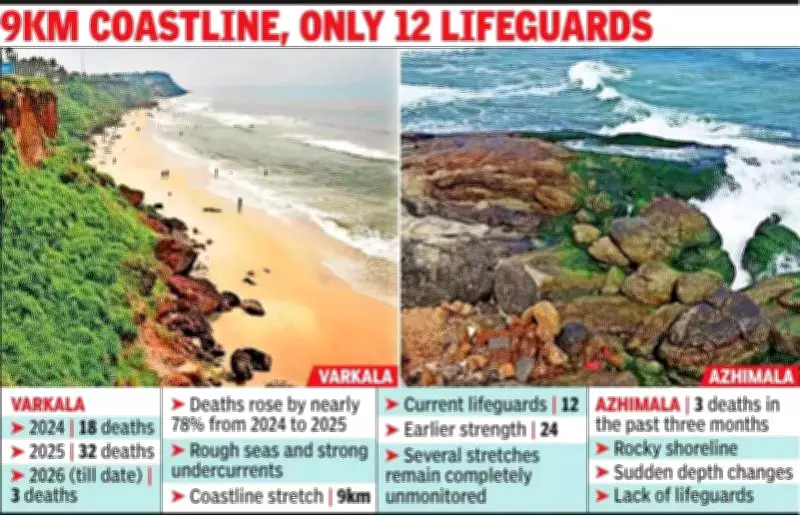
According to the Varkala Tourism Development Association (VTDA), 32 deaths were reported across beaches in and around Varkala in 2025 alone. Already this year, three more fatalities have been recorded. Police data indicates that at least 18 lives were lost in 2024 due to rough seas and powerful undercurrents.
Police officials note that many victims are tourists from other states who are unfamiliar with the unpredictable sea conditions along Kerala's coastline. Strong currents, sudden waves, and sharp drop-offs make several stretches of the 9-kilometer coastline from Kappil to Aliyirakkam particularly hazardous.
Tourist Behavior Compounds Natural Dangers
Despite repeated warnings, visitors frequently enter prohibited areas or disregard rough sea alerts. The rising trend of taking selfies on cliffs and rocks has introduced another layer of risk, even as authorities warn that Varkala's cliffs are prone to erosion and potential collapse.
"Domestic tourists are increasingly ignoring rough sea warnings. Three deaths have been reported this year alone, including one from a cliff fall," said Sanjay Sahadevan, patron of the Varkala Tourism Development Association.
Critical Shortage of Lifeguards and Safety Infrastructure
A primary factor behind the rising death toll is the severe shortage of lifeguards. Currently, only 12 lifeguards are deployed across Varkala, against a required minimum strength of 18. Previously, approximately 24 personnel were stationed along the coast, but this number has been halved over recent years due to budget constraints.
This shortage has left several coastal stretches unguarded, forcing limited staff to monitor large crowds spread across multiple locations simultaneously. Basic safety infrastructure remains woefully inadequate, with many areas lacking proper warning signboards, barriers, watchtowers, and adequate lighting.
Lifeguards have repeatedly flagged the absence of modern rescue equipment, which significantly hampers emergency response capabilities during critical situations.
Local Authorities Begin Response Measures
At Azhimala, local authorities have initiated corrective actions following three deaths in the past three months. The Kottukal panchayat plans to convene a multi-departmental meeting to address safety concerns. Proposed measures include establishing additional police aid posts near rocky areas and installing more warning boards.
"Azhimala has also become a major spiritual destination. Over 200 people visit the Siva temple daily. A permanent safety mechanism is essential," emphasized panchayat vice-president Punnakulam Binu.
Comprehensive Safety Plan Under Development
A tourism department official confirmed that a comprehensive safety plan is being finalized. This plan will cover additional lifeguard deployment, increased patrols, and clearer signage to prevent tourists from entering hazardous zones along Kerala's popular coastline.
The situation highlights the urgent need for enhanced safety protocols at tourist destinations experiencing high visitor volumes, particularly during peak seasons when natural hazards combine with human factors to create potentially deadly scenarios.