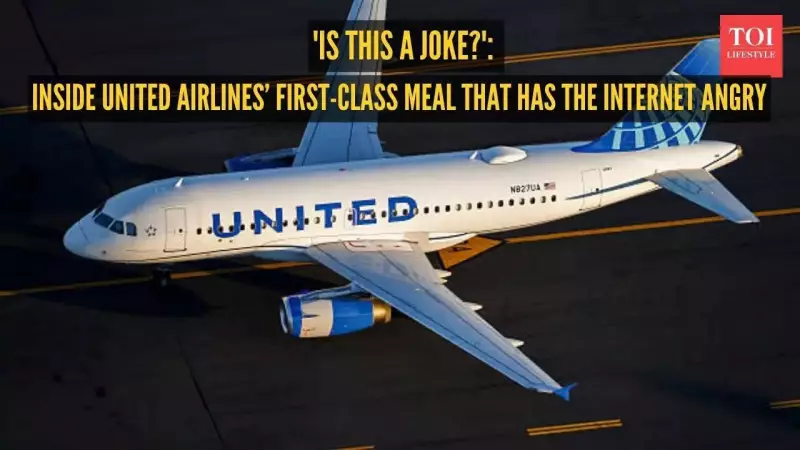
The promise of first-class air travel, often painted as the ultimate luxurious experience, has been severely tarnished by a recent viral social media post. The incident involves a prominent Google scientist and a shockingly underwhelming meal served on a major US carrier, United Airlines, sparking widespread debate about the real value of premium cabin tickets.
A 'Bowl of Sadness' at 30,000 Feet
On January 4, 2026, Peyman Milanfar, a distinguished scientist at Google, took to the social media platform X to share his dining experience. He had just completed a flight of over five hours in United Airlines' first class. Instead of the gourmet meal one might expect, he was presented with what he described as a "bowl of sadness."
The now-viral photograph showed a plastic tray containing assorted salad greens, cubes of cheese and processed meat, pumpkin seeds, and a whole, uncut tomato. Milanfar's caption expressed his disbelief: "Hey @united is this a joke? I just flew 5+ hours in First Class and this bowl of sadness is what you serve me for dinner." He further criticized the "3D-printed mystery meat" and "cafeteria cheese cubes," humorously noting that the tomato "needed a chainsaw" to cut.

Internet Erupts with Disappointment and Alternatives
The post quickly captured the internet's attention, amassing a staggering 9.1 million views and 31,000 likes. The comments section turned into a forum for shared frustration with modern air travel.
Many users echoed Milanfar's disappointment, with one creatively stating the meat looked "3D printed from despair and white erasers." Others shared their own negative experiences with United, like not receiving a meal due to not pre-ordering. The sentiment that first-class travel has lost its exclusive allure was strong, with one user lamenting, "First class used to feel special. Now it's just points, miles, and the right credit cards."
Several commenters actively suggested switching to competitors, with airlines like Delta being recommended for a superior experience. The collective reaction highlighted a growing consumer perception that the gap between premium and economy services is narrowing unacceptably.
Airline's Response and the Bigger Question
United Airlines did respond to the viral outcry. The airline's official account issued a public apology to Milanfar, stating, "We’re sorry the meal didn’t meet your expectations, Peyman. This is not the experience we want for you." They requested his confirmation number via direct message to investigate the incident further.
While the apology was a standard customer service move, it did little to quell the larger conversation ignited by the post. The incident forces potential travelers to reconsider the first-class dream. When a meal presented in the top cabin is comparable to a basic, pre-packaged snack, it raises serious questions about what passengers are truly paying a significant premium for beyond just a larger seat.
The viral episode serves as a potent reminder for airlines that in the age of social media, every aspect of service is under scrutiny. For consumers, it underscores the importance of managing expectations, as the marketed glamour of first-class travel may not always match the reality served on the tray table.