In the heart of India, there exists a city where the past is not a memory but a palpable, living presence. Varanasi, also known as Kashi or Banaras, stands as one of the world's oldest continuously inhabited cities, a place where the weight of millennia is felt in every narrow alley and on every step leading to the sacred Ganges. For about 2500 years, it has been the epicentre of India's religious and cultural consciousness, a living civilisation that refuses to be confined to history books.
The Unbroken Rhythm of Timeless Rituals
According to Indian mythology, Varanasi was built by Lord Shiva, and for devout Hindus, attaining salvation (moksha) by dying here is a profound belief that shapes the city's very essence. This conviction is not a relic but the driving force of daily life. From the pre-dawn chorus of temple bells and chanting priests to the last flicker of evening lamps, the city operates on a rhythm unchanged for centuries.
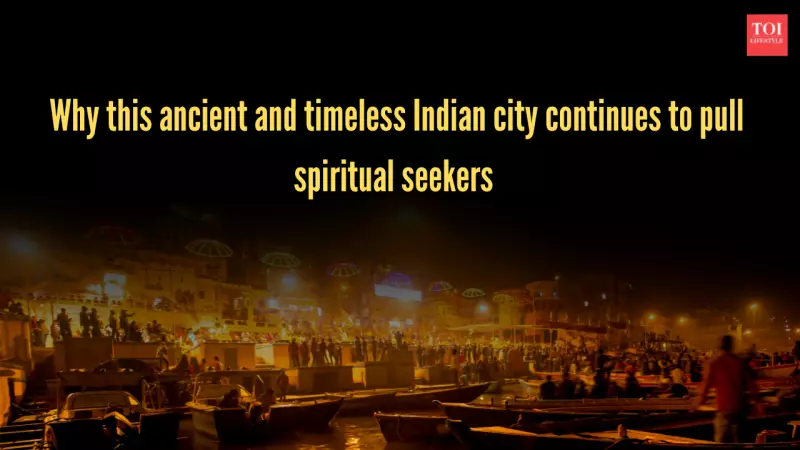
The ghats, the stone staircases lining the Ganga, are the stage for this eternal performance. Each day begins with thousands taking ritual baths in the holy river, their prayers mingling with the morning mist. Wooden boats drift peacefully beside ghats whose steps have been polished smooth by countless generations of pilgrims. The city doesn't replicate the past; it exists within it, offering a raw, unfiltered continuity that is increasingly rare in the modern world.

Beyond Pilgrimage: A Tapestry of Culture and Craft
While its spiritual magnetism is undeniable, Varanasi's soul is multi-faceted. It is a renowned centre of learning and the arts. The city is synonymous with the Banaras gharana of classical Indian music, having produced numerous legendary musicians and musicologists. Its labyrinthine lanes hide traditional workshops where master weavers create exquisite Banarasi silk saris using techniques passed down through family generations.
Today, travellers—both Indian and international—are returning as seekers, not just pilgrims. They are drawn by improved infrastructure, riverfront rejuvenation projects, and curated heritage walks that allow deeper dives into its textured history. Visitors now explore off-the-radar temples, historic districts, and the city's intellectual legacy, moving beyond mere checklist tourism.
The Raw, Transformational Truth of Life and Death
Perhaps what defines Varanasi most is its unflinching authenticity. Life and death coexist openly, most visibly at the Manikarnika and Harishchandra ghats, where cremation pyres burn 24 hours a day. This honest confrontation with mortality can be shocking, yet for many, it is the source of the city's transformative power.
There is no artificial divide here. Sacred prayers reverberate amidst the beeps of chaotic traffic; profound spirituality unfolds against a backdrop of everyday hustle. Despite modern investments, Varanasi has resisted becoming a sanitised spiritual retreat. It remains noisy, congested, and vibrantly alive. This very rawness is what compels people to return.
In an age of fast travel and fleeting experiences, Varanasi offers something precious: endurance. It invites you to slow down, absorb its contradictions, and witness a stream of faith, culture, and daily life that has flowed uninterrupted for over two millennia. Its power lies not in being trapped in time, but in having learned how to carry time within itself, making it eternally relevant for every new generation of seekers.