

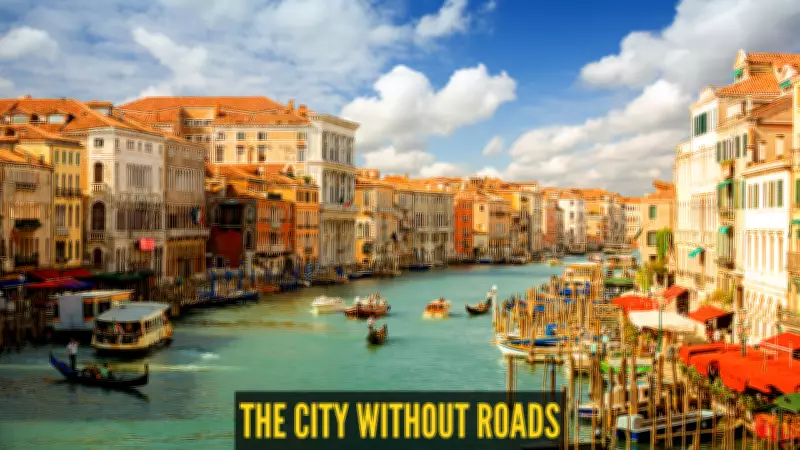
Imagine a city with no cars, buses, or traffic jams. Instead, boats glide along narrow canals, stone bridges arch over waterways, and pedestrians wander through tiny pathways. This is Venice, one of the most stunning places on Earth. Perched on a collection of islands in a sprawling lagoon along Italy's northeastern coastline, Venice has charmed travelers for centuries with its unique way of life. Known as the "Floating City," it is a rare place where water replaces roads, and boats serve as the primary mode of transport. Visiting Venice is not just a holiday—it is an opportunity to experience a lifestyle completely detached from modern norms.
A City Built on Water
Venice was founded over 1,500 years ago in the Venetian Lagoon of the Adriatic Sea. Generations of settlers built homes, cathedrals, and civic halls across more than 100 small islands, connecting them with hundreds of bridges. Unlike typical cities that expand with road networks, Venice grew entirely around its canals. Today, the historic center remains remarkably unchanged, preserving its medieval character and earning UNESCO World Heritage status.
Why Does Venice Have No Roads?
Venice's geography explains its lack of roads. The city developed on islands surrounded by marshy terrain and shallow waters. Building paved roads would have been a logistical nightmare, while natural waterways provided perfect transit routes. As the population grew, canals became the local streets. The most famous is the Grand Canal, a serpentine waterway that winds through the city's core. From it, countless smaller canals branch off, forming a complex web that functions like a road system. Cars, buses, and bicycles are absent from the historic center.

How Do People Move Around?
Without streets, navigation by water is essential. The vaporetto, Venice's public water bus, is the workhorse of transport. These boats travel along the Grand Canal and connect districts and nearby islands like Murano, Burano, and Lido. For most visitors, the vaporetto is the cheapest and easiest way to get around. Water taxis offer faster, private rides but at a higher cost. These speedboats can take passengers directly to canal-side hotels and attractions. The gondola, Venice's iconic boat, is now primarily for leisurely sightseeing rather than daily transport. Many locals and tourists also explore on foot. Venice is compact, and walking through narrow lanes, hidden courtyards, and bridges often reveals its true charm.
What Should Travelers Explore?
Venice itself is the main attraction, but several landmarks are unmissable. St. Mark's Square has been the city's social and political heart for centuries. The Grand Canal offers a spectacular introduction to Venice, flanked by historic palaces that showcase its former wealth and architectural flair. The famous Rialto Bridge, one of the oldest crossings, provides excellent views and is always bustling. Travelers should also consider visiting the nearby islands of Murano and Burano. Murano is world-renowned for its glassmaking traditions, while Burano is famous for its brightly colored houses and lace craftsmanship.
How to Reach Venice
From India, there are no direct flights to Venice. Most journeys involve a stopover in major European or Middle Eastern hubs such as Dubai, Doha, Frankfurt, Munich, Paris, or Zurich, before landing at Venice Marco Polo Airport. From the airport, the most budget-friendly option is a bus to Piazzale Roma, the gateway to the historic center. From there, visitors can take a vaporetto or walk. For a scenic arrival, a water bus from the airport across the lagoon offers stunning first views of the city.
Best Time to Visit
To see Venice at its best, visit in spring (April to June) or autumn (September to October). During these months, temperatures are pleasant, walking conditions are comfortable, and crowds are smaller than in peak summer. Summer brings long sunny days and cultural events but also massive crowds and high accommodation prices. Winter offers a quieter, atmospheric experience with misty canals and fewer tourists, though it can be chilly with occasional flooding.






