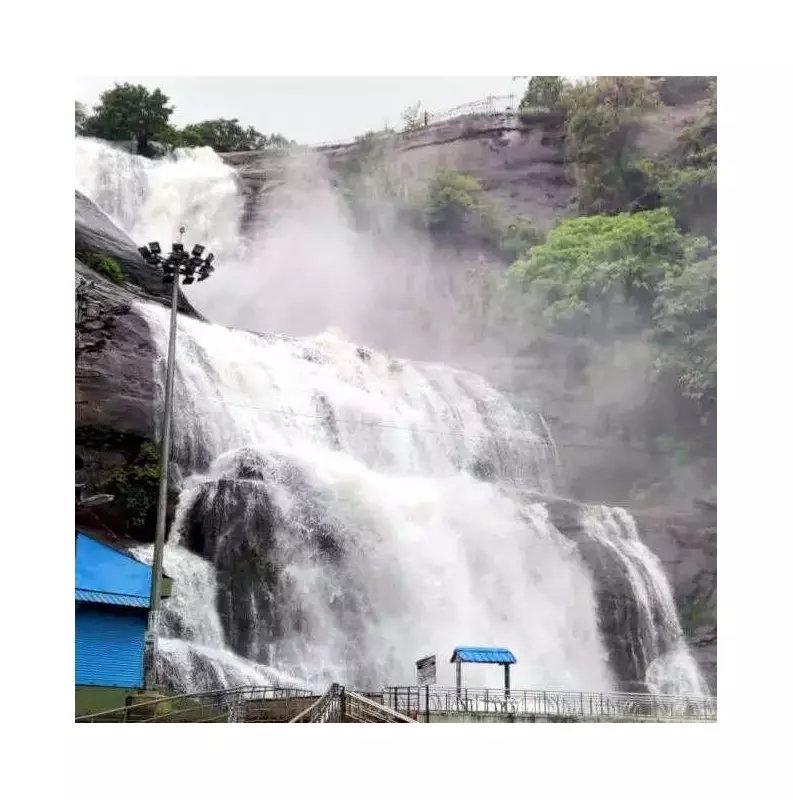
Forest authorities in Tamil Nadu have imposed an immediate ban on bathing at several popular waterfalls and river stretches. This decisive action comes in response to a significant increase in water flow, triggered by heavy rainfall in the Western Ghats region over the past days.
Rainfall Data and Rising Water Levels
The districts of Tenkasi and Tirunelveli have borne the brunt of the downpour. As of Friday morning, Tenkasi district recorded an average rainfall of 11 centimetres. The area near the Gadananathi dam received the highest downpour, measuring a substantial 23.9 centimetres. This intense rainfall has directly impacted reservoir levels.
The water level at the Gadananathi dam has risen sharply, reaching 78 feet against its total capacity of 84.3 feet. Other areas in Tenkasi, including Sivagiri and Tenkasi town, received 17 cm and 5 cm of rain respectively. Meanwhile, neighbouring Tirunelveli district recorded an average of 4.7 cm rainfall, with Cheranmahadevi receiving 10.4 cm and Ambasamudram getting 9.4 cm.

List of Restricted Tourist and Bathing Sites
In the interest of public safety, forest officials have moved swiftly to restrict access to dangerous water bodies. The following key locations are now off-limits for bathing and swimming:
- The main waterfalls in the famous hill station of Courtallam.
- The Manimuthar falls, another major tourist attraction.
- The Thalaiyanai forest area and the Nambi river stretch.
It is important to note that bathing at the old Courtallam falls has already been prohibited for the past three months. Additionally, officials have placed curbs on visiting the Nambi temple due to the hazardous conditions created by the increased water flow in the surrounding areas.
Safety First: Officials Urge Public Cooperation
The primary reason for these bans is the powerful and unpredictable currents generated by the sudden surge in water volume. Waterfalls and rivers that are usually calm can become deadly during such periods of heavy inflow from the catchment areas in the Western Ghats.
Forest department officials have emphasised that these restrictions are preventive measures to avoid potential drowning incidents and accidents. They have urged tourists and local residents to strictly adhere to the bans and not venture into the water at the designated spots. The situation is being monitored closely, and the restrictions will remain in force until water levels recede to safer limits.