AI Summit Traffic Curbs Prove Localized, Delhi Maintains Overall Smooth Flow
Following the inaugural day of the AI Summit, on-ground traffic analysis has revealed that the anticipated widespread disruptions were largely unfounded. The restrictions imposed were far more localized than initially projected, with the majority of Delhi experiencing relatively unhindered movement on what was the first working day of the week.
Day 1 Analysis: Controlled Impact
Authorities categorized approximately 51 roads under 'controlled' status and only two under 'restricted'. The significant traffic impact was predominantly confined to the immediate vicinity of the summit venue, Bharat Mandapam. This suggests a targeted and effective traffic management strategy for the high-profile event.
Key incidents from Day 1 included:

- Morning Hours (10:30 AM – 11:00 AM): A misconception that the expo was open to the public led to a large crowd gathering outside Bharat Mandapam, resulting in a traffic jam on adjacent roads.
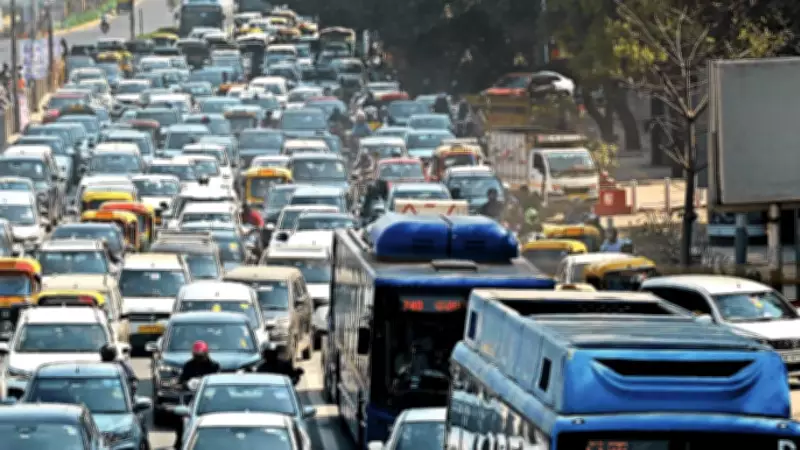
- Evening Hours (6:40 PM – 6:55 PM): Brief road closures for VIP movement caused temporary congestion. After reopening, traffic spillover was reported, with a major jam stretch observed between ITO and Bharat Mandapam. For example, a 2.2 km journey took approximately 33 minutes during this period.
- No further restrictions were implemented for the remainder of the evening.
Traffic Forecast for Upcoming Summit Days
Based on consultations with traffic officials, here is a detailed outlook for the subsequent days of the AI Summit:
Day 2 (February 17)
The AI Impact Expo opens to the general public. While no official road closures are planned, traffic is expected to slow near Bharat Mandapam and surrounding roads due to anticipated visitor crowds. Sources indicate that daytime restrictions are unlikely due to a projected lower turnout compared to the inaugural day.
Day 3 (February 18)
This day involves coordinated VIP movement to and from Bharat Mandapam from several major hotels. Travel planning is strongly advised. The hotels involved include The Imperial, Le Meridien, Taj Mahal Hotel, The Oberoi, The Ashok, ITC Maurya, Teen Murti Chowk, The Claridges, Taj Palace, The Leela Palace, Hyatt Regency, and AIIMS.
Expected Restriction Window: Evening, approximately 6:30 PM to 7:15 PM.
Traffic Management Plan:
- Some VIP convoys will utilize Teen Murti Chowk.
- Roads will be restricted sequentially, not simultaneously.
- Multiple diversions will be in place.
- General traffic should expect slow movement.
Important Closure: Mathura Road may be fully closed for about 30 minutes during the evening movement. Concurrently, Bhairon Marg towards ITO will be restricted but will remain open towards Delhi Zoo.
Overall, February 18th, a working day, will combine normal high office traffic with VIP movement, likely leading to extra congestion on specific arterial roads.
Day 5 (February 20)
No traffic restrictions are currently expected for this day of the summit.
Heavy Footfall and Queues Mark Summit's First Day
The AI Impact Summit 2026 commenced on Monday with heavy visitor traffic and long queues, signaling that attendees in the coming days should allocate extra time for entry and navigation within the expansive Bharat Mandapam complex. An unexpectedly high turnout contributed to congestion that began early in the morning.
The diverse crowd included school and college students, developers, and startup founders, all converging to experience the AI Impact Expo, which was inaugurated by the Prime Minister in the evening. While business professionals explored AI deployment partnerships, students sought affordable cloud service options.
Registered delegates, exhibitors, and officials faced delays, particularly during security checks for those carrying laptop bags and personal items, with wait times extending up to 45 minutes during peak hours. Volunteers were actively encouraging attendees to have laptops and devices ready for scanning to expedite the process.

Technology and Human Effort in Sync
The dedicated AI-powered DigiYatra entry system, utilizing facial recognition and QR code scans, functioned effectively for thousands of participants. However, the immense volume of footfall occasionally caused the system to slow or stall briefly, leading to minor backups at entry points. Volunteers equipped with handheld scanners intervened manually to clear delegates and maintain queue flow.
This blend of advanced technology and swift human intervention encapsulated the summit's ethos. A volunteer's lighthearted remark, "AI bhi thoda sochta hai" (Even AI thinks a little), as she waved a delegate through, elicited smiles and highlighted the collaborative spirit of the event.
With over 1.5 lakh participants registered and more than 20 heads of state expected, crowd sizes are projected to increase significantly from Tuesday onward, underscoring the importance of the traffic management measures already in place.