

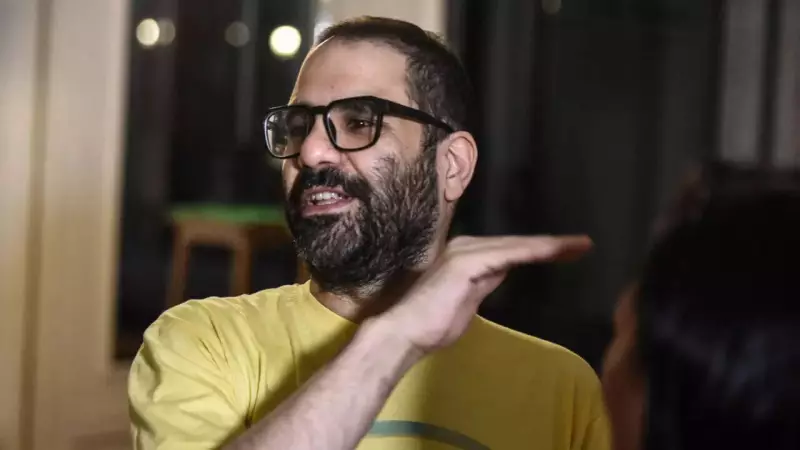
The story of Alaa Abd el-Fattah, long a global symbol of Egypt's suppressed democratic hopes, was supposed to conclude with his hard-won freedom. Instead, his arrival in the United Kingdom has opened a fresh and contentious chapter, shifting focus from Cairo's prisons to London's political and immigration systems.
From Arab Spring Icon to Political Prisoner
Alaa Abd el-Fattah first gained prominence in the mid-2000s as a pioneering Egyptian blogger and software developer. He used online platforms to courageously critique police brutality, military trials, and state authoritarianism, well before social media became a mainstream tool for dissent. His voice became central during the 2011 uprising that overthrew longtime president Hosni Mubarak.
However, the revolutionary spring turned into a long winter. Under successive regimes, and particularly after President Abdel Fattah el-Sisi assumed power, Abd el-Fattah faced relentless persecution. He was arrested multiple times, charged under protest and cybercrime laws, and handed lengthy prison sentences. By the late 2010s, he was internationally recognised as one of Egypt's most famous political prisoners.

International Campaign and the UK Citizenship Twist
Abd el-Fattah's case became a flagship cause for global human rights organisations like Amnesty International and several Western governments. His hunger strikes, including one during the COP27 climate summit hosted by Egypt in 2022, amplified worldwide pressure. The situation acquired a new dimension in 2021 when he obtained British citizenship through his mother, a UK-born woman.
This turned his detention into a direct consular issue for the UK. His sisters, Mona Seif and Sanaa Seif, led a sustained campaign in London, protesting outside Downing Street and the Foreign Office. UK politicians across parties pledged action. After years of diplomatic pressure, Abd el-Fattah was finally released and allowed to travel to Britain in late 2025.
Old Posts Resurface, Igniting a New Storm
What was anticipated as a moment of humanitarian victory quickly soured. Shortly after his arrival in the UK, old social media posts and interviews from the late 2000s and early 2010s resurfaced. These historical comments, made during periods of intense regional conflict, contained incendiary language regarding violence, Israel, and political opponents.
Critics immediately questioned why such material was not flagged during the mandatory vetting process for his British citizenship, granted in 2021. Supporters and his family argued that the remarks were over a decade old, made in a context of severe repression and war, and did not represent his later evolved positions. They contend this is a political effort to discredit him and his advocates.
The Core Debate: Citizenship, Security, and Sympathy
The controversy has squarely placed UK citizenship rules under the microscope. British law permits the government to revoke citizenship in specific circumstances, provided the individual is not made stateless. As a dual British-Egyptian national, Abd el-Fattah's status falls within this purview.
The UK government has admitted to lapses in the due diligence process during his citizenship application and initiated an internal review. The political opposition is questioning whether sympathy for his plight led to compromised security checks. The debate now transcends one man's story, probing how liberal democracies balance humanitarian advocacy with rigorous national security protocols.
Apology and a Broader Reckoning
Abd el-Fattah has since apologised for some of his past online statements, describing them as the product of a younger man shaped by anger, war, and repression. He acknowledged failing to consider how they would be perceived by a wider audience.

This episode highlights a recurring dilemma for the West. Political dissidents upheld as symbols of freedom often emerge from complex, violent environments. For years, Western governments framed Abd el-Fattah's case as a clear-cut narrative of a prisoner of conscience versus an authoritarian state. His presence in the UK forces a more uncomfortable reckoning, proving that solidarity does not erase history, and that the privilege of citizenship brings with it intense scrutiny alongside sympathy. This enduring tension between ideals and institutional responsibilities ensures his story remains headline news long after his prison door opened.





