

Army Takes Steps to Rename Cantonment Roads, Honors Indian Military Heroes
The Indian Army has recently initiated a commendable effort to rename several roads within cantonments and military stations, moving away from British military figures to honor Indian military personalities, including gallantry award winners. This step, though somewhat delayed, marks a positive shift in acknowledging India's own heroes and distancing from colonial associations.
Persistent Colonial Legacy: The Case of Hodson's Horse
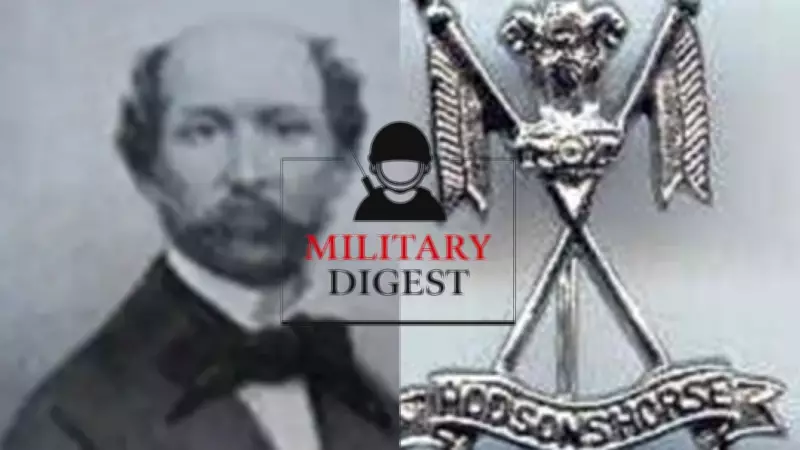
Despite these changes, a significant colonial legacy persists in the form of regimental associations. The 4th Horse, commonly known as Hodson's Horse, continues to bear the name of Major William Stephen Rakes Hodson on its cap badge and shoulder epaulettes. This is particularly contentious given Hodson's controversial history, which includes the murder of Mughal princes during the 1857 uprising.
Historical Efforts to Remove Hodson's Name
In the early 1980s, Lt Gen S K Sinha, then Vice Chief of Army Staff, raised the issue with Army Chief Gen K V Krishna Rao to remove Hodson's name from the regimental crest. Although approval was granted and recorded, the change was never implemented due to what Sinha described as "mistaken loyalty for regimental traditions." This highlights a long-standing resistance to fully eradicating colonial symbols within the military.

Controversial Bust Unveiling at Lawrence School
Adding to the controversy, a bust of Major Hodson was unveiled at Lawrence School, Sanawar, about a decade ago by a Lt General. This stands in stark contrast to the bust of 2/Lt Arun Khetarpal, a Param Vir Chakra awardee and national hero from the 1971 war, also present at the school. The juxtaposition of these two figures—one a colonial officer who suppressed India's First War of Independence and the other a martyr who defended the nation—creates a troubling dichotomy.
Questioning the Glorification of Hodson
While Hodson played a role in establishing the school at Sanawar, his glorification raises ethical questions. His actions during the 1857 uprising, including the cold-blooded murder of Bahadur Shah Zafar's sons, cast a shadow over his legacy. It is argued that his association with the school and regiment should be acknowledged as a historical footnote rather than celebrated, to avoid perpetuating a misplaced sense of honor.
Call for Further Action and Steady Progress
The Army's efforts to rename roads are a step in the right direction, but more needs to be done to eliminate colonial remnants. The case of the 4th Horse serves as a reminder that regimental traditions should not overshadow the need to honor India's true heroes. As the military continues this process, it is crucial to address such anomalies promptly, ensuring that colonial ghosts like Hodson's are finally laid to rest.






